Celestial Magic: Using the Sky as a Ritual Tool and Sacred Guide to Timing
What Is Celestial Magic?
Celestial magic is the practice of working with the sky — its planets, the moon, stars, and constellations — as active participants in ritual and spellwork. It is one of the oldest structured magical frameworks in human history, and it draws its power from two forces that become most potent when used together: the symbolic weight of celestial correspondence, and the living rhythm of celestial timing.
Correspondence is the symbolic layer. Each celestial body carries a set of associations — qualities, energies, intentions — that map onto human experience. Venus corresponds to love and beauty. Saturn corresponds to discipline, limitation, and long-term structure. Mars corresponds to drive, conflict, and protection. These aren't arbitrary; they evolved over millennia of observation and cross-cultural pattern-making, and they give you a vocabulary for directing your will toward a specific outcome.
Timing is where celestial magic becomes something no other magical system can replicate. The sky moves on its own schedule — completely outside your control. The moon doesn't wait for you to feel ready. A planetary hour begins whether or not you've lit your candle. This is precisely what makes the sky so powerful as a ritual anchor.
Most magical tools — a candle, a crystal, an herb — are things you pick up, prepare, and put down. You control their presence entirely. The sky is different. When you sync your intention to a celestial cycle, you are placing your will inside a structure that predates you and continues without you. That external pacing has a real psychological effect: it cuts through the internal noise of doubt and delay. You can't talk yourself out of a full moon the way you can talk yourself out of burning a candle. The deadline is built into the cosmos.
The strongest celestial workings bring both forces together: you select a celestial body whose correspondence matches your intention, then you act at the moment when that body's timing influence is at its peak. That combination — the right energy, at the right time — is the core of the practice.
How Celestial Magic Is Used in Modern Practice
Planetary magic and correspondences form the backbone of most celestial practice. The seven classical planets — the Sun, Moon, Mercury, Venus, Mars, Jupiter, and Saturn — each govern a domain of human experience, and working with them means aligning your intention to their archetypal energy. Venus magic for love spells draws on Venus's rulership of beauty, desire, and connection; it works because you are focusing your will through a symbol with thousands of years of consistent associative weight behind it. Mars magic for protection or conflict resolution works the same way — you are borrowing the force of a well-worn symbolic channel and directing it. The outer planets (Uranus, Neptune, Pluto) appear in more modern practice and carry correspondences around revolution, dissolution, and transformation respectively, though they don't factor into traditional planetary timing systems.
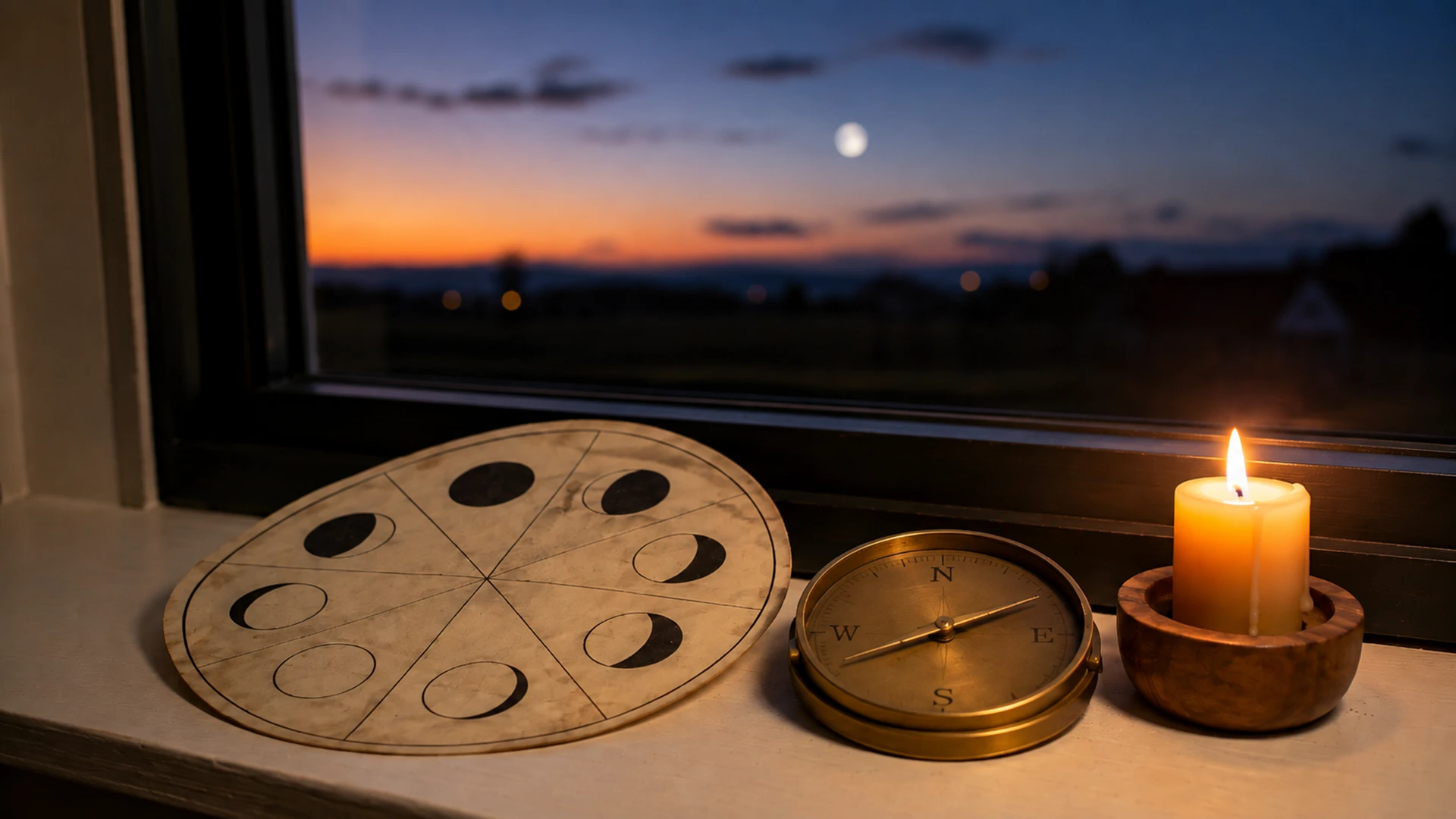
Moon phase magic is the most widely practiced form of celestial timing work, and for good reason — the lunar cycle is visible, reliable, and broken into phases that map cleanly onto magical intention. The new moon is for planting seeds: new projects, intentions, and beginnings. The waxing moon supports growth and attraction. The full moon amplifies energy and is ideal for workings that need maximum charge — full moon ritual magic has the benefit of a sky that literally radiates light all night. The waning moon supports release, banishment, and reduction. The dark moon (the final days before the new moon) is the quiet, internal phase suited to rest, shadow work, and endings. Moon phase magic for beginners is often the most accessible entry point into celestial timing because you don't need a table or calendar — you can look up and see it.
One timing nuance worth knowing early: the void of course moon. This is the period between the moon's last major aspect to another planet and its entry into the next zodiac sign. Void of course moon periods are traditionally considered poor timing for initiating new workings — actions taken during this window tend not to develop as intended. Checking for this before a major ritual is a small habit that pays off.
Zodiac and elemental magic adds a layer of nuance to both lunar and planetary work. As the moon moves through the zodiac over its 28-day cycle, it passes through signs that carry elemental and qualitative signatures. The moon in Scorpio favors deep emotional work and transformation. The moon in Taurus favors grounding, abundance, and material magic. Working with the moon in a sign that reinforces your intention creates a layered correspondence that sharpens focus. The same principle applies to the sun's transit through the zodiac — each solar season brings a shift in the ambient quality of magical energy, and practitioners who work with the zodiac begin to feel those seasonal shifts as real shifts in the texture of their workings. The debate between sidereal vs tropical zodiac in witchcraft is ongoing and engaging; most Western practitioners use the tropical zodiac, which is season-based, while Vedic-influenced practice uses the sidereal, which tracks actual stellar positions.
Celestial timing through planetary days and planetary hours is the precision layer of the practice, and it's older than modern astrology as most people know it. Each day of the week is ruled by one of the seven classical planets — a structure that goes back to Babylonian omen astrology and was fully codified by the Hellenistic period. Sunday belongs to the Sun (vitality, success, clarity). Monday to the Moon (emotion, intuition, dreams). Tuesday to Mars (courage, conflict, protection). Wednesday to Mercury (communication, travel, contracts). Thursday to Jupiter (expansion, luck, abundance). Friday to Venus (love, beauty, pleasure). Saturday to Saturn (discipline, boundaries, banishment). Working a spell on the planetary day that matches your intention is the simplest form of celestial timing available, and it requires no calculations at all.
Planetary hours go deeper. Each hour of the day and night is also ruled by a planet, cycling through in a fixed sequence called the Chaldean order — Saturn, Jupiter, Mars, Sun, Venus, Mercury, Moon — starting from sunrise on the day's ruling planet. Using planetary hours in spellwork means finding the precise window within a given day when your target planet is active. A Venus working performed during the Venus hour on a Friday is doubly reinforced.
Special celestial events carry amplified timing energy that practitioners across traditions have always treated as significant. Solar and lunar eclipses are among the most potent — they occur when the sun, earth, and moon align precisely, disrupting the normal light cycle in a way that has no mundane equivalent. Eclipse magic is powerful precisely because eclipses mark endings and sudden beginnings; they tend to force outcomes rather than invite them gently, which makes them unsuitable for delicate or nuanced workings but excellent for breaking long-standing patterns or closing chapters decisively. Retrogrades — most famously Mercury retrograde, but also Venus, Mars, Jupiter, and Saturn retrograde — are periods when a planet's themes turn inward and review-oriented. Rather than avoiding them entirely, experienced practitioners use them strategically: Saturn retrograde for reassessing long-term structures, Venus retrograde for revisiting relationships and values. Solstices and equinoxes mark the solar year's turning points and are natural moments for workings tied to light, dark, beginnings, and culminations.
Star and constellation magic is one of the more ancient layers of celestial practice, predating the planetary system. Fixed stars — individual stars like Sirius, Regulus, Spica, and Algol — each carry specific magical qualities that were documented in Hellenistic, medieval, and Renaissance magical texts including Cornelius Agrippa's Three Books of Occult Philosophy. Sirius, the brightest star in the sky, carries associations with power, fame, and devotion to work. Algol, a variable binary star in Perseus, has long been associated with intense, dangerous, and transformative energy. Working with a fixed star means timing your working to when that star rises, culminates, or sets — adding a stellar timing layer on top of planetary and lunar timing. Constellation magic extends this outward: the sky as a symbolic map that the practitioner learns to read section by section, rather than planet by planet.
Three Traditions That Built Celestial Magic
Babylonian astral-religious practice is where the structural foundation of Western celestial magic originates. The Babylonians of ancient Mesopotamia were the first civilization to systematically catalog the sky as a language of omen and divine communication, and their work gave the modern world two of its most enduring celestial structures: the seven-day planetary week and the twelve-sign zodiac. The MUL.APIN tablets — a series of cuneiform astronomical texts dating to around 1000 BCE but drawing on observations centuries older — cataloged the stars, their rising and setting times, and their associations with the gods of the Babylonian pantheon. Marduk governed Jupiter; Ishtar governed Venus; Nergal governed Mars. Celestial observation was not academic — it was priestly work. The sky told the king when to act, when to retreat, when to perform which temple rites. The underlying logic — that celestial position and timing determines the quality of action taken beneath it — is the same logic that drives celestial magic today.
Egyptian decanal astronomy represents one of the most specific and visually striking applications of celestial timing in magical history. The ancient Egyptians divided the sky into 36 sections called decans — each covering ten degrees of the ecliptic, with a new decan rising on the eastern horizon every ten days. Each decan was personified as a deity and associated with specific qualities, protective powers, and ritual functions. The decans were used as a star clock: priests could determine the time of night by observing which decan was rising, which was essential for timing temple rituals that had to occur at precise hours. This system is documented on the astronomical ceilings of royal tombs in the Valley of the Kings and in the famous zodiacal ceiling of the Temple of Hathor at Dendera, one of the best-preserved astronomical ceilings in Egypt. The Dendera ceiling shows both the 36 decans and the twelve zodiac signs, blending Egyptian and Hellenistic astronomical systems — evidence of how celestial timing traditions traveled and merged across cultures. In practical terms, the Egyptian decanal system is the direct ancestor of the 36 decan-based astrology still used in some modern magical traditions for refining planetary readings.
Maya astronomical-ritual practice demonstrates that the principle of celestial timing in magic was not a single-culture invention but a convergent development across independent civilizations. The ancient Maya maintained some of the most precise astronomical records of any pre-industrial culture, and their approach to celestial timing was deeply ritual in character. The most documented example involves Venus. The Maya tracked Venus with extraordinary precision — its synodic cycle of approximately 584 days, its appearance as morning star and evening star, and its periodic disappearances below the horizon. The Dresden Codex, one of only four surviving Maya books and one of the most important astronomical documents in the Americas, contains detailed Venus tables that allowed Maya priests to predict Venus's movements decades in advance. These tables were not academic exercises — they were scheduling tools. Major events including warfare, sacrifice, and political ceremony were deliberately timed to Venus's heliacal rising (its first appearance as morning star after a period of invisibility), which was considered a moment of intense, dangerous power. The Venus warrior deity — associated with the morning star's sudden reappearance — was invoked at that precise moment. The Maya understanding that celestial timing could amplify or imperil human action, documented with mathematical precision in the Dresden Codex, is functionally identical in structure to the planetary timing principles that underlie celestial magic practice today.
Building Your Celestial Magic Practice
The best thing about celestial magic as a starting practice is that the sky is always there. You don't need to acquire anything to begin — you need to learn to read what's already above you.
Start with two planetary correspondences rather than seven. Venus and Saturn are an excellent first pair because they anchor opposite ends of the magical spectrum: Venus for love, beauty, attraction, and pleasure; Saturn for discipline, banishment, limitation, and long-term structure. Knowing these two cold — their symbols, their days (Friday and Saturday), their qualities — gives you an immediately usable foundation for real workings. You can layer in the other five planets one at a time once Friday and Saturday feel natural.
For moon phase tracking, there's no need to begin with complex tables or charts. A quick check of the current sky — whether through a lunar almanac, a search, or simply stepping outside and looking up — will tell you exactly where you are in the cycle. What matters at first is building the habit of checking — noticing where you are in the lunar cycle before you begin a working, and asking yourself whether that phase supports what you're trying to do. Over a few months of doing this consistently, you will begin to feel the lunar cycle as a rhythm you live inside rather than a calendar feature you look up. That embodied sense of the cycle is worth more than any table.
For planetary timing, the gateway is the day of the week. Before you work with planetary hours, spend time working intentionally on corresponding days. Cast money and abundance workings on Thursday (Jupiter's day). Do any love-related ritual work on Friday (Venus's day). Start your banishing and boundary-setting work on Saturday (Saturn's day). This alone will immediately deepen your practice because you are no longer working in generic time — you are working in specifically flavored time, with the planetary current of the day behind your intention.
Once the days feel intuitive, planetary hours are the natural next step. Working within the correct planetary hour on the correct planetary day is where the real precision of celestial timing for spells comes online. That double alignment — day and hour both governed by the same planet — gives your working a focused momentum that single-layer timing can't match. Planetary hour tables have been published in grimoires for centuries, and finding them is easier now than it has ever been.
Celestial magic rewards practitioners who learn it incrementally and observe honestly. Keep notes on what you worked, when, and what happened. Patterns will emerge. You'll notice that workings timed to a waxing moon consistently feel different from those done under a waning moon. You'll start to feel Friday differently than Monday. Over time, the sky stops being a backdrop and starts being a collaborator — a structure you work with rather than work beneath. That shift in relationship is when celestial magic becomes genuinely your own.
Everything in this category is built to support that progression, from foundational planetary correspondences and lunar cycles all the way through advanced timing work and star magic. Start where you are. The sky will meet you there.