Herbal Magic: How Plants Sharpen Your Will and Power Your Practice
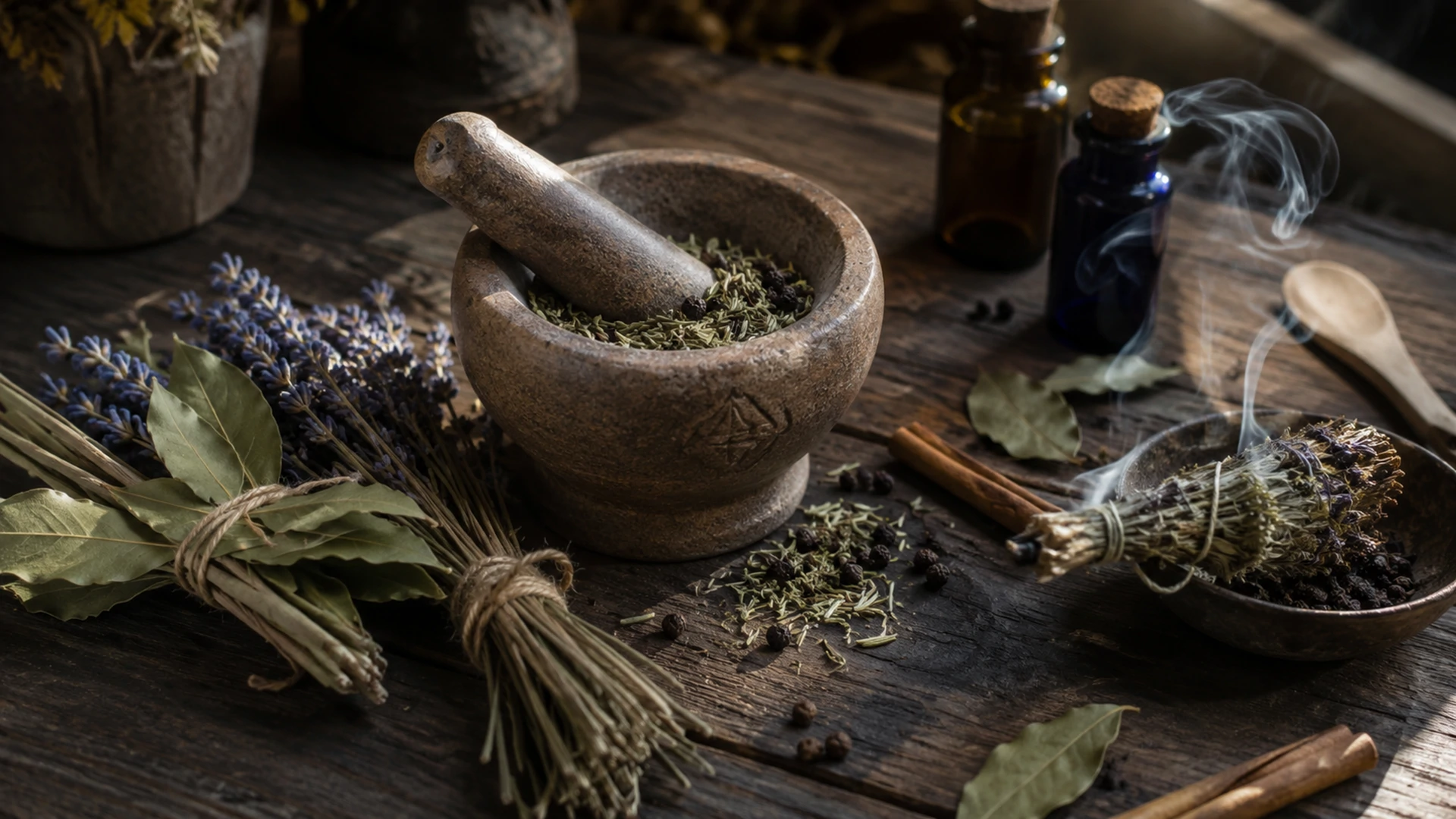
What Is Herbal Magic?
If you have ever lit a stick of incense before a ritual, steeped chamomile tea to calm your nerves before a meditation, or tucked a sprig of rosemary under your pillow for protection, you have already stepped into the world of herbal magic. You did not need a formal initiation or a decade of study. You just needed a plant, an intention, and the will to put them together.
Herbal magic is the practice of working with plants — their leaves, roots, flowers, bark, resins, and oils — as physical tools to focus and amplify your magical will. The key word there is focus. Plants do not cast spells on their own. What they do is give your intention something real and sensory to anchor to. The scent of burning sage, the weight of a dried root in your pocket, the color of an infused oil — these things pull your mind into sharp alignment with what you are trying to create. That alignment is where the real power lives.
This makes herbal magic one of the most accessible and immediately rewarding areas of magical practice. You do not need rare supplies or expensive tools. Most of what you will use grows in gardens, sits in grocery store spice aisles, or can be ordered online for a few dollars. The learning curve is gentle, the applications are endless, and the results have the kind of tangible, grounded quality that makes your practice feel real and lived-in. Whether you are brand new to magic or looking to deepen a practice you have had for years, herbs are a genuinely powerful place to start or return to.
The articles in this category cover everything from foundational correspondences and beginner-friendly spells to more advanced techniques like crafting condition oils, working with planetary herbs, and using smoke in ritual. Wherever you are in your practice, there is something here for you.
How Herbal Magic Is Used in Modern Practice
Modern herbal magic is beautifully varied. There is no single correct method, and that flexibility is part of what makes it so approachable. The most common applications fall into a few broad categories, each with its own logic and its own way of engaging your focus and intention.
Smoke and Incense — Burning herbs is one of the oldest and most direct methods of working with plant energy. When you burn a herb, its chemical compounds become airborne. Your nervous system responds to the scent before your conscious mind even registers it. That physiological shift — calm, alertness, heightened awareness — is the mechanism behind why smoke has been used in ritual across virtually every culture in human history. In modern practice, loose herb blends burned on charcoal discs, herb bundles, and herbal incense sticks are all common tools. You might burn mugwort to deepen a divination session, frankincense to elevate a ritual space, or black pepper to sharpen your resolve before a banishing.
Infused Oils and Condition Oils — Condition oils are herb-infused carrier oils used to anoint candles, tools, the body, or objects as part of a spell or ritual. The term condition oil comes from the Southern American folk magic tradition known as Hoodoo, where specific oil blends were crafted for specific magical conditions — drawing money, attracting love, breaking a hex, dominating a situation. The herbs and roots chosen for each blend are not arbitrary. Each plant carries a symbolic and energetic correspondence that aligns with the intended outcome. When you anoint a green candle with an oil infused with basil and bay laurel, you are layering two systems of focus — color symbolism and herbal correspondence — into a single intentional act.
Sachets, Mojo Bags, and Charm Pouches — Carrying herbs on your body is another powerful form of physical anchoring. A sachet or mojo bag is a small pouch filled with herbs, roots, and other curios chosen for a specific magical purpose, then carried or placed in a strategic location. Every time you feel the weight of it in your pocket or catch its scent, your mind is pulled back to your intention. That repeated reinforcement is not superstition — it is a deliberate psychological practice of keeping your will sharp and directed over time.
Teas, Washes, and Potions — Herbal teas prepared with magical intent are a form of internal working. You are not just consuming a beverage — you are consciously drawing the energy and symbolism of the plant into your body. Washes, by contrast, are herbal infusions used externally to cleanse a space, an object, or yourself. A floor wash made with hyssop and salt water is a traditional cleansing practice. A bay laurel and rosemary rinse through the hair after a ritual bath is a classic form of spiritual fortification. These practices keep herbal magic woven into your daily life rather than confined to formal ritual.
Herbal Candle Dressing and Spell Work — Coating a candle in oil and rolling it in dried herbs before burning it is one of the most visually satisfying forms of herbal magic. The combination of fire, color, scent, and plant correspondence creates a multilayered focal point for your will. As the candle burns, the herbs catch and release their smoke, and you have a living, evolving ritual object in front of you. It is tactile, immediate, and deeply engaging to your senses — which is exactly the point.
Herbal Magic Through History
Herbal magic is not a modern invention or a revival trend. It is one of the oldest continuous magical practices on earth, documented across cultures that had no contact with each other and yet arrived at strikingly similar conclusions: that plants carry power, that this power can be worked with intentionally, and that the person doing the working shapes the outcome through their will and knowledge. Here are three traditions that illustrate just how deep these roots go.
Ancient Egypt — Egyptian magical practice, known as heka, was a sophisticated and institutionalized system in which herbs played a central role. Priests and healers worked with plants like blue lotus, myrrh, frankincense, kyphi — a complex resin incense blend — and mandrake for purposes ranging from healing and protection to spirit contact and banishment. Kyphi alone was composed of up to sixteen ingredients and was burned in temple rituals to honor the gods and purify sacred space. Egyptian medical papyri, including the Ebers Papyrus dating to around 1550 BCE, document hundreds of plant-based remedies that blend the medicinal and the magical without distinction, because in Egyptian thinking, healing the body and working with divine power were the same act.
European Folk Magic and Cunning Craft — Across medieval and early modern Europe, the village herbalist or cunning person was the practical magical practitioner most people actually consulted in their daily lives. These were not ceremonial magicians working from grimoires in towers. They were knowledgeable local figures who worked with locally available plants — yarrow, elder, hawthorn, wormwood, vervain, St. John's Wort — to address the real needs of their communities: protection from harm, reversal of bad luck, love and fertility, justice against wrongdoers, and healing. Herbs were bundled and hung above doorways, sewn into clothing, burned as offerings, and brewed into potions. Many of these practices survive today in modern folk magic, Wicca, and witchcraft traditions, often in nearly identical form to their historical counterparts.
Mesoamerican Traditions — Among the Aztec and Maya, plant magic was inseparable from cosmology and priestly knowledge. The Aztec god Xochipilli was patron of flowers, plants, and ecstatic ritual states, and certain entheogens — plants that produce visionary states, from the Greek meaning generating the divine within — were used in highly structured ceremonial contexts to facilitate spirit contact and divine communication. Copal resin, still burned widely in Mexican spiritual practice today, was used as sacred smoke to carry prayers to the gods and to cleanse ritual space. The Maya botanical codices document an extensive knowledge of plant properties that integrated medicinal, cosmological, and magical understanding into a single coherent system. This tradition continues unbroken in curanderismo and other living folk healing and magical practices across Latin America.
Building Your Herbal Magic Practice
You do not need to master every herb in existence before your practice becomes meaningful. What you need is a clear intention, a willingness to learn the correspondences that resonate with your goals, and the discipline to work with what you have consistently. Herbal magic rewards attention and commitment more than it rewards accumulation.
Start with a small core of versatile herbs that cover the most common magical needs. Rosemary is protective, purifying, and strengthening — it substitutes for almost any herb in a pinch and is a genuinely powerful ally in its own right. Lavender calms the mind and opens psychic receptivity. Bay laurel amplifies intention and is classically associated with victory, prophecy, and manifestation. Chamomile brings peace and draws luck. Black pepper banishes and protects. Cinnamon accelerates and intensifies any working. These six herbs alone give you a working toolkit for protection, cleansing, manifestation, psychic work, and banishing.
As you expand your practice, pay attention to your results. Keep notes. Notice which herbs your body and mind respond to most strongly. Notice which methods — smoke, oil, sachet, tea — feel most natural and effective for you. Your practice will develop its own character over time, shaped by your individual will, your intuition, and the feedback you get from consistent work. That personalization is not a deviation from tradition. It is exactly how these traditions have always grown and evolved.
The articles in this category are designed to guide you through that process step by step. You will find deep dives into specific herbs and their magical applications, tutorials on crafting oils and incense blends, guides to working with herbal magic for specific intentions, and explorations of the broader traditions that herbal magic draws from. Every piece is written to help you understand not just what to do, but why it works — because understanding the why is what turns a recipe into a real magical practice. Explore, experiment, and trust your will. The plants are ready when you are.