High John the Conqueror: The Root That Will Not Be Beaten
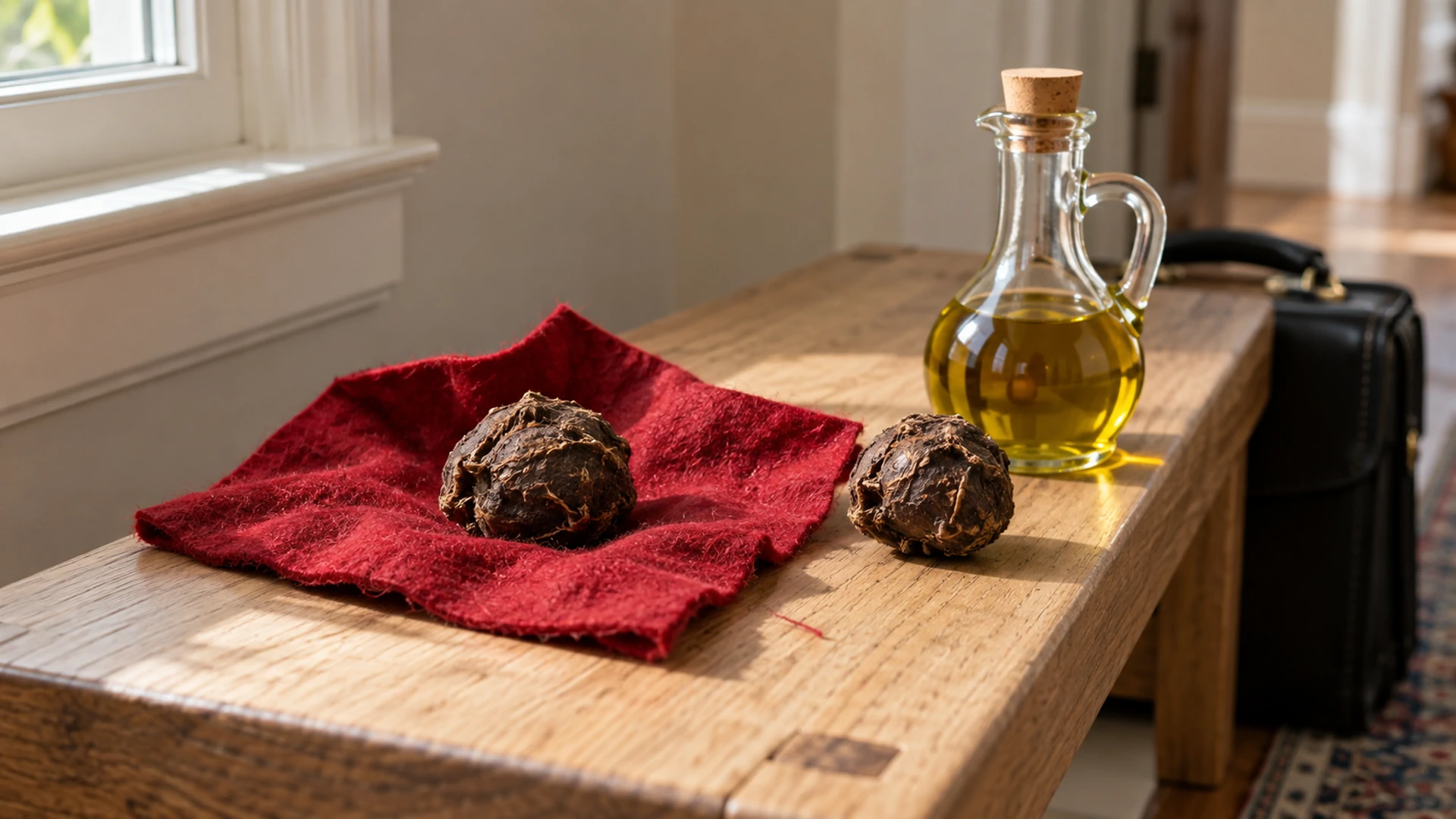
High John the Conqueror root is the best-known root in African American Hoodoo, carried for mastery, victory, luck, and the power to overcome whatever stands between you and where you need to be.
Mastery: High John's Place in Prosperity & Success
Every prosperity herb has an angle, a specific way it bends toward abundance. High John's angle is mastery. Not luck as in fortunate circumstance, not steady accumulation, not the opening of a road — but the kind of power that walks into a hard situation and comes out on top. Its uses in victory, courage, and overcoming obstacles all live inside that one word. That's what makes it distinct among roots and among prosperity herbs generally: it doesn't smooth the path, it makes you capable of walking the path as it actually is.
Contrast it with nutmeg, the other carried luck piece of American folk practice. Nutmeg is luck — the carried piece you bring to a game of chance or a moment where fortune could tip either way. High John isn't about fortune tipping. It's about the force of will and personal power that decides outcomes where luck alone isn't enough. Compare it also with Solomon's seal, which seals and holds a situation once it has been resolved — High John is what you work with to win the situation in the first place. Solomon's seal closes the door; High John kicks it open.
Cunningham assigns High John to Mars and fire, which fits the herb's assertive, obstacle-crushing energy. That said, Hoodoo itself does not use planetary correspondences — the Mars attribution is a Western overlay applied by later writers, not something native to the tradition. Both facts are worth knowing. If you work within a planetary framework, Mars and fire are the honest assignment. If you work within Hoodoo on its own terms, the root's power doesn't need a planet behind it.
John the Conqueror and the Power Left in a Root
The root is named for John the Conqueror, a trickster hero figure who emerged in the stories and oral tradition of enslaved African Americans. John was not a saint or a spirit in the formal sense — he was a man who outmaneuvered masters, overseers, and the Devil himself through wit, nerve, and a refusal to accept defeat as final. He laughed where others feared. He turned impossible situations around. He was the embodiment of the kind of power that slavery was designed to erase, and his stories kept that power alive.
Zora Neale Hurston's essay "High John de Conquer," published in The American Mercury in 1943, is the essential document for understanding the root's meaning. Hurston writes that John the Conqueror knew that the enslaved people of America needed something to hold onto across the long years of bondage, so when he finally returned to Africa, he left his power behind inside a root — tucked into the earth where his people could find it and carry it with them. That story is not a metaphor Hurston invented. She was documenting a living tradition, a body of belief that was already old when she wrote it down. The root also appears in blues music: Muddy Waters named it directly in "Hoochie Coochie Man," which puts High John squarely inside the Black cultural tradition of the 20th century, not just in folk practice but in recorded art.
Hoodoo is rooted in African American experience, and that matters when you're deciding whether and how to work with it. Some practitioners, particularly those whose ancestors carried this tradition through generations, regard Hoodoo as an ancestral practice — not open to those outside that lineage, and not theirs to adapt or repurpose. Others within and adjacent to Hoodoo take a more open view, seeing the tradition as one that has always absorbed influences and that anyone can approach with genuine respect and serious study. Neither position owns the final word. What's fair to say is that if you come to High John from outside the tradition, it's worth learning its history along with its uses.
Jalap Root, and the Fakes Sold Under Its Name
High John the Conqueror root is jalap root — Ipomoea purga, also listed as Ipomoea jalapa — a plant in the morning glory family (Convolvulaceae), native to Mexico. Its common name comes from Xalapa, the city in Veracruz near which it was historically harvested. In its genuine form it is sold as whole, dark, walnut-sized roots with a dense, woody feel. That description matters because fakes are extremely common in the commercial herb trade. Over the decades, other morning glory roots, galangal, and even Solomon's seal root have been sold under the High John name — sometimes by accident, sometimes not. If a supplier is selling what looks like a pale, fibrous chunk with no resemblance to a dark, rounded root, it is almost certainly not the genuine article. Buy from suppliers with a reputation in the Hoodoo community specifically, and when possible, buy the whole root rather than powder, where substitution is easiest to hide.
Jalap is a strong purgative. The root is carried, not eaten. There is no preparation that calls for consuming it, and the tradition does not use it that way.
Three Ways to Work the Conqueror Root
The Root in Red Flannel
This practice is for a stretch of time that demands strength you need to hold across days — a legal fight, a competition, an extended period of pressure where the outcome matters and giving up isn't an option.
Take a whole High John root and place it inside a small piece of red flannel. Red flannel is the traditional carrier for this root specifically — the form the tradition uses. Hold the bundle in your hands and name what you're up against. Be specific: the case, the job, the person, the obstacle. Not in general terms — name the actual thing. Fold the flannel around the root and tie it closed. Carry it on your body through the duration of the challenge. Some workers dress the cloth with a little oil before sealing it; some leave it plain. The root does its work through contact and through the clarity of your stated intention. Keep the bag close — a pocket, a bag worn near the body — for as long as the challenge runs.
Dressing the Root Before a Challenge
This practice is for a single, defined moment — a confrontation, an interview, a negotiation — where you need to walk in already grounded in your own authority.
The night before or the morning of the challenge, take your High John root in hand and speak to it directly. Name the challenge: what it is, what outcome you need, what you are walking into. Then put a few drops of oil on your fingertips — a condition oil formulated for power, courage, or victory is traditional, though plain olive oil has been used in Hoodoo for generations — and rub it across the surface of the root. You're not coating it; you're making contact, layering your spoken intention into the root with your hands. Carry the dressed root with you to the challenge. This is not a passive working — the root amplifies what you bring, which means you walk in prepared, clear-headed, and ready to act. The root holds the intention; you do the work.
High John Steeped in Oil
This practice is for making a working oil charged with the root's virtue, to be used on a candle you've prepared or a petition paper.
Place a whole High John root in a clean glass jar and cover it with a carrier oil — olive oil is traditional, almond oil also works. Seal the jar and set it somewhere it won't be disturbed. Leave it for at least a week, longer if you can. The oil will take on the root's character. When you're ready to use it, anoint a candle dressed for a career working or rub a small amount onto a written petition before folding it. Write your petition before you open the oil. The root stays in the jar and can be used to make additional batches; it does not lose its virtue after a single steeping.
Power That Was Left for Its People
High John the Conqueror sits inside the Prosperity & Success category because its angle — mastery, victory, the power to overcome — is inseparable from what it means to succeed on your own terms. Not luck, not gentle accumulation, not the gradual building of resources: the direct force of personal power applied to a hard problem. That makes it one of the most specific tools in the prosperity tradition, and one of the most historically grounded. Its home is African American Hoodoo, and that origin is not background color — it is the entire reason the root carries what it carries.
If you want to see High John alongside the other prosperity herbs — the ones that bring speed, stability, luck, and accumulation — and understand how they sit within the six other categories of plant magic, the full picture is in seven paths through plant magic.