Dill: The Cradle Ward of English Rhyme
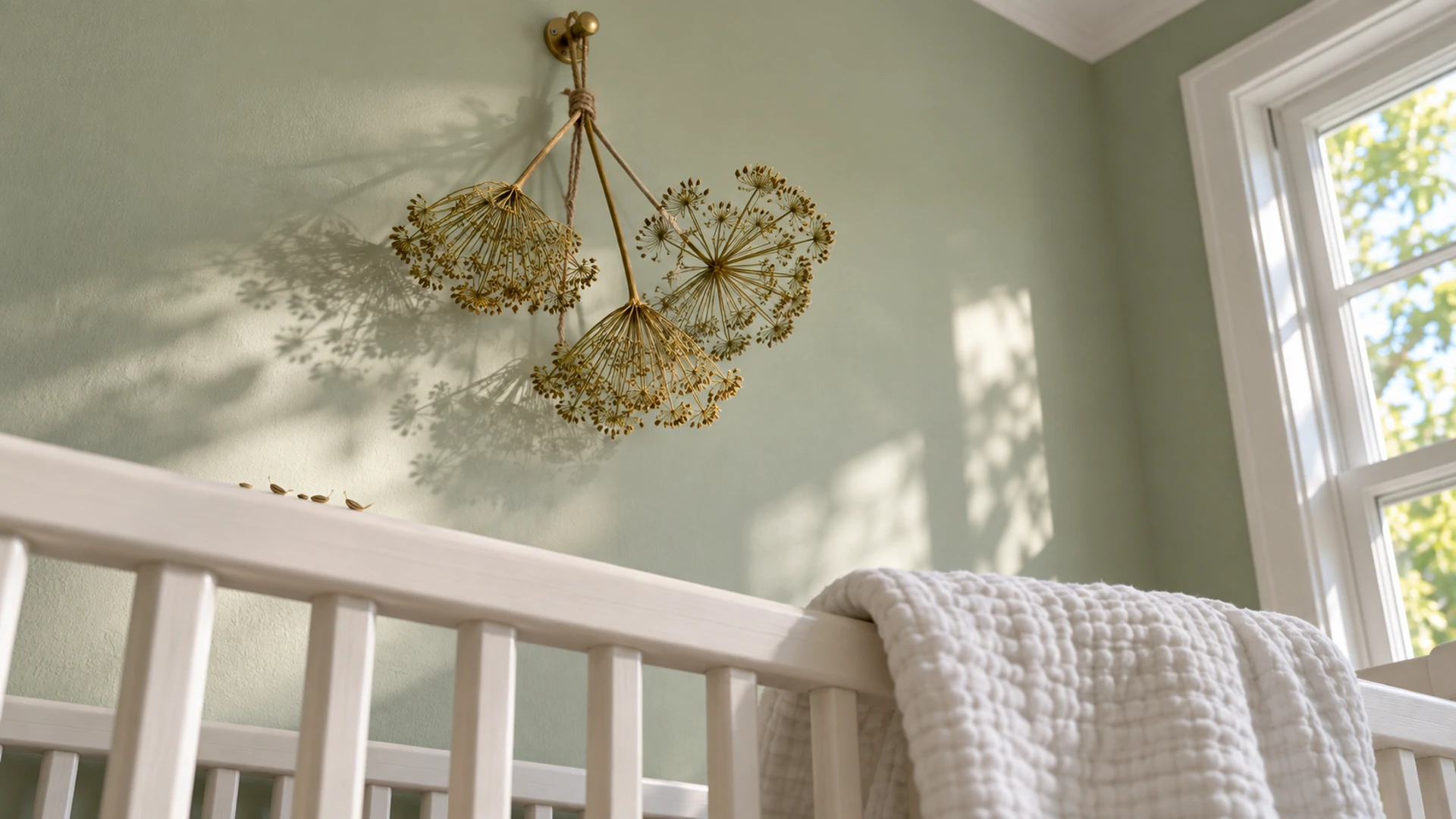
Dill (Anethum graveolens) is a feathery kitchen herb with a specific protective role in English folk tradition: hung over cradles and doors against witchcraft, with a quieter second life in love magic. Its correspondences are Mercury, fire, and Wednesday.
Guarding the Nursery: Dill's Place in Protection
Most protective herbs guard a threshold — something stands at the outer edge and holds it. Dill's angle is narrower and more intimate than that. It belongs to the cradle, the kitchen, the inside of the house rather than its perimeter. Where fennel is the Midsummer threshold herb hung over doors to guard the way in from outside, dill turns inward. It is the ward for the softest and most vulnerable point of any home: the place where a new person sleeps. That specificity is worth holding onto, because it changes how you use it. Dill isn't the herb you hang when you want to assert a boundary at the outer wall. It's the herb you reach for when the protection needed is close, quiet, and domestic.
In the carrot family's lineup of protective herbs, dill and fennel are close culinary cousins — both feathery-leafed, both seed-bearing, both widely grown in kitchen gardens across Britain and Europe. But their folk roles pull in opposite directions. Fennel faces the front door; dill faces the cradle. Where garlic drives off what approaches the threshold rather than only holding it, dill doesn't drive anything anywhere. It sits quietly above a sleeping child and keeps the household safe by holding that center steady. Both modes of protection matter. They just aren't the same working.
Dill's planetary ruler is Mercury — Culpeper and Cunningham both agree on this — with fire as its elemental correspondence and Wednesday as its day. Mercury governs communication, quick movement, and the links between things, which gives dill a certain nimbleness: it isn't heavy or slow in the way a Saturnine herb can be. Its secondary category is Love and Attraction, mostly through the love bath, which will come up again in the workings section. The fire correspondence gives it a bit of edge for an herb so associated with kitchens and nurseries — fire moves, it transforms, it doesn't just sit. Nothing about dill demands ceremony. It works in the everyday.
Vervain and Dill, and the Tithe of Mint
The English saying that pairs dill with vervain as herbs that hinder witches of their will is preserved in Michael Drayton's poem Nymphidia, published in 1627, though the pairing was already in circulation by the time Drayton wrote it down. Drayton was working in a tradition, not inventing one. What the saying captures is something specific about these two herbs: they don't just protect passively, they actively interfere with malicious intent directed at the household. Vervain's role in the pairing is sweeping and sanctifying — it was the Roman herb that cleared the table of Jupiter and purified homes before a gathering. Dill's role is closer to home, literally. The two together covered the domestic space from altar to nursery, which is probably why the pairing stuck.
Dill's connection to babies and cradles runs through more than folk magic. Dill water — a simple infusion — was the classic historical remedy given to colicky infants to soothe their discomfort, a practice so established that it found its way into generations of household guides. That medicinal history underlies the cradle association in ways that are hard to separate: the herb that eased a crying baby at night was a natural candidate for the herb hung over the place where the baby slept. The name itself may reinforce this: a popular explanation traces it to an Old Norse word meaning to lull or calm, though this etymology is disputed and should be treated as a story rather than settled fact. What's less disputed is dill's place in Matthew 23:23, where Jesus rebukes those who carefully tithe mint, dill, and cumin while neglecting weightier matters of justice. The Greek text uses anethon, which is unambiguously dill — though the King James Version renders it as "anise," a rendering that hid dill's presence in the English text. The pairing with mint in that passage is worth noting: both are small, aromatic kitchen herbs considered precise enough for tithing, and both carry folk-magic traditions of household protection and money-drawing that far outlasted the biblical context.
Heads, Seeds, and Safe Hanging
Dill is easy to grow from seed and extremely generous once it starts flowering. The whole plant cooperates with magical use: seeds, fronds, and flowering heads all have their place. Flowering heads dry well when hung upside down in a warm, ventilated spot — they hold their shape and their scent for months. Seeds are compact and easy to work into sachets or small cloth bags. Fronds are softer and best used fresh, either in a bath or briefly dried for a bundle. The practical reason to prefer seeds for long-term use is stability: they don't crumble as fast, they store well, and their scent is sharper and longer-lasting than dried leaf.
When dill is hung near a baby or a child — above a crib, over a nursery doorway, or tucked into the frame of a child's room — the first and only rule is that it must be completely out of reach. Secure hanging, well above any point a child could grab, is not optional. Dried plant material is fragile, and fragments near infants are a hazard. Renew the bundle when it starts to crumble rather than letting it shed. On safety: culinary dill is safe; dill essential oil is not appropriate for use around infants or young children.
Three Dill Workings for Home and Heart
Dried Heads Above the Cradle
This is the working to reach for when a child has arrived or is expected — the traditional domestic ward for the nursery, drawn directly from English folk practice.
Harvest or purchase dill at the flowering head stage, when the flat umbels are fully open and beginning to form seed. Hang the heads upside down to dry completely — this takes one to two weeks in a warm room. Once dry, gather three heads into a small bundle and tie them securely with natural twine, leaving a long tail of twine for hanging. Fasten the bundle above the child's sleeping space — above the head of the crib or over the inside of the nursery door — at a height that is genuinely out of reach. As you tie it, name what you're asking for plainly: protection for this child, peace in this room, a safe and quiet space. No elaborate ritual is needed here. The intention is simple, and dill does simple work well. When the bundle begins to crumble and shed, take it down and burn or bury it, then hang a fresh one.
A Kitchen Sachet of Dill Seed
This working suits any household that wants a quiet, ongoing protective presence in the kitchen — the room that has always been dill's home ground.
Take a small square of undyed cloth — linen or cotton both work — and place a tablespoon of dried dill seeds in the center. Fold the cloth and tie it closed with twine, leaving it small enough to tuck easily behind a spice jar or hang from a hook inside a cabinet door. Before you tie the final knot, hold the sachet in both hands and settle your intention: this is for the protection of the household, the safety of the people who eat and gather here. Hang or place it in the kitchen on a Wednesday, or during a Mercury hour, to align the working with dill's ruler. Seeds hold their potency longer than dried leaf, so this sachet can stay in place for months. Replace it when the scent fades.
The Dill Love Bath
Use this before a date, before a difficult conversation with someone you love, or any time you want to soften the space between yourself and another person.
Bring two cups of water to a gentle simmer and add a generous handful of fresh dill fronds, or two tablespoons of dried dill seed. Let it steep off the heat for ten to fifteen minutes, then strain thoroughly — no plant material should enter the bath. Add the strained infusion to a warm bath and soak for at least ten minutes. The intention here is simple: openness, warmth, the quality of being someone easy to move toward. Dill's Love and Attraction secondary is quieter than rose or jasmine, less about passionate draw and more about gentle receptivity. This bath doesn't demand anything dramatic from you. It just settles the energy before you walk out the door.
Small Seeds, Close to Home
Dill's story inside the Protection and Warding category is a reminder that protective magic isn't one thing. There are herbs that enforce a perimeter, herbs that turn back the evil eye, herbs that last for generations in the wood of a house. Dill works at the most personal scale — the cradle, the kitchen, the inner life of a home — and it does that work with the same quiet authority as any of them. Small doesn't mean weak. It means the protection goes exactly where it needs to go.
To see dill alongside the full sweep of plant magic across all seven categories, the Witch's Herbarium covers all seven paths and maps the other thirteen protection herbs in context.