Vervain: The Sacred Plant That Swept Jupiter's Table
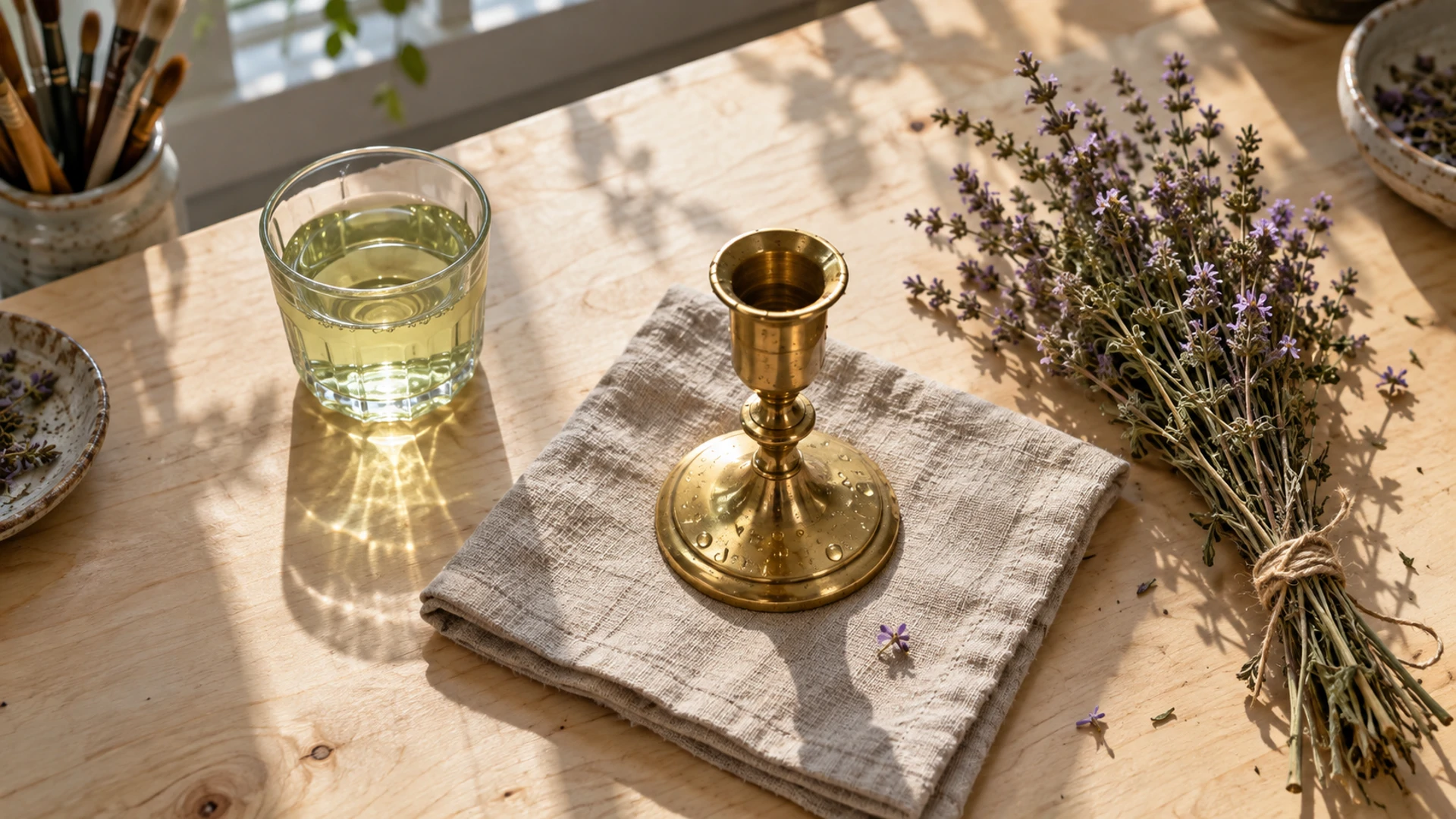
Vervain is a consecration herb used to purify altars and ritual tools before working, called the "sacred plant" by the Romans and carried by their envoys as a badge of sanctity. Protection is its second role.
Consecration for Altar and Tool: Vervain's Place in Cleansing
Vervain's cleansing work is specific. It is not a smoke you fill a room with to break up heavy energy, and it is not a wash for cleansing a person. It is a consecration herb: the one you reach for when you want to make the altar itself, the table you work on, or the tools laid out on it ready and sanctified before the ritual begins. That specificity is what earns it its place in the Cleansing and Purification category, and understanding the distinction matters for using it well.
Compare it to the other consecration herbs and the contrast sharpens. Frankincense consecrates by lifting — it raises a space toward the sacred before ceremonial work begins, working through smoke that elevates rather than clearing. Hyssop works by aspersion — water sprinkled from a bundle to wash a person or a place clean, in a liturgical register that has a long scriptural echo. Vervain does something different from both. It sweeps and sanctifies the working surface, the tools, the altar cloth, and the objects laid out on it. It prepares the stage rather than the players or the room around them.
Correspondences are straightforward. Culpeper assigned vervain to Venus; Cunningham agrees, placing it with Venus and earth. Friday is its day. Its folk names carry the weight of centuries of reverence: herb of grace, holy herb, simpler's joy, and enchanter's plant are among them. Each name points to the same thing — a plant that people recognized, over and over, as something set apart. Its secondary magical category is Protection and Warding, which pairs naturally with consecration: you prepare the space, and you hold it.
Hiera Botane: Vervain in Pliny's Rome
The Latin name verbenae referred, in Roman practice, to the sacred boughs carried by envoys and heralds as a sign of their inviolable status. Pliny records that the Romans called vervain hiera botane — the sacred plant — and that the table of Jupiter was swept with it and homes purified with it. That detail is worth sitting with. The table of the chief god was prepared with this plant. It was not incense, not an offering, not a sacrifice. It swept the surface clean and made it fit for what was to come. That is exactly the role it still plays.
In the same passage, Pliny writes that the Gauls used vervain for fortune-telling and prophecy. He records this alongside his account of Roman practice, which means vervain's reach extended well beyond the temples of Rome. The plant traveled the ancient world with a reputation. Then Pliny turns to a harvest rite he credits to the Magi — the Persian priestly caste — and describes it with some skepticism. The Magi, he writes, gather vervain at the rising of the Dog Star, when neither sun nor moon is shining, after making an offering of honey to the earth. He is clearly mocking them, but he records it anyway, which tells us the rite was known, taken seriously by its practitioners, and old enough to have reached Pliny's sources.
Vervain's reputation kept moving long after Rome. Its name traveled further still. Van Van, the best-known New Orleans Hoodoo formula, is widely thought to take its name from the French word for vervain, verveine. In the Americas, lemongrass came to stand in for it — the two plants are entirely unrelated botanically, but they share the same role in the formula's logic: clearing away what is stagnant and opening the road to what is coming.
Finding True Vervain
The most common sourcing confusion is with lemon verbena (Aloysia citrodora), a South American shrub that smells strongly of lemon and is sold under names that are close enough to cause real mix-ups in shops and online listings. They are different plants in different genera with different magical profiles. If you pick up an herb labeled verbena and it smells sharply of citrus, you have lemon verbena. True vervain (Verbena officinalis) is much subtler, almost bitter, with small pale lilac flowers on thin spikes. North American blue vervain (Verbena hastata) is a related species from a different continent and is commonly used as a substitute; it is botanically closer than lemon verbena is, and is accepted in most contemporary practice. The aerial parts are what you use — the leaves and flowering tops, dried into a bundle, steeped into a sprinkling wash, or burned as incense.
Vervain is a mild herb and generally well tolerated. The traditional caution is to avoid it in pregnancy, and that caution holds. Outside of that, it is one of the gentler plants you will work with. It can also be drunk as a ritual tea; if luck and open roads are what you are working toward, the vervain tea ceremony for luck gives you a full ritual framework for that intention.
Three Consecrations With Vervain
Sweeping the Altar
Use this when your altar has been sitting between workings, accumulating the general ambient energy of the room, and you want to reset it before something focused and intentional.
Take a small bundle of dried vervain — a few stems bound together with natural twine — and sweep it lightly across the surface of your altar or working table, moving from back to front, ending at the edge closest to you. You are not scrubbing; you are indicating. The gesture acknowledges what you are doing before you do it, which is exactly what the Romans were doing when they swept Jupiter's table. Lay the bundle on the altar as you begin your work, or set it aside in a fireproof dish. The point is not to reconstruct a Roman rite — it is to use the same gesture in your own practice, with full intention behind it.
The Tool-Blessing Sprinkle
Use this when you have a newly acquired or newly made ritual object — a knife, a bowl, a wand, a candle holder — and you want to consecrate it before its first use, clearing whatever it has picked up in transit and claiming it for the work ahead.
Make a simple infusion by steeping dried vervain in hot water for ten minutes, then straining and allowing it to cool to room temperature. Hold the object over a clean cloth or bowl and sprinkle the infusion across it, letting it run over the surface. Name what the object is for as you work — out loud, plainly, one sentence is enough. This is distinct from hyssop's role washing people and rooms; this consecration is for the objects themselves, the instruments of the work. Friday, or a Venus hour, suits this well — Venus rules vervain, and timing a consecration to Venus's hour aligns the planetary current with the plant's own nature.
Vervain and Dill Over the Door
Use this when the protective secondary of vervain is what you need — not consecration of a surface, but a standing ward at the threshold of your home.
Bind a small amount of dried vervain and dried dill together with red or natural twine and hang the bundle above your door, on the inside of the frame. This comes directly from the English saying that pairs them as herbs that hinder witches of their will. Keep it simple and precise: two herbs, one bundle, one threshold. Replace it when it loses its scent or begins to crumble.
Holy Herb for the Working Surface
Vervain is the herb that makes the table ready. In a practice that includes herbs for forceful room clearing, for washing and aspersing, for lifting a space toward the sacred, and for opening roads — vervain fills the quieter, more specific role of sanctifying the surface where your hands will work and your tools will lie. It does not need to fill the room with smoke or presence. It just needs to pass across the altar, or steep into the water that consecrates your tools, and the preparation is done.
If you want to see vervain alongside the other cleansing herbs and understand how all seven magical categories fit together, the Witch's Herbarium is where to go next.