How to Charge a Candle for Magic: The Complete Guide
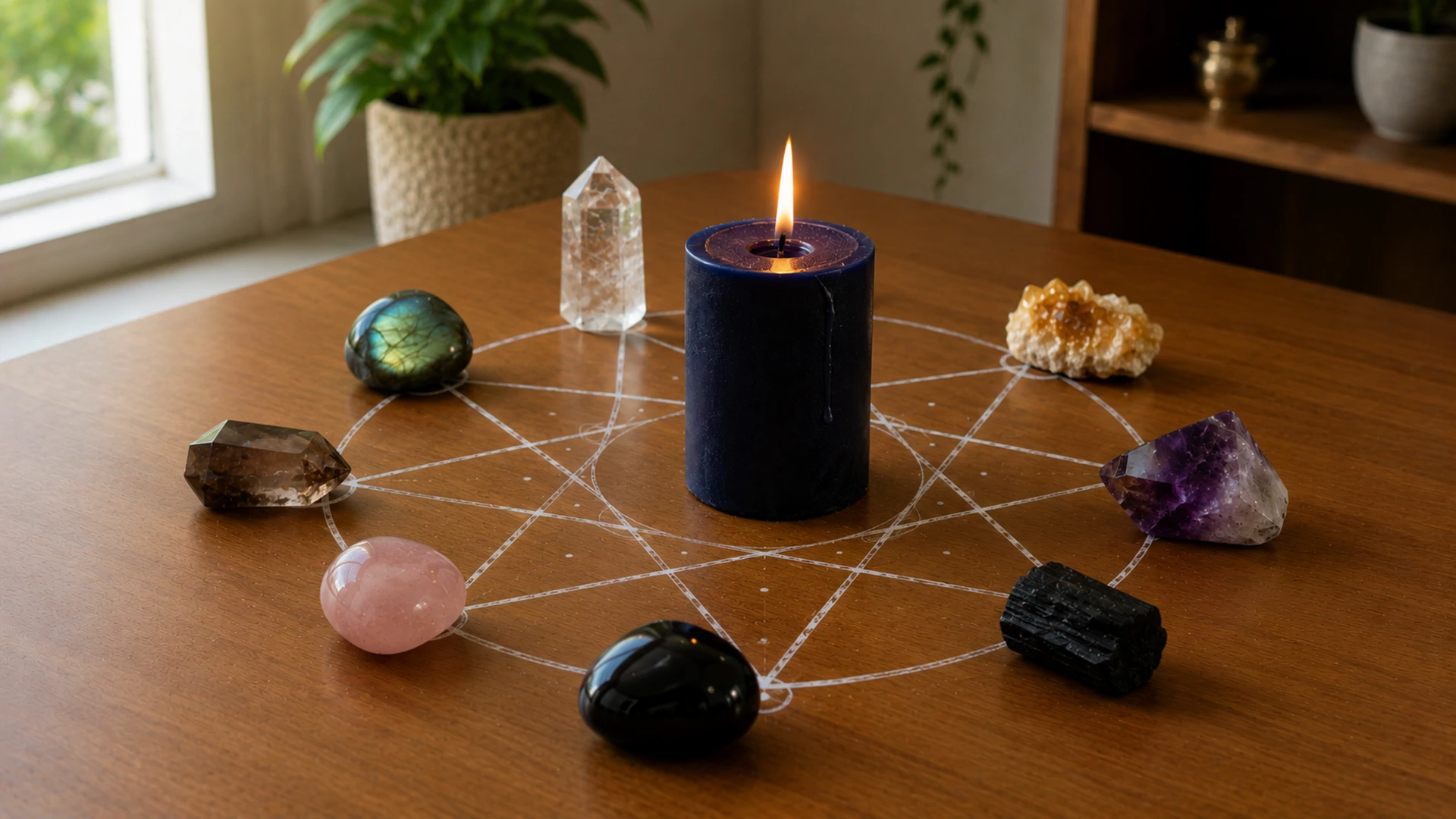
Charging a candle is the step that transforms a plain wax object into a focused magical tool. It's the moment where your intention moves from a vague idea in your head into something tangible — something the candle will carry and release as it burns. If you've ever lit a spell candle and felt like nothing much happened, there's a real chance the charging step was skipped or rushed. Learning how to charge candles properly is one of the highest-leverage skills you can develop in your practice, and the good news is that it requires no special tools, no rare ingredients, and no years of training. It requires your focused will, and you already have that.
What Charging a Candle Actually Does
Charging — sometimes called programming or loading — is the process of deliberately imprinting a specific intention onto your candle before a working. Think of an uncharged candle as a blank broadcast signal. It has potential, but it isn't tuned to any frequency yet. Charging is the act of tuning it. You're essentially telling the candle what job it has to do.
From a magical philosophy standpoint, the candle itself holds no power. The wax, the wick, the color — none of it does anything on its own. What charging does is give your mind and will a concrete focal point. The ritual of holding the candle, breathing into it, and speaking or visualizing your intent creates a psychological and energetic alignment between you and the working. That alignment is what makes the difference. When the candle burns, every flicker of flame becomes a physical reinforcement of the intention you placed there.
This is also why charging works in tandem with every other step of candle preparation. The oils, herbs, and other materials you dress the candle with add layers of symbolic resonance, but those layers need something to resonate with. Your charged intention is the core signal — everything else amplifies and refines it. Skipping the charge and just dressing a candle is a bit like building an amplifier with no input source.
Charging also personalizes the working to you specifically. Two practitioners could dress identical candles with the same oil for the same purpose, but their charged intentions will differ because their will, their emotional reality, and their specific desire differ. That personal specificity is not a weakness — it's the whole point. Magic works through you, not around you. Charging is the step that makes the spell yours.
One more thing worth understanding: charging isn't a one-size-fits-all formula. You can charge a candle for love, for money, for protection, for baneful work, for clarity, for grief, for rage — any genuine human intention is valid material. The color you've chosen already points the candle in a general direction, and knowing the symbolic meanings behind candle colors helps you align your charge with the candle's existing energetic signature. But the charge itself is always yours to define.
How to Charge a Candle: Step by Step
Before you touch the candle, do something most people skip: get yourself into the right state. This doesn't mean you need to meditate for an hour. It means taking two or three full, deliberate breaths and consciously dropping out of whatever your day was. Distraction is the enemy of a good charge. You're about to communicate something to your own subconscious mind through a symbolic act, and that communication only lands when you're actually present for it. Close the browser tab in your head, even for five minutes.
Pick up the candle with both hands and hold it at roughly the level of your heart or solar plexus. The physical act of holding it matters — it creates a somatic anchor between your body and the object. Feel its weight, its texture, its temperature. You're making contact, not just touching it. This deliberate physical engagement is what starts the charging process. Your focus is beginning to move out of the abstract and into the material.
Now bring your specific intention to mind as clearly and concretely as possible. Vague intentions produce weak charges. "I want more money" is far less effective than "I am drawing a specific and significant financial opportunity into my life by the next new moon." The more precise your intention, the sharper the energetic signal. Don't worry about getting it perfect in words — the important thing is that you feel the reality of what you're calling in. You're not just describing a wish. You're declaring a direction.
With your intention clearly in mind, begin to breathe into the candle. Some practitioners do this literally — holding the candle close to the mouth and exhaling slowly across it while holding the intention firmly in mind. Others visualize their intention as a specific color, light, or feeling pouring from their hands directly into the wax. Both approaches work because both accomplish the same thing: they create a sustained, embodied focus on the intention while maintaining physical contact with the candle. Use whichever feels most natural and most real to you.
Speak your intention aloud if you can. The voice is a powerful magical instrument — it engages your body, your breath, and your mind simultaneously, and spoken words carry a kind of commitment that purely mental statements don't always achieve. You don't need to recite a formal incantation. You can speak in plain, direct language. Something like: "I charge this candle to draw love that is genuine, mutual, and lasting into my life" is completely sufficient. What matters is that you mean it when you say it. Conviction is the active ingredient.
As you speak or breathe your intention, you can also use physical movement to reinforce the charge. Rotating the candle clockwise in your hands while focusing on attraction, drawing-in, or increase is a common technique — clockwise motion symbolically corresponds to building and growth in most Western magical traditions. If your working is about banishing, releasing, or sending something away, rotating counterclockwise aligns with that directional symbolism. This isn't mandatory, but for practitioners who work well with kinesthetic reinforcement, it adds another layer of signal to the charge.
Continue the charging process until you feel a natural sense of completion — a moment where the intention feels settled, solid, and fully transferred. This might take thirty seconds or five minutes. There's no correct duration. What you're tracking is the quality of your own focus, not the clock. Some practitioners describe it as a feeling of the candle "clicking" into the intention, a subtle but perceptible shift in the object's presence. Others simply know from experience when they've held their focus long enough. Trust your instincts here — they get sharper the more you practice.
Once the charge feels complete, set the candle down deliberately. Don't just drop it or get immediately distracted. Take one more conscious breath, acknowledge internally that the work has been done, and release your focused grip on the intention. The candle now holds what you gave it. Your job in this moment is finished. Before you light it, you may also want to inscribe it — carving symbols, sigils, or a word of power directly into the wax is a powerful way to layer additional intention onto what you've already charged, and the guide on how to inscribe candles for magic covers exactly how to do that. If you're working with crystals alongside your candle work, placing something like clear quartz near the charged candle can help hold and amplify the energetic imprint until you're ready to light it.
What to Avoid When Charging Candles
The most common mistake practitioners make is charging a candle while mentally scattered. Checking your phone between steps, half-watching TV, or letting your mind drift to your grocery list during the process doesn't just weaken the charge — it can dilute it with unintended mental noise. Your subconscious mind does not distinguish between what you meant to put into the candle and what you happened to be thinking about during the process. Full presence isn't a bonus; it's a requirement.
Avoid charging from a place of panic, desperation, or frantic need. This one is subtle and it matters more than most guides acknowledge. There's a difference between genuine desire backed by focused will and anxious grasping at an outcome. When the dominant emotion during a charge is fear of failure — "please work, please work, I need this so badly" — you're imprinting that desperation onto the candle along with your intention. That mixture muddies the signal. Take a breath, ground yourself, and charge from a place of confident direction, not frantic hope.
Don't try to charge a candle with multiple conflicting intentions at once. This seems obvious, but practitioners do it more often than you'd think — trying to draw love and banish a specific person and also bring in money all through the same candle in the same session. Each of those goals deserves its own candle and its own focused charge. Splitting your attention between competing intentions doesn't double your power; it fragments it. One candle, one intention. That's not a limitation — that's the discipline that makes the work effective.
Avoid charging candles you've already lit and burned. Once a candle has been ignited as part of a working, it is already active and already releasing whatever it was set to carry. Stopping mid-burn to try and re-charge it is like trying to rewrite a letter you've already sent. If a working didn't feel strong enough, finish the burn, reflect on what felt incomplete, and start fresh with a new candle and a more focused charge.
Finally, don't skip clearing the candle before you charge it — especially if it's a candle you purchased from a store, received as a gift, or had sitting on a shelf for a while. Objects pick up energetic residue from the environments they pass through. A quick cleanse before charging ensures you're working with a clean slate. Passing the candle through frankincense smoke or briefly holding it under cold running water with the intention to clear it are both effective and simple options.
Charging Candles Through History
The practice of intentionally empowering a flame-based object before ritual use is ancient, and it shows up across cultures in recognizable forms long before any modern magical tradition codified the term "charging."
In ancient Egypt, priests performed a rite called the Opening of the Mouth ceremony, which was used to animate sacred objects and statues by transferring divine essence into them through focused ritual action and spoken incantation. While this was applied most famously to funerary figures, the underlying principle — that an object must be deliberately activated and loaded with specific intent to function in a ritual context — is directly ancestral to what we now call charging. Egyptian magical practice was deeply sophisticated in its understanding that material objects are neutral until consecrated will is applied to them.
In the Greek Magical Papyri — a collection of ritual texts from Greco-Roman Egypt spanning roughly the 2nd century BCE through the 5th century CE — there are detailed instructions for consecrating lamps and lights before use in magic. Practitioners were directed to breathe on the flame, speak specific names and words of power into the lamp, and hold a focused visual image of their desired outcome. These lamp consecration rites are some of the earliest written records of what is functionally identical to the candle charging process practiced today.
In European folk magic traditions, particularly those recorded from the medieval period through the early modern era in grimoires and cunning folk practices, the blessing and empowering of candles before use was standard. Church candles were frequently used in folk magical practice precisely because the blessing ritual performed by a priest was understood to have charged them with sacred power. Cunning folk and village practitioners adapted this logic into their own methods — handling the candle with focused prayer, breath, and spoken intent before working. The idea that the physical preparation of a ritual tool and the spiritual charging of it were inseparable was taken as given.
Bringing It All Together
Charging a candle is not a mystical act that requires years of training or a specific spiritual lineage. It's the practical application of something you already do constantly — focusing your mind on what you want and directing your will toward it. What candle charging does is give that process a physical anchor, a ritual structure, and a moment of genuine commitment. That combination is what makes it effective.
The core takeaways are straightforward: get present before you begin, hold the candle with intentional physical contact, make your intention specific and emotionally real, speak it aloud when you can, and stay with the process until it feels complete. Avoid distraction, desperation, and cluttered intentions. Clear your candle before you charge it. One candle, one intention, one focused will.
Charging is one step in a broader preparation process that includes cleansing, dressing, and inscribing your candle — all of which work together to align every layer of the working with your intent. If you want to understand how all of the preparation steps fit together from start to finish, the full guide on preparing candles for magic — including how to dress, inscribe, and charge them — walks you through the complete process. And if you're still exploring which candle to reach for in the first place, knowing the full range of candle color meanings will help you make that choice with confidence. Every element of your working builds on the last — and it all starts with what you put in.