How to Inscribe Candles for Magic: The Complete Guide
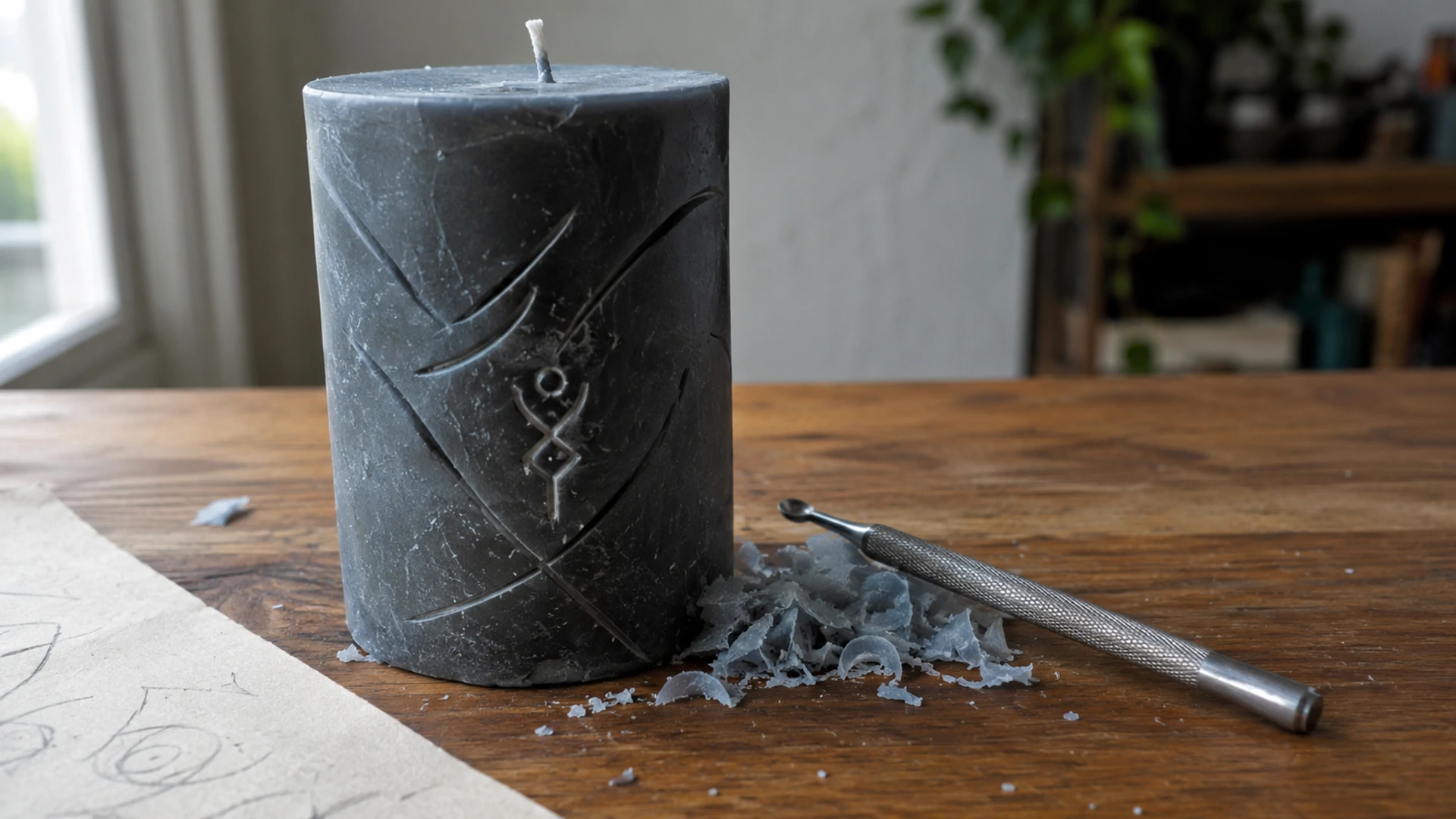
Inscribing candles is one of the most direct and effective ways to deepen your candle magic practice. When you carve a word, name, symbol, or sigil into wax, you are doing more than decoration — you are encoding your intention into the physical body of the candle itself. Every time the flame touches that carved surface, it reads and releases what you put there. Inscription turns a generic candle into a precision tool that knows exactly what it is working toward. If you have ever felt like your candle workings lacked focus or personal power, learning to inscribe is the skill that changes that.
What Inscribing Candles Is and Why It Matters
Inscribing a candle means using a pointed tool to carve text, symbols, or imagery directly into the surface of the wax before you light it. The carved marks become part of the candle's identity. As the wax melts and burns, those markings are consumed by the flame, symbolically releasing their meaning into the working. This is not just a symbolic gesture — it is a deliberate act of will that focuses your mind and commits your intention to a physical form.
The core reason inscription works is the same reason all magical tools work: it focuses your will. Carving something into wax requires you to slow down, choose your words or symbols carefully, and physically engrave your intention into matter. That process of deliberate, focused action is itself a magical act. You are not just thinking about what you want — you are writing it into the world in a form that will be consumed and transformed by fire.
Inscription also personalizes your candle in a way that no amount of color selection or oil dressing can fully replicate. A red candle carries the general correspondences of passion, desire, and vitality. But a red candle with a specific person's name, a relevant sigil, and a single keyword carved into it is now a targeted instrument built for one exact purpose. That specificity is power.
What you can inscribe is broad. Common choices include a person's name — your own for self-directed work, or someone else's for workings that involve them. You can carve keywords that capture your intent: words like ABUNDANCE, CLARITY, RELEASE, PROTECT, or HEAL. You can carve dates, planetary symbols, astrological glyphs, runes, or sigils — a sigil being a personalized magical symbol you create to represent a specific desire or outcome. You can carve a short phrase or petition. You can combine multiple elements. There is no single correct formula. The right inscription is the one that most precisely captures what you are working toward.
How to Inscribe Your Candle Step by Step
Before you pick up your carving tool, take a moment to get clear on your goal. This is not optional prep — it is the foundation of the whole working. Sit quietly for a minute or two and let your intention crystallize into something specific. Vague intentions produce vague results. Instead of holding a general sense of wanting things to improve financially, define it: you want a specific opportunity to open, a debt to be resolved, an income stream to grow. The more precisely you know what you want, the more precisely you can encode it.
Once your intention is clear, choose your inscription elements. Decide whether you are working with words, symbols, or a combination. If you are using a sigil, create or select it before you touch the candle. If you are using runes, decide which ones and in what order. If you are carving a name, confirm the exact spelling you want to use. Write everything out on paper first so you have a reference in front of you. You do not want to be making decisions mid-carve with a half-inscribed candle in your hand.
Now choose your tool. The most common option is a dedicated carving implement called a burin or stylus — a pointed metal tool designed for this purpose. A large sewing needle or a toothpick can work well for thin lines and detail work. The tip of a skewer, a nail, or even a sharpened pencil can serve if you are working with softer wax. What matters most is that the tip is fine enough to carve cleanly without gouging or cracking the wax. Keep your tool dedicated to magical work if you can — it becomes part of your practice over time.
With your reference in hand and your tool ready, begin carving. Work slowly and deliberately. This is not a step to rush through. Each stroke is an act of intention. As you carve each letter, symbol, or line, hold the meaning of what you are inscribing firmly in your mind. Feel the purpose of the working as you move through each mark. Some practitioners speak their intention aloud as they carve — a word per stroke, a phrase per symbol. Others work in focused silence. Do what allows you to stay most present and engaged with the work.
Direction matters in inscription. Carving from the base of the candle up toward the wick is traditionally associated with drawing things toward you — attracting abundance, love, opportunity, or healing. Carving from the wick downward toward the base is associated with sending things away — banishing, releasing, or repelling. This is not a rigid rule, but it is a meaningful one, and working with it adds another layer of symbolic alignment to your inscription. If your working is neither clearly attracting nor banishing, top-to-bottom or a circular pattern around the candle both work well.
After inscribing, step back and look at your candle. Read what you have carved. Let it land. This moment of conscious acknowledgment is important — you are seeing the finished encoded object and confirming in your own mind that it is correct. If something feels off, you can gently smooth it and re-carve, or set the candle aside and return fresh. If it feels right, trust that. Your candle is now ready to be dressed with oil and herbs if that is part of your practice, and then charged before the working begins.
What to Avoid When Inscribing Candles
The biggest mistake practitioners make when inscribing candles is working without clarity. If you carve words or symbols while your mind is scattered, distracted, or uncertain about what you actually want, the inscription reflects that confusion. The physical marks may look fine, but they carry the energetic signature of an undecided mind. Always resolve your intention completely before you start carving. If you are not sure what you want, that is a signal to sit with the question longer before moving forward with the working.
Avoid carving too deeply or too aggressively, especially on thinner candles. Deep gouges can crack the wax, weaken the structural integrity of the candle, or create uneven channels that cause the flame to burn erratically. Use consistent, moderate pressure. You want visible, intentional marks — not trenches. If your carving tool is slipping or dragging rather than gliding, the wax may be too cold. Warming the candle slightly in your hands for a minute or leaving it at room temperature longer can make carving much smoother and cleaner.
Do not inscribe contradictory intentions on the same candle. It sounds obvious, but it is easy to do accidentally — carving a name for a love working on one side and a word associated with independence or separation on the other, for example. Every element you inscribe should point in the same direction. If you are uncertain whether a symbol supports your goal or conflicts with it, leave it out. Clarity and coherence in your inscription is more powerful than a candle covered in every relevant symbol you could think of.
Avoid using symbols or scripts you do not actually understand. Runes, planetary glyphs, and sigils are powerful exactly because they carry concentrated symbolic meaning. If you copy a symbol from an image without knowing what it represents, you are introducing an unknown variable into your working. Study what you plan to use before you carve it. If you are drawn to runic inscription, spend time learning the meanings of the individual runes. If you want to use planetary symbols, make sure you understand which planet governs what and whether that aligns with your working. Use what you know, not what looks impressive.
Finally, do not skip the intention-holding step during carving in favor of getting it done quickly. The physical act of carving is not the magic — it is your focused will moving through that act that creates the magic. If you rush through inscription while mentally composing your grocery list, you have carved wax and nothing more. Slow down. Stay present. The few extra minutes it takes to carve with full attention are the minutes that make the working real.
The Historical Roots of Candle Inscription
The practice of inscribing magical objects is ancient, and while candles specifically became widespread in magic much later, the impulse to mark wax, wood, bone, and clay with intention-carrying symbols stretches back thousands of years across many cultures. Understanding where inscription comes from gives the practice more weight and connects your individual work to a long, living tradition of human magical practice.
In ancient Egypt, the use of inscribed wax figures in magical workings is well documented in surviving papyri and archaeological finds. Practitioners would model small figurines from wax and inscribe them with the name of the person the working was intended to affect — for healing, binding, or cursing. The inscription of the name was considered essential: in Egyptian magical thought, the name was the soul-identity of a person, and to write it on a magical object was to establish a direct link between the object and the individual. This understanding of the name as a magical anchor is one that persists across nearly every subsequent tradition of inscription magic.
In the Norse and Germanic traditions, runes were carved into objects as a primary form of magical inscription. Runes were not merely an alphabet — each character carried its own meaning, energy, and domain of influence. Carving a rune into wood, bone, stone, or any other surface was understood as activating that rune's power and directing it toward a specific purpose. Warriors carved runes into weapons for protection and victory. Healers carved them into objects associated with the sick. This tradition of carving as an activating magical act maps directly onto how modern practitioners approach inscribing candles — each carved symbol understood as a key that unlocks a specific energetic quality.
In the hoodoo tradition of the American South — a system of folk magic with roots in African, Native American, and European practices — candle inscription became a central technique from the moment candle magic became widespread in the tradition. Practitioners would carve names, petitions, and commanding phrases directly into candles, often in combination with dressing the candle with condition oils and rolling it in herbs. The written word, whether carved into wax or written on paper and placed beneath the candle, was treated as a living carrier of will. This tradition directly shaped much of modern folk candle magic practice as it is taught and practiced today.
Bringing It All Together
Inscribing candles is one of those skills that feels simple on the surface but opens into something genuinely deep the more you work with it. You have learned that inscription works because it forces precision — it demands that you know your intention clearly enough to commit it to physical form. You have learned how to carve with direction, intention, and coherence, and how to avoid the common mistakes that dilute a working before the candle even lights.
You have also seen that this practice is not a modern invention. From Egyptian wax figures to Norse runic carving to the candle magic of hoodoo, human beings have always understood that marking an object with intention-carrying symbols is a way of anchoring will into matter. When you inscribe a candle, you are participating in that tradition — and you are doing it with the full clarity and awareness that makes it effective.
Inscription is one part of a complete candle preparation practice. If you want the full picture — including how to cleanse, dress, and charge your candles before a working — the complete walkthrough is waiting for you in the full guide to preparing candles for magic. And if you are still working out which candle color best serves your current intention, the complete guide to candle color meanings will help you choose with confidence. Every layer you add to your candle working — color, inscription, dressing, charge — is another act of will. Build it deliberately, and your practice will show it.