Candle Color Magic: The Complete Guide to Every Color's Meaning and Use
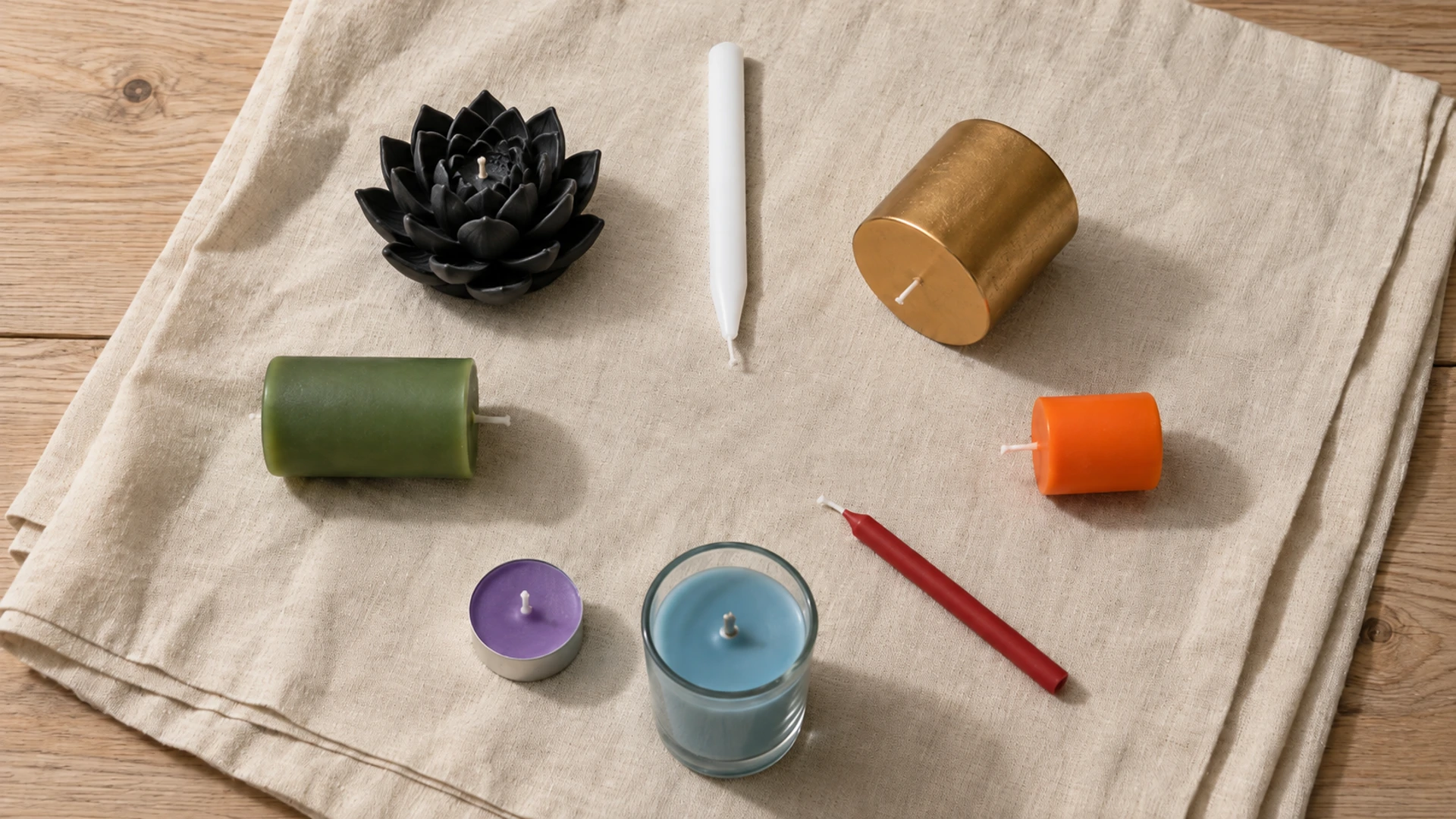
Color in candle magic is not decoration. Each color carries a defined set of correspondences — planetary rulers, elemental alignments, specific intentions — and choosing the right one sharpens the focus of your working from the moment you light it.
Why Color Matters in Candle Magic
Fire already does something specific to the mind. A lit flame draws the eye, quiets distraction, and creates a natural focal point for will and intention. Color adds a second layer of signal on top of that focus — one your subconscious reads instantly, before you've formed a single conscious thought. A red flame reads as action and force. A silver flame reads as receptivity and reflection. That read happens fast, and it matters because it sets the emotional and symbolic register of the entire working.
This isn't a modern invention. Ancient Egyptian ritual used green — the color of Osiris, of the Nile's fertile banks, of life restored — in workings tied to abundance, healing, and resurrection. European folk magic traditions relied heavily on black candles for protection and banishment, treating the color's capacity to absorb as a literal magical virtue. In Hoodoo and rootwork, the candle color grammar is especially precise: specific shades are matched to specific outcomes in a way that leaves little room for improvisation, because practitioners understood that the color is part of the working's language, not a visual preference.
Think of color correspondences as a shared symbolic language — one that's been refined across cultures and centuries. You don't have to follow every traditional assignment rigidly. Over time, your own associations will develop and matter. But starting from the established system gives you a functional framework immediately, and it means your tools are already doing part of the work before you add anything else.
The Full Spectrum: Every Candle Color and What It Means
Here is every color used in candle magic, with its core meaning, best-fit intentions, and one key correspondence to anchor it.
- White — The universal candle. White governs purification, spiritual clarity, truth, and new beginnings under the Moon, and it substitutes for any other color when you're working without the right shade on hand. Pair it with clear quartz or selenite and frankincense for cleansing work or any altar setting where purity of intention matters most.
- Black — Saturn's candle. Black absorbs, banishes, and protects. It's the right color for releasing what no longer serves, cutting cords, binding harmful influences, and shadow work. Black tourmaline or obsidian beside it strengthens the working; patchouli or rue as a dressing oil deepens its capacity to hold and neutralize.
- Grey — The color of neutralization and concealment. Grey sits between black and white intentionally — it's used to stall situations, break stalemates, and shield your actions from outside attention. Burn it on a Saturday with mugwort or star anise for psychic work or when you need to move without being seen.
- Red — Mars rules here. Red carries passion, courage, physical strength, sexual desire, and forceful protection. This is your candle for workings where you need to act boldly or push through fear. Dragon's blood resin or cinnamon as a dressing makes the working hit harder; carnelian or red jasper alongside it amplifies the Mars current.
- Orange — Sun and Mercury meet in orange, making it the color of attraction, opportunity, and creative confidence. It's especially effective for drawing new circumstances toward you — job opportunities, creative breakthroughs, social openings. Sunstone or tiger's eye works well beside it; bergamot or sweet orange oil as a dressing fits Sunday or Wednesday.
- Yellow — Mental clarity, communication, and success under the Sun and Mercury. Yellow is the color for spells involving study, exams, writing, persuasion, and self-confidence of the intellectual kind. Citrine or yellow calcite on the altar focuses the solar energy; lemon or bergamot as a dressing sharpens the Mercury edge.
- Green — Venus governs green, and green governs prosperity, abundance, healing, and growth. It's the go-to for money workings, fertility, and physical recovery. Pair it with malachite or green aventurine; dress it with basil and patchouli for wealth, or lavender and chamomile when the working is about healing the body.
- Blue — Jupiter and the Moon share blue, with shade doing real work here: light blue governs gentle healing and calm communication, royal blue carries wisdom and authority, and dark navy reaches into the subconscious and dream states. Lapis lazuli or blue lace agate pairs well depending on the shade; chamomile or lavender as a dressing softens the working toward peace.
- Indigo — The color of the third eye and inner truth. Indigo governs psychic vision, deep meditation, and the kind of spiritual authority that comes from genuine inner knowing rather than performance. Burn it under the full or waning moon with sodalite or fluorite on the altar; mugwort or frankincense as a dressing activates its visionary depth.
- Purple — Jupiter's wisdom color. Purple is for psychic development, divination, spiritual authority, ancestral connection, and accessing higher knowledge. It belongs on a Thursday altar or any working where you want to strengthen your relationship with your own intuition and inner guidance. Amethyst is its natural companion stone; frankincense or cedarwood as a dressing fits the register.
- Magenta — The color of rapid, high-voltage change. Magenta has no fixed classical planetary home, but in practice it draws on both Mars's drive and the transformative current often associated with Pluto — making it the right candle when you need things to shift fast, when you're commanding a new direction, or when you're working on self-mastery at a deep level. Rhodonite or sugilite beside it; cinnamon or dragon's blood as a dressing.
- Pink — Venus's softer register. Where red carries desire and force, pink governs romantic love, self-love, emotional healing, compassion, and reconciliation. It's the color for bringing warmth back into relationships or into your own relationship with yourself. Burn it on a Friday with rose quartz; rose, jasmine, or hibiscus as a dressing deepens its Venus resonance.
- Brown — Earth and Saturn together make brown the candle of grounding, stability, material manifestation, and ancestral connection. It's less commonly used but genuinely powerful for workings tied to physical security, property, animal magic, and the long, slow building of lasting things. Smoky quartz or tiger's eye pairs well; patchouli or vetiver as a dressing anchors the working to the earth.
- Gold — The Sun at full power. Gold governs abundance, success, confidence, and personal authority — the kind that radiates outward and changes how others perceive you. Burn it at solar noon on a Sunday with citrine or pyrite on the altar; frankincense or bergamot as a dressing pulls the working into full solar alignment.
- Silver — The Moon in its reflective aspect. Silver governs intuition, dream work, psychic development, emotional clarity, and mirror-shield protection — the kind that turns harmful energy back toward its source. Burn it on a Monday or under a full moon with moonstone or selenite; jasmine or mugwort as a dressing fits lunar work precisely.
- Rainbow — Jupiter through the full spectrum. Rainbow candles carry wholeness, divine protection, joy, and the kind of manifestation that addresses all areas of life at once rather than targeting one. They're useful for alignment workings, celebrations, and any time you want to invoke the full range of what's possible. Labradorite or rainbow moonstone beside it; frankincense with orange or bergamot as a dressing brings the working into full expansion.
Combining Colors and Reading Beyond the List
Most real workings use more than one candle. Layering colors lets you hold multiple intentions simultaneously or build out a more specific energetic signature than any single color can carry on its own. The pairing conventions that have developed across traditions aren't arbitrary — they reflect how practitioners found the currents working together in practice.
A few combinations worth knowing by name: Green and gold together target solar abundance — opportunity-driven wealth that comes through action and visibility, which is distinct from green alone, where the Venusian current favors steady, earth-based accumulation. Black followed by magenta is a classic release-then-redirect sequence — black absorbs and removes what's blocking you, and magenta commands the new direction once the space is clear. Purple and white together clarify and protect spiritual work; the white purifies the field while the purple amplifies your access to higher knowledge. Silver on the left and gold on the right creates an altar polarity that honors the full lunar-solar current — receptive and active, drawing in and radiating out.
The list of traditional pairings is a starting point, not a ceiling. As your practice develops, you'll find certain combinations that work specifically for you — colors you reach for together because the results have proven it out over time. That personal correspondence layer is real and worth tracking in a journal. Trust the established system while you're building, and trust your own data once you have it.
Building a Real Candle Magic Practice
The most effective thing you can do right now is pick one color that maps onto something you're genuinely moving through — not a theoretical intention, but something alive in your life today. If you're trying to shift your financial situation, light a green candle. If you're rebuilding confidence after something knocked you flat, orange or yellow — and you can find a full preparation guide for exactly that in the guide to preparing candles for confidence magic. If you need to release a relationship or situation that's draining you, black. Sit with the flame for ten minutes with your intention clearly held in mind, and notice what shifts — not just in the working but in how you're thinking and feeling about the situation in the hours after. That noticing is where your practice actually develops.
You don't need a full altar setup or years of study to start getting results. What you need is a clear intention, the right color, and the focused will to direct toward it. Start there. Complexity comes later and earns its place through practice, not through acquiring it upfront.
Layering In Format and Preparation
Once you've chosen your color, two more decisions shape how the working actually runs. The first is format: a chime candle burns in under two hours and suits a single-session working, while a pillar or seven-day candle can hold a sustained intention across days or weeks. The complete guide to candle types for magic breaks down every format — taper, votive, tealight, pillar, jar, seven-day, figural — by burn time, containment style, and what kind of working each format genuinely serves best.
The second decision is how you prepare the candle before lighting it. Dressing it with an oil matched to your intention, carving symbols or words into the wax, and charging it with directed will before the flame goes anywhere near it — these steps transform a colored candle into a focused magical tool. Everything you need to know about those techniques lives in the guide to how to prepare candles for magic, which covers dressing, inscribing, and charging in full. Neither format nor preparation replaces the foundational work of choosing the right color — but both amplify it considerably once that foundation is in place.
You already know which color calls to you. Light it, hold your intention, and see what moves.