Votive Candle Magic: Keeping a Devotional Flame on the Altar
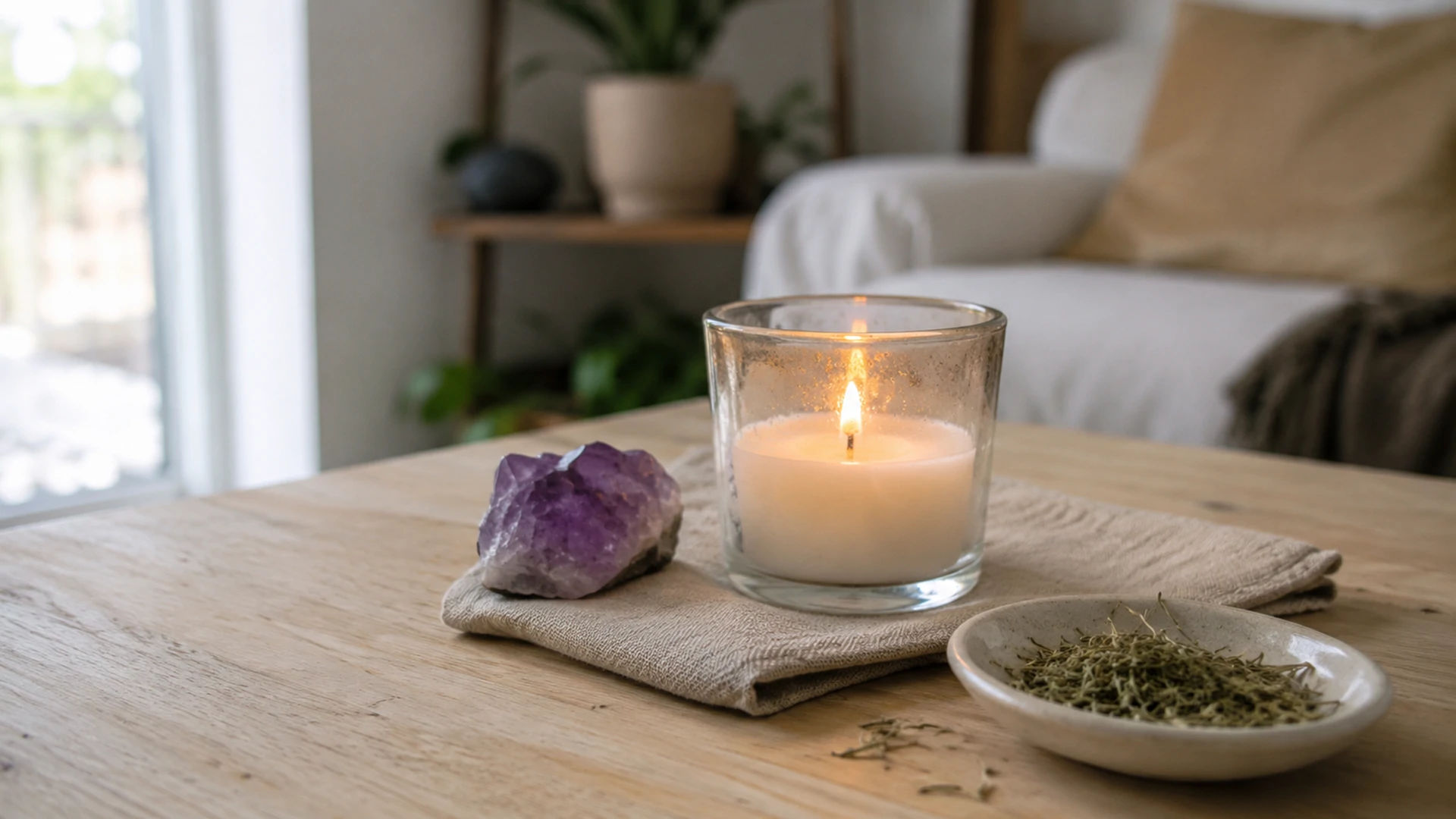
If you've ever kept a candle burning on an altar for a deity, ancestor, or spirit — or if you've wanted to — votive candle magic is exactly what you're looking for. The word "votive" literally means "offered in fulfillment of a vow," and that etymology is not incidental. These small, purpose-built candles have been used in devotional contexts across Catholic tradition, folk Catholicism, Hoodoo, and modern Wiccan practice for generations. They are not a generic substitute for another candle format. They are, historically and by design, devotional instruments — and when you understand why, the way you work with them changes completely.
Why Votive Candles Suit Devotional and Altar Work
A standard votive candle is roughly two inches tall and one and a half inches wide. It's designed to be burned inside a small glass or metal holder, which serves a specific functional purpose: as the wax melts, it pools inside the vessel rather than dripping freely. This contained, slow burn is what makes votives so well-suited to altar and devotional work — the candle can sustain itself across hours of unattended presence, holding your intention steady without constant tending.
A typical votive burns for 10 to 15 hours. That's long enough to carry intent through an entire day, an overnight vigil, or a multi-session ritual cycle — and short enough that it finishes cleanly without requiring days of management. For devotional work, where the act of keeping a flame alive is itself the offering, this burn window is almost perfectly sized. You light it in the morning as part of a daily altar practice. It sustains itself. You return to it throughout the day. It finishes cleanly. That rhythm is not incidental to the magic — it is the magic.
Historically, votive candles in folk and Catholic tradition were lit before images of saints, the Virgin Mary, and other holy figures as a material pledge — proof of prayer, made visible in flame. Hoodoo practitioners adopted and adapted this practice, burning fixed candles in glass holders on altar setups dedicated to specific spirits, ancestors, or conditions. The modern Wiccan and pagan traditions drew on both of these lineages. In every case, the key quality is the same: a votive candle is meant to be left burning as an ongoing act of devotion, not watched over as a single focused operation. Its burn duration matches the devotional rhythm of a full day — present enough to carry the working, contained enough not to demand your constant attention.
The vessel also matters symbolically. When you place a votive in a holder — especially a glass one — you are creating a contained sacred space within your altar. The flame is held, protected, surrounded. For devotional magic, that containment mirrors the relationship you're building: you are holding space for something larger than yourself. The vessel is not just practical; it shapes and holds the working the way intention shapes and holds a prayer. Choose your holder with the same care you'd bring to any ritual tool.
Preparing Your Votive Candle
Color is your first decision, and for devotional and altar work, your choice should map directly to what — or who — you're honoring. White is the universally appropriate choice when you're unsure, or when you want to dedicate the flame to a spirit, deity, or ancestor without placing a particular condition on the offering. White carries associations with purity, spiritual clarity, and openness to divine contact. If you're working with a specific deity or spirit, color becomes more nuanced — purple and indigo for spiritual connection and psychic awareness, gold for solar deities and divine abundance, blue for peace and communication with guides.
For a general devotional setup: white, gold, or purple are your strongest choices. If your altar honors a specific tradition's deity, research their associated colors — that research is itself a devotional act. You can find detailed correspondences in the complete candle color guide to help you match your color to your working with precision.
Dressing and inscribing a votive is slightly more limited than working with a larger format, and it's worth being honest about that. The surface area of a votive is small. You can carve a single word, symbol, sigil, or deity name into the top of the wax or lightly down one side — but there's no room for lengthy inscriptions. Keep it minimal and precise. One symbol carries more intention than three symbols crammed together. If you want to work with a more elaborate inscription, consider that the practice of inscribing is really about committing your will to a physical form — even a single carved rune or deity initial does that fully.
Dressing with oil is very workable on a votive. Apply a small amount of oil appropriate to your intent — frankincense or myrrh for spiritual and devotional work, frankincense in particular has been used in sacred and temple contexts across virtually every major ancient civilization. Rub the oil from the top of the candle downward, pulling energy toward yourself and your altar if you're petitioning or inviting, or from bottom upward if you're sending an offering outward. A full breakdown of dressing technique and directional symbolism is in the candle dressing guide. For votives, use a light touch — too much oil can create an uneven burn or cause the flame to flare in the holder.
Timing strengthens your working, though it's not a requirement. For devotional work, the new moon is a natural starting point — it's a moment of beginning, of reaching out and establishing a new relationship or renewed practice. The full moon amplifies offerings and gratitude. If you're working with a solar deity or the theme of illumination, midday on a Sunday carries strong solar resonance. For spirit and ancestor work, dusk on a Saturday — associated with Saturn and the liminal boundary between worlds — is traditionally potent. Daily altar practice can begin on any day that feels sacred to you personally; consistency matters more than perfect astrological timing.
One specific safety note worth mentioning for votives: because they're designed for unattended burning, it's easy to set one going and forget it entirely. The vessel will get very hot — glass holders especially retain heat. Make sure your votive holder sits on a heat-safe surface, away from anything flammable, and that it's stable enough not to tip. If you're burning the candle overnight, check that the holder has enough clearance above it. Votives are safe for unattended burning by design, but your holder setup matters.
Lighting and Working with Your Votive Candle
Before you light the candle, take a moment to arrive fully in the space. Devotional work isn't something you rush into between tasks. You're opening a line of communication — with a deity, an ancestor, a guiding spirit, or the deeper dimensions of your own will. That requires you to be actually present. Set your phone down. Take a few slow breaths. Orient yourself to your altar and to what you're there to do.
When you're ready, hold the unlit candle briefly between both hands. Feel the wax warm slightly under your palms. This is the moment you're loading the candle with your specific intent — not just a vague hope, but a clear, felt statement of purpose. You might speak this aloud or hold it firmly in your mind. If you're dedicating the flame to a deity or spirit, name them directly. Something as simple as "This flame is offered to [name], in devotion and in gratitude" is completely sufficient. The clarity of your intent matters far more than the elegance of your words.
Light the candle from a match rather than a lighter if possible — the small ritual of striking a match adds a moment of intentional pause before the flame appears. As you touch the match to the wick, feel the shift: the working has begun. The flame is now the active element of your altar. For the first few minutes, stay present with it. Watch how the flame establishes itself, how the wax begins to soften around the wick. This initial observation isn't just practical — it's your opportunity to deepen your focus and attune to the energy you're working with.
Votives are designed for sustained, ambient presence rather than focused short-duration ritual. You don't need to sit in front of it the entire time. What you should do is check in with it periodically throughout the burn — especially if this is a daily practice. Each time you pass your altar, acknowledge the flame. A brief mental salutation, a whispered word, a moment of eye contact with the candle — these micro-devotions are the substance of altar work. The candle holds the space; you feed it with your attention.
If you have specific prayers, affirmations, or invocations that belong to this working, say them at your most intentional moments — when you first light the candle, when you return to the altar after time away, and when you're preparing to let the candle finish its burn. You can pair the candle with complementary altar elements: a small dish of herbs like rosemary for remembrance and sacred clarity, a crystal relevant to your working, or an image of whoever you're honoring. Each element you add deepens the altar's symbolic coherence and, in turn, sharpens your own focus every time you engage with it.
Let the candle burn continuously if you can — extinguishing and relighting a votive isn't wrong, but an unbroken burn is traditionally considered the more complete devotional gesture. If you must extinguish it, use a candle snuffer rather than blowing it out. Breath carries distraction and emotional turbulence; a snuffer closes the flame cleanly, preserving the working's integrity until you return to it. When you relight, restate your intent briefly to re-establish the connection.
Reading the Burn and Closing the Working
Once your votive has burned down, what it leaves behind is worth reading. Candle divination — interpreting the physical results of a burn — is a longstanding folk practice, and votive candles produce particularly readable results because the wax pools inside the holder rather than dripping freely. That pooled wax, the pattern of any soot in the glass, and the behavior of the flame throughout the burn all carry information if you're willing to look.
A clean, even burn with a steady flame throughout is the most positive sign — it indicates your working was received clearly, your energy was focused, and the line of communication with whatever you were honoring was open and unobstructed. A flame that burns tall and bright, especially at moments of prayer or invocation, is often read as a sign of strong spiritual presence and receptive energy. If your flame flickered dramatically at a specific moment, recall what you were thinking or saying then — that moment may carry significance.
Soot on the inside of the glass holder is worth noting. A lightly sooted vessel is normal, especially with dressed candles. Heavy, dark soot concentrated at the top of the glass traditionally suggests resistance or spiritual static at the beginning of the working, while soot concentrated at the bottom can indicate the energy cleared as the working progressed — usually a positive resolution. A completely clear glass after a full burn is considered an excellent sign in folk and Hoodoo candle reading: the working was clean and well-received.
If your votive burns out unexpectedly early, it doesn't necessarily signal a failed working — but it does invite reflection. In traditional candle magic, an early burnout on a devotional candle can mean the offering was received quickly and fully, or it can signal that the working's specific condition has been completed. Conversely, a votive that goes out on its own before fully burning (not from a draft) is traditionally read as a sign that the working needs to be repeated or that something in your intent or approach requires refinement. Relight when you're ready, restate your purpose, and continue.
When the candle has finished burning, take a moment to formally close the working. This doesn't need to be elaborate. Thank the deity, ancestor, or guiding energy you were working with — sincerely, as you'd thank a person who showed up for you. If you've been building a relationship through this practice, acknowledge that the particular session is complete while the relationship itself continues. For devotional work specifically, the close is not an ending — it's a pause before the next session begins.
Dispose of the remaining wax thoughtfully. For devotional and altar work, there's rarely a need to bury or discard wax in the way you might with a petition candle. The remnants of a devotional candle are sacred residue — you can leave small wax remains in the holder as part of the altar's ongoing energy, or remove them and keep them in a small dish on the altar as an accumulated offering. If you prefer to dispose of it entirely, returning it to the earth by burying it on your property is a respectful option. Throwing it in the trash is your call — just do it consciously, with gratitude rather than carelessness.
Every Flame Held in the Vessel Is a Relationship Continued
Devotional practice doesn't accumulate through grand gestures. It accumulates through return — the same altar, the same flame, the same quiet act of showing up. That's what votive candles are built for. Their vessel holds the working steady while you step away and come back. Their burn duration matches the rhythm of a real day. Their history in Catholic, folk, and Hoodoo traditions has given them a weight of devotional meaning that you draw on every time you set one in a holder and strike a match.
The real power here, as with all candle magic, is your will. The votive candle is a focus — it externalizes your intent, makes it visible, and gives it a duration and a physical presence in your space. Your sustained attention, your prayers, your invocations, your daily check-ins at the altar — those are what animate the working. The candle gives your will a form to inhabit while the work unfolds.
Start simply if you're new to altar practice. One candle, one clear intention, one deity or spiritual focus if you have one. Light it. Stay with it for the first few minutes. Return to it throughout the day. Let it finish. Read what it leaves behind. Then light another. Devotional practice builds through repetition — each candle you burn deepens your familiarity with the process, sharpens your ability to focus and sustain intent, and strengthens the relationship you're cultivating. You don't need to have everything figured out before you begin. You just need to begin.
If you want to explore the full range of candle formats and understand exactly where votives sit within the broader landscape of magical candlework, the Candle Types for Magic: Complete Guide is the place to go next. Every format has its own strengths and its own best use cases — knowing the full toolkit makes every working you do more intentional and more powerful.