Lemon Tea Ceremony for Luck: Clearing the Static Before Fortune Arrives
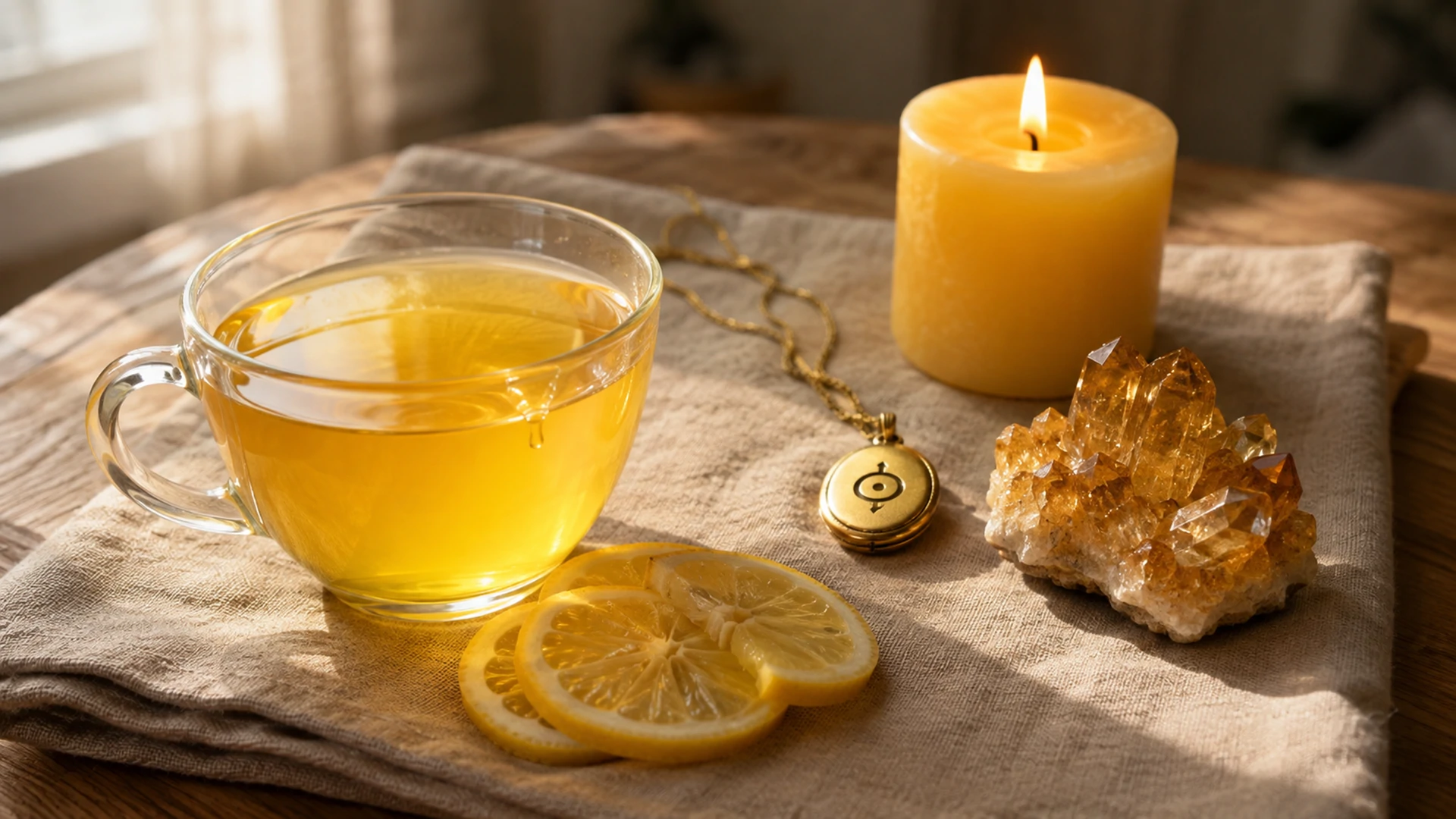
A spiritual tea ceremony is one of the most intimate forms of magical practice you can build. Unlike burning an herb or carrying it in a charm, drinking it asks you to bring the working inside your own body — to literally internalize the intent. This lemon tea ceremony for luck is designed to do exactly that. It draws on lemon's solar energy, its centuries-long history in luck-drawing magic, and the simple, grounded power of your own focused will. Whether you're preparing for a big opportunity, trying to shift the current of your circumstances, or simply calling in more ease and good fortune, this ceremony gives you a repeatable, meaningful ritual to anchor that intention.
Why Lemon Is Suited to a Luck Tea Ceremony
Lemon's luck correspondence isn't just vibes — it has concrete magical roots. In planetary magic, lemon is governed by the Sun, and in some traditions by the Moon, but its solar attribution is the stronger and more consistent one across Western folk and ceremonial practice. The Sun rules clarity, vitality, confidence, and — crucially — fortune. Solar energy is expansive. It opens doors, illuminates paths, and draws favorable attention. When you work with lemon in a luck context, you're calling on that expansive solar force to clear the way and attract opportunity.
In folk traditions across the American South, the Caribbean, and parts of Latin America, lemon has long been used in luck-drawing and uncrossing work. Uncrossing — the magical practice of removing obstacles, jinxes, or crossed conditions that block good fortune — is fundamentally linked to luck magic, because sometimes the first step to attracting luck is clearing whatever is blocking it. Lemon's full magical correspondences include cleansing, purification, clarity, and attraction — all of which feed directly into a luck working. It doesn't just draw good things toward you; it clears the static that keeps them away.
Lemon's sensory qualities reinforce this correspondence in a way that matters practically. The sharp, bright scent of lemon activates alertness and mental clarity. That clarity is directly relevant to luck because luck — in magical thinking — is rarely just random chance. It's the intersection of opportunity and readiness. When your mind is clear and your energy is open, you recognize and act on opportunities that might otherwise slip past. The sourness of lemon also has a cutting quality in magical symbolism: it cuts through stagnation, cuts through confusion, and cuts through blockages. This is an herb that clears first and attracts second, which makes it genuinely powerful for luck work.
Drinking lemon as a tea rather than burning it, carrying it, or using it in a floor wash creates a fundamentally different kind of magical relationship. When you drink an herb, you're not placing its energy in your environment — you're absorbing it into your body. You become the vessel of the working. Every sip is a physical act of consent: you are actively choosing to take this intention into yourself, to let it move through you, to make luck not just something you're attracting from outside but something you're embodying from within. For luck work specifically, this matters. You're not just hoping fortune finds you — you're aligning your own energy with the frequency of fortune and stepping into it.
Preparing for Your Lemon Tea Ceremony
Space
Before you brew anything, spend a few minutes on your space. You don't need an elaborate altar, but you do need a surface that feels intentional — cleared of clutter, clean, and dedicated to this moment. A small table, a windowsill with good light, or a corner of your kitchen counter all work perfectly well. What matters is that the space signals to your mind that what's about to happen is different from your ordinary cup of tea. That psychological shift is part of how ritual works: it tells your brain to pay attention.
Timing
Timing strengthens this working meaningfully. The best time to perform a luck tea ceremony with lemon is during a waxing moon — the phase between the new moon and the full moon when lunar energy is building toward fullness. Waxing energy supports attraction, increase, and the drawing-in of new things, which maps perfectly onto luck. Sunday is the ideal day of the week, since Sunday is the day of the Sun, and lemon's solar correspondence is strongest here. You can find the Sun's hour for your location and date using our Sun's hour finder to time your ceremony with even more precision. If you can combine a Sunday morning with a waxing moon, even better. That said, if an opportunity arises on a Tuesday and you need to work for luck right now, do the ceremony. Timing enhances; it doesn't make or break a working. Your intention does that.
Auxiliary Tools
Two auxiliary tools will significantly reinforce your ceremony, and both are worth having on your workspace before you begin.
- A yellow candle: Yellow candle magic sits at the heart of solar workings — the color carries the same bright, expansive quality as lemon itself, and lighting one here creates a visual anchor that keeps your attention trained on clarity and openness throughout the ceremony. The flame does real work: it holds the solar current active in your space while you brew and drink, reinforcing the lemon's own energetic signature rather than introducing a competing frequency.
- Citrine: Citrine is a solar stone in the most literal sense — its warm yellow color comes from iron, and its traditional association with abundance, clarity, and the drawing-in of good fortune makes it a natural partner for lemon's luck-drawing work. Where lemon clears and opens, citrine holds the door open. Place it beside your cup or rest it in your palm while you steep, and let it remind your body that receptivity is an active state, not a passive one.
Safety Note
A brief safety note: lemon tea made from dried lemon peel or fresh lemon slices is generally considered safe for most adults. However, lemon can interact with certain medications, particularly those affected by citrus compounds, and can be an irritant for people with acid reflux or citrus sensitivities. If you're pregnant, nursing, managing a health condition, or taking prescription medication, check with your doctor or a qualified herbalist before adding medicinal quantities of any herb to your routine. This guide is a magical practice, not medical advice.
Brewing Lemon With Intention
Gathering Materials
Begin by gathering what you need: fresh lemon slices, dried lemon peel, or a lemon herbal blend formulated for tea. Fresh lemon is the most direct and potent option for this working — the living quality of fresh fruit carries a vitality that dried preparations sometimes lack. If you're using fresh lemon, plan on two to three thin slices from an organic lemon if possible, since you'll be steeping the peel and all. If you're working with dried peel, one to two teaspoons is a good starting amount. You can also add a small sprig of fresh mint or a pinch of chamomile if you want to soften the tartness while keeping the working centered on lemon.
Lighting the Candle and Setting Intention
Light your candle before you heat your water. This is intentional — you want the flame to be burning and the stone to be in place before the ceremony formally begins. As you light the candle, say aloud or hold clearly in your mind what you're calling in. Be specific. "Luck" as a general concept is a fine intention, but "luck in my job search" or "luck in finding the right opportunity this month" gives your will a sharper edge to work with. Specificity is focus, and focus is power.
Heating the Water
Heat your water to just below a full boil — around 88°C to 93°C (190°F to 200°F), or the point just before a rolling boil when small bubbles are beginning to rise. Boiling water can make lemon peel bitter and mutes some of the brighter volatile compounds you want fully present in this cup. As the water heats, watch it. Don't walk away. Use this time to breathe slowly and hold your intention in mind. The heating of water is the first act of transformation in this ceremony — you are preparing something ordinary to become something charged.
Pouring and Steeping
Pour the hot water over your lemon into your cup or a small teapot. The moment the water meets the lemon, visualize the bright, sharp solar energy of the fruit releasing into the water — picture it as a pulse of gold or warm yellow light spreading through the liquid. This is the core visualization of the ceremony. You're not just making a drink. You're infusing a medium with intention. Let the lemon steep for five to seven minutes. Use that time to sit quietly with your candle, hold your citrine if you like, and keep your mind on what you're drawing in. If your thoughts drift, gently bring them back. Ritual attention is a skill, and this practice builds it.
When the steep is complete, take a moment before you drink. Hold the cup in both hands. Feel the warmth. Smell the bright, cutting scent of the lemon rising in the steam. This is a good moment to speak your intention aloud one more time — a short, clear statement of what you're calling in. Something like: "I open myself to luck and good fortune. I am ready to receive." Keep it simple, keep it present-tense, keep it affirmative. You are not begging for luck. You are claiming alignment with it.
Drinking and Closing the Ceremony
Hold the cup in both hands and drink slowly. Let the sharp, solar brightness of the lemon do its work on your senses — that cutting clarity is part of the ceremony, not just the flavor. The drinking itself is the final and most powerful act of the working: you are taking everything you've charged and built and physically absorbing it into your body. Each sip is an act of will. With every swallow, feel the warmth moving through you, and let yourself genuinely believe — not hope, believe — that you are now carrying the frequency of luck inside you. This is where your confidence as a practitioner matters most. Doubt is the only thing that can dilute this.
Let the ceremony end naturally when the cup is empty, or close to it. Don't rush the last few sips. When you're done, sit quietly for a moment and simply feel. Notice if your energy has shifted even slightly — a sense of lightness, warmth, optimism, or calm readiness. These are signs of a well-held working. Your body knows when a ritual has landed.
To close the ceremony formally, extinguish your candle with intention — snuff it rather than blowing it out if you prefer to keep the energy contained, or let it burn down completely if it's a small chime or tea light. Thank the herb, the flame, the stone, or whatever forces you feel you've worked with. Gratitude is not a superstition — it's a psychological act that reinforces completion and acknowledges that you received something, which in turn strengthens the belief that supports magical practice.
Handle the remaining lemon with care. For a luck-drawing working, you don't want to simply toss it in the trash — that's energetically careless with something you've just charged with intent. Instead, pour any leftover liquid outside onto the earth if you can, or down the drain with the tap running as a form of release. You can compost the spent lemon slices, bury them, or place them in a garden. Returning the herb to the earth is a clean, complete ending for an attraction working. It signals that the ceremony is done, the intention is released, and luck is now free to move toward you.
Journaling after the ceremony is optional but deeply useful if you do this practice regularly. Even a few lines — what you intended, what you noticed while drinking, how you felt afterward — builds a record of your practice over time. Pattern recognition in magical work is one of the most underrated tools a practitioner has. When you can look back and see that your luck workings tend to produce results within a certain window, or that they work best at a particular moon phase, you're using evidence from your own experience to refine your craft.
Let Lemon Keep Working for You
What you've built here is more than a one-time ritual. You've learned that lemon's effectiveness for luck isn't just symbolic — it's rooted in its solar planetary rulership, its documented history in uncrossing and luck-drawing folk traditions, and its sensory sharpness that cuts through stagnation and opens the way for good fortune. You've learned to work with those qualities deliberately, through a ceremony that moves from preparation through embodiment and closes with care.
The real power of this practice is that it's repeatable. You can come back to this ceremony whenever you're stepping into something uncertain, whenever circumstances feel stuck, or whenever you simply want to refresh and reinforce your alignment with good fortune. Luck isn't a finite resource you either have or don't. It's a quality of energy that you can cultivate, strengthen, and return to — and this ceremony is one reliable way to do exactly that.
If you want to keep exploring luck-focused tea work, two other ceremonies are worth knowing. The Vervain Tea Ceremony for Luck works through a different energetic current — vervain is a powerhouse for breaking through obstacles and opening roads, making it especially effective when luck feels actively blocked rather than simply absent. The Vanilla Tea Ceremony for Luck takes a warmer, more magnetic approach, drawing fortune through attraction and sweetness rather than solar clarity — a strong choice when you want to pull in not just opportunity, but the right opportunity. Each herb brings its own character to the same intention, and working with more than one over time gives you a richer, more flexible toolkit. For a broader view of how different herbs serve different intentions within this same ceremonial framework, the Spiritual Tea Ceremonies: A Complete Guide by Intent is the best place to go next. Every cup is an opportunity to practice, and every practice builds the kind of will that makes magic real.