Chamomile Tea Ceremony for Healing: Solar Strength, Gently Applied
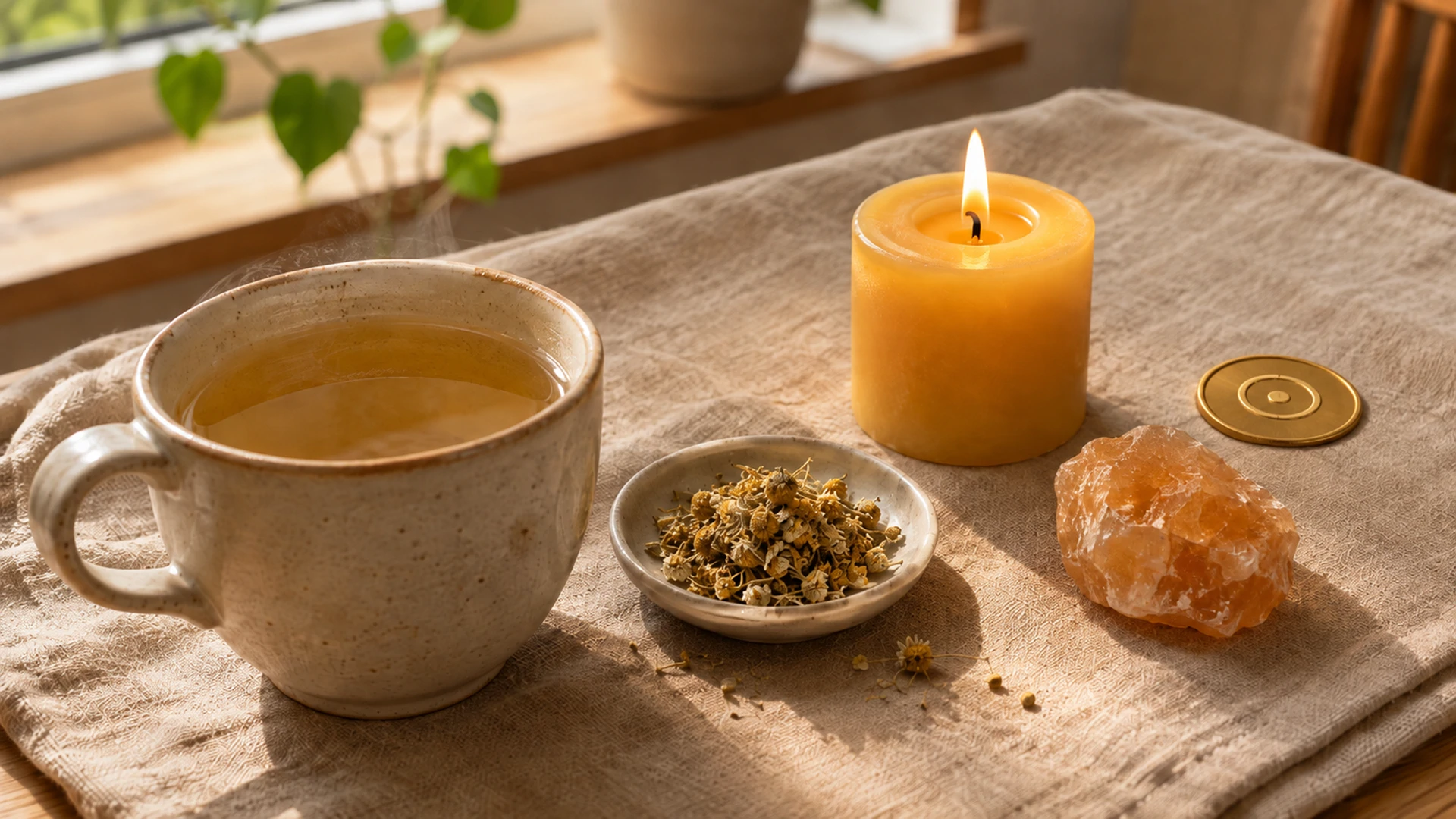
A chamomile tea ceremony for healing is one of the most accessible and genuinely powerful magical practices you can build into your regular routine. Chamomile has earned its place as a healing herb across thousands of years and dozens of cultures — not because it sounds mystical, but because it works on multiple levels at once: physically soothing, aromatically calming, and symbolically aligned with restoration and gentle repair. When you approach brewing it as a ritual rather than a habit, you stop going through the motions and start directing real intention. This guide walks you through the full ceremony, from why chamomile is the right herb for this specific intent to how to close the ritual and carry that healing energy forward.
Why Chamomile Is Suited to a Healing Tea Ceremony
Chamomile's healing correspondence isn't arbitrary. In Western magical tradition, chamomile is a solar herb — ruled by the Sun — which connects it to vitality, restoration, and the regenerative power that the Sun symbolizes in virtually every culture on earth. The Sun governs life force, physical wellbeing, and the kind of deep renewal that comes after illness or exhaustion. Working with a solar herb for healing means you're calling on that same regenerative principle every time you sit down with your cup.
Its elemental correspondence is Water, which governs the emotional body, the flow of energy through the self, and the process of release and restoration. Together, those two correspondences — solar vitality and Water-element flow — make chamomile a dual-action healing herb. It supports both the active rebuilding of strength and the gentler work of releasing what's been depleted. You can read more about chamomile's full magical profile in the chamomile correspondences, uses, and safety guide.
Historically, chamomile has been used in European folk medicine for centuries as a remedy for inflammation, digestive distress, nervous tension, and fever. Ancient Egyptians dedicated it to their sun gods and used it ceremonially. Medieval herbalists prescribed it as a restorative tonic. That centuries-long documented use for healing isn't just tradition for tradition's sake — it reflects accumulated cultural knowledge that this plant genuinely softens pain, eases tension, and supports recovery. That history gives your magical intention a real foundation to stand on.
The sensory experience of chamomile also matters here. Its aroma is warm, apple-sweet, and slightly earthy — a scent that the nervous system responds to almost immediately with something close to relief. The warmth of the tea itself, the gentle bitterness underneath the sweetness, the way it softens the body from the inside out — all of these qualities are themselves part of the magical correspondence. In sympathetic magic, like attracts like. An herb that physically produces the sensation of soothing and restoration is uniquely powerful for rituals that seek exactly those things.
Drinking chamomile as tea, rather than burning it as incense or carrying it in a sachet, is a meaningfully different kind of working. When you ingest the herb, you're not projecting your intention outward — you're drawing healing inward, directly into your body. This is embodied magic in the truest sense. You become the vessel for the working. The herb passes through you, and with it, the intention you've loaded into it. There's no more direct way to work with a healing herb than to make it part of yourself, and tea ceremony gives you a ritual structure that honors how significant that act actually is.
Preparing for Your Chamomile Tea Ceremony
Space
The quality of a tea ceremony begins before you ever put water on to heat. Your space is part of the ritual. You don't need a dedicated altar or anything elaborate — what you need is a space that signals to your mind that something intentional is happening. Clear away clutter from whatever surface you're working at. Silence your phone. If you have a window nearby, open it slightly — fresh air supports the circulation of energy and keeps the space from feeling stagnant. The goal is to create an environment where your attention isn't competing with anything else.
Timing
Timing is worth considering. Healing work benefits from being performed on a Sunday, chamomile's solar day, or during the waxing to full moon phase, when the Moon's energy supports growth, restoration, and drawing things toward you — including health. You can find the Sun's hour for your location and date using our Sun's hour finder to time your ceremony with even more precision. If you're working through emotional healing or grief, the waning moon is also appropriate, as it supports the release of what's harming you. Early morning, when the day is fresh and your mind is clear, is an ideal time of day, though any moment when you have genuine quiet and focus will serve you.
Auxiliary Tools
Two auxiliary tools will meaningfully reinforce your healing intention during the ceremony:
- A yellow candle: Yellow candle magic carries the solar current directly — it amplifies vitality, clarity, and the kind of bright, generative energy that chamomile itself embodies. Burning one during this ceremony isn't just symbolic; it creates a shared energetic register between the flame and the herb, so that when you sit with your cup, everything in the space is oriented toward the same solar, restorative frequency. Light it before you begin and let it burn for the full duration.
- Sunstone: Sunstone is one of the few crystals whose solar correspondence runs deep enough to genuinely complement chamomile's working rather than simply echo it. Where chamomile brings gentle restoration, sunstone adds warmth and a quality of self-replenishment — the sense that vitality is something you generate from within, not something that has to be given back to you. Hold it in your non-dominant hand while you steep and drink, and let it remind your body that the healing you're calling in is already yours to claim.
Safety Note
A brief safety note before you begin: chamomile is well-tolerated by most people, but it does belong to the Asteraceae (daisy) family, which means anyone with ragweed, chrysanthemum, or related plant allergies should proceed with caution and consult a doctor or herbalist before consuming it. Chamomile can also interact with blood-thinning medications, and it is not recommended during pregnancy. If any of these apply to you, get professional guidance first. This article offers magical guidance, not medical advice.
Brewing Chamomile With Intention
Setting Your Intention
Begin by filling your kettle or pot with fresh, cold water. As you do this, hold your healing intention clearly in your mind. This is the moment to get specific — not just "I want to heal" but exactly what you're healing from or toward. Physical recovery? Emotional exhaustion? The slow rebuilding of energy after a difficult season? The more precisely you can name what you're working with, the more focused your intention becomes, and focused intention is what gives this ceremony its power.
Heating the Water
Heat your water to approximately 90°C to 95°C (194°F to 203°F), just under a full boil. Chamomile is a delicate flower, and boiling water can strip away some of its softer aromatic compounds, leaving the brew more bitter than warming. While the water heats, place your chamomile — about one heaped teaspoon of dried flowers per cup, or one tea bag if that's what you have — into your cup or teapot. Take a moment to look at the herb before the water touches it. Chamomile's small, bright flowers carry the sun in miniature. Let that image register intentionally.
Pouring and Speaking Your Intention
When you pour the water over the flowers, do it slowly and deliberately. Watch the steam rise. As you pour, speak your intention aloud or silently — something direct and present-tense, like: "As this herb opens in the water, healing opens in me." You don't need a formal incantation. The words are a vehicle for your focused will, and simple clarity is more powerful than elaborate phrasing you don't fully mean.
Steeping
Steep for five to seven minutes. This is not idle waiting — it's an active part of the ritual. Place your hands around the cup (carefully, if it's very hot) and feel the warmth seeping into your palms. Watch the water change color as the chamomile releases its essence into it. You can close your eyes and visualize the healing energy you've named becoming tangible in the liquid — golden and warm, the color of sunlight through thin clouds. If you have your sunstone nearby, hold it in one hand during the steep. Let your body settle.
When the steep is complete, remove the herb or bag without rushing. If you're using loose flowers, you can strain them into a second cup or leave them in if you don't mind them at the bottom — there's no wrong answer here. What matters is that when you're ready to drink, you're fully present for it.
Drinking and Closing the Ceremony
Before you take the first sip, pause. Hold the cup in both hands, feel its weight and warmth, and take three slow breaths. This pause is a threshold — you're moving from preparation into the working itself. On your exhale, let your shoulders drop and your jaw unclench. You're not fighting for this healing. You're receiving it.
Give the tea your full attention as you drink. Let the golden warmth track down your throat and spread through your chest. Each sip is an act of self-directed intention. As the tea moves through you, let yourself feel it — the warmth spreading from your throat into your chest, your belly softening. This is your body and your will working together. If a thought about the thing you're healing from surfaces, don't push it away. Acknowledge it, and then consciously return your attention to the sensation of warmth and ease. You're surrounding the wound rather than pushing it away.
By the time you reach the final third of your cup, begin letting the ceremony wind down internally. Slow your breathing. Let the candle flame draw your gaze. Feel yourself settling rather than anticipating. The last sip should feel like a completion, not just an ending — a signal to your own mind and body that the working is sealed.
When you've finished, take a few minutes to ground yourself before returning to ordinary activity. Grounding after magical work is important because it helps your nervous system integrate the shift in focus and prevents that slightly floaty, unanchored feeling that can follow deep intentional work. Press your feet flat on the floor. Hold the sunstone in both hands. Take several slow breaths with a long exhale. You can also place both palms flat on a table or the earth if you're outside.
Spend five minutes journaling if you can. Write down what you set your intention toward, anything that surfaced during the ceremony, and how you feel now compared to before you began. Over time, these notes become a record of your practice and your healing — a visible map of how far you've come. There is real magic in that documentation.
For the spent chamomile flowers, return them to the earth if possible — bury them in a garden or scatter them in a green space. This closes the loop between the herb and the natural world it came from, and it's a way of giving back after working with a plant's energy. If outdoor disposal isn't practical, you can compost them or dispose of them with gratitude rather than indifference. How you treat the remnants of a working is part of the working itself.
Let Chamomile and the Sun Carry You Forward
What you've built here is more than a one-time ritual. The chamomile tea ceremony for healing works because it combines real herbal correspondence — chamomile's documented solar affinity, its Water-element flow, and its centuries-long folk use as a restorative — with your own directed will. The herb is not doing the healing for you. You are doing the healing, and the herb is helping your intention become vivid, embodied, and fully felt. That's the real work happening, and it's a powerful one.
Every time you return to this ceremony, you reinforce that pattern. The ritual becomes a container your mind already trusts. The scent of chamomile begins to cue a healing state before you've even taken a sip. The act of making the tea with full attention becomes a practice of self-directed restoration that compounds over time. You don't need a full moon or a perfectly cleared altar every time — you need your intention, your presence, and the herb in your hands.
If this kind of healing tea work resonates with you, there's a lot more territory to explore. The Lemon Balm Tea Ceremony for Healing works the emotional and nervous system angle especially well — lemon balm is deeply calming and carries strong correspondences for soothing anxiety, grief, and mental fatigue. The Calendula Tea Ceremony for Healing is a powerful complement to chamomile's solar energy, bringing its own solar warmth alongside correspondences for physical recovery, resilience, and protection during vulnerability. Each herb opens a slightly different door into the same intention, and working with more than one over time gives you a richer, more layered practice.
If you want to explore the full range of herbs and intentions that can be worked this way, the Spiritual Tea Ceremonies: A Complete Guide by Intent maps out magical tea ceremony practice across different goals and botanicals. Your chamomile ceremony is a starting point, not a ceiling — and every cup you brew with intention is a step further into your own power.