Hyssop Tea Ceremony for Banishment: A Decree, Not a Request
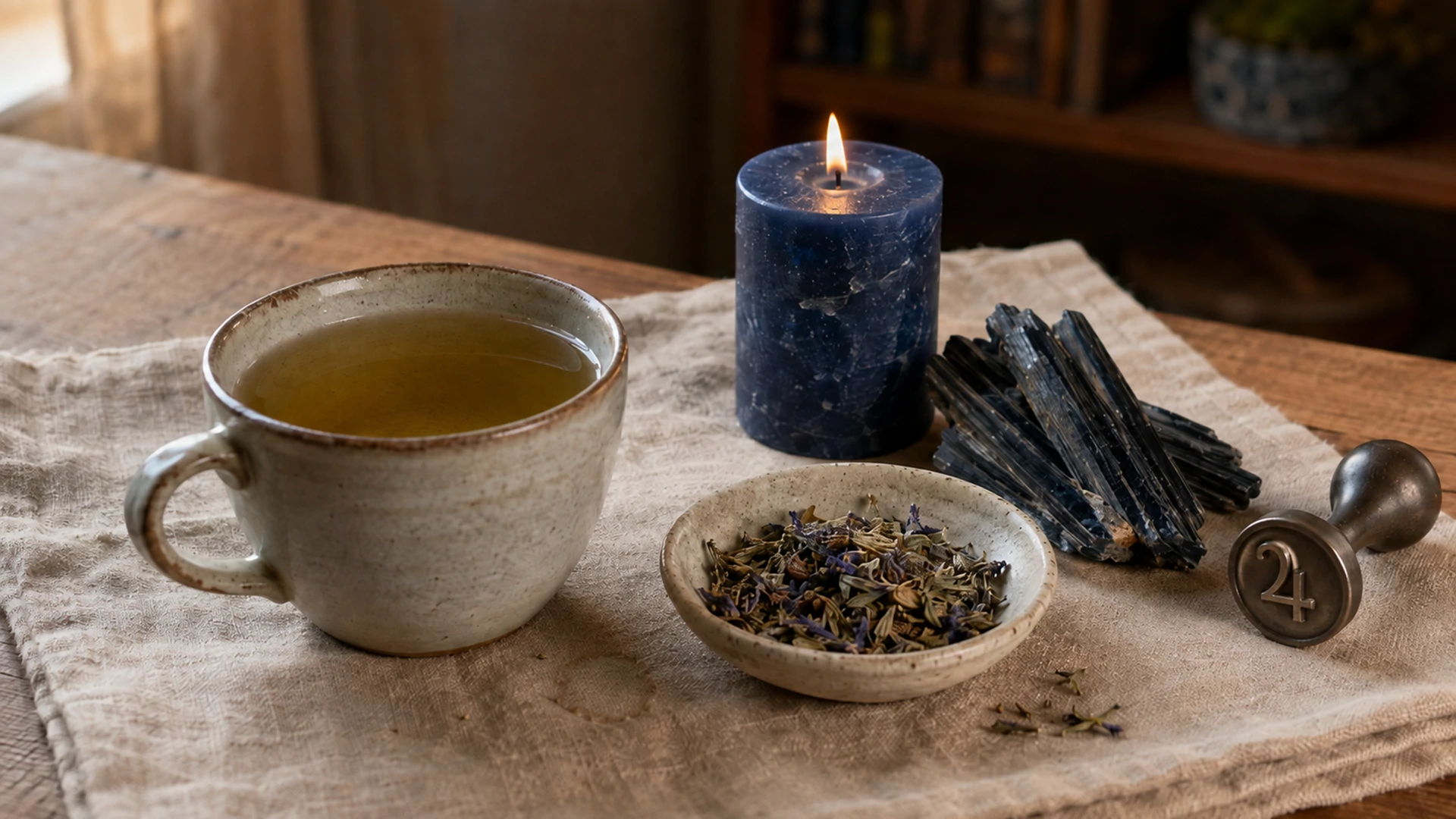
If you need something gone — a harmful pattern, an energy that's been following you, a relationship that's overstayed its welcome, or a fear you've carried far too long — a hyssop tea ceremony for banishment is one of the most direct tools available to you. Hyssop (Hyssopus officinalis) has a centuries-long record in magical practice as a cleansing, purifying, expelling herb. Drinking it as tea takes that tradition inside you, making banishment not just a symbolic act but a fully embodied one. This guide walks you through every step: why hyssop works for this intent, how to prepare your space and tools, how to brew with focused intention, and how to close the ritual once the work is done.
Why Hyssop Is Suited to a Banishment Tea Ceremony
Hyssop's banishment credentials are not vague or assumed. They are grounded in documented history, planetary correspondence, and sensory qualities that have made this herb a go-to across magical traditions for expulsion and purification. Understanding exactly why it works sharpens the way you work with it.
Planetarily, hyssop is associated with Jupiter — and specifically with Jupiter's authority to expand, govern, and decree. In traditional planetary magic, Jupiter doesn't just bless and bestow; it has jurisdiction. Working with a Jupiter herb for banishment means you're not asking something to leave. You're issuing a ruling. Hyssop carries that authoritative, expansive energy and redirects it outward, pushing what's unwanted beyond your boundaries with real force. Its elemental association is Fire, which adds the quality of active combustion — Fire does not negotiate with what it wants gone, it consumes and clears.
Historically, hyssop appears in some of the oldest purification rites we have records of. In biblical tradition, hyssop was the herb used in cleansing rituals for leprosy and for ritual impurity (Leviticus 14), and Psalm 51 — one of the most famous penitential texts — calls directly on hyssop to purify. In medieval European herbalism, hyssop bundles were used to sweep and cleanse sacred and domestic spaces alike. Across these traditions, the consistent theme is removal: hyssop strips away what is unclean, unworthy, or spiritually intrusive. That's not a metaphor borrowed from its pleasant smell. It was the specific, stated function people assigned to it across cultures and centuries.
Sensorially, hyssop reinforces this. The taste is bitter, sharp, and slightly medicinal, with a warm camphorous edge. In folk magic, bitter herbs are consistently associated with expulsion — they are not gentle, accommodating flavors. When you drink hyssop tea, your body registers something active and assertive happening. That quality is not incidental to the magic. It's part of what makes this work. The warmth and bitterness signal to your nervous system and your subconscious that something forceful is taking place, which directly supports the willpower and conviction the banishment requires. For a deeper look at hyssop's full magical profile, see the Hyssop correspondences and uses guide.
Drinking hyssop as tea, rather than burning it, carrying it, or using it in a floor wash, changes the nature of the working in a meaningful way. When you burn an herb, the action is largely atmospheric — the smoke moves through your space and affects the energy of the environment around you. When you carry an herb, it acts as a talisman, a sustained energetic presence in your field. Drinking it is different. The herb enters your body. It moves through you. For banishment specifically, this matters because some of what we're banishing isn't external — it's a fear that lives in your chest, a pattern encoded in your behavior, a grief you can't release. Drinking hyssop tea places the expelling force at the source, inside the body and mind where those things actually live. It makes the banishment physiologically immediate in a way no other method quite replicates.
Preparing for Your Hyssop Tea Ceremony
A hyssop banishment ceremony isn't something you should walk into distracted. The preparation is part of the work — it signals to your mind and will that something intentional is about to happen, and it positions you to enter the brewing and drinking with focus already established.
Space and Setting
Clear your working area before you begin. This doesn't require a formal altar, but it does require a space that feels contained and deliberate. Remove clutter from your immediate area. If the thing you're banishing relates to a specific person or situation, you may want to be in a room that doesn't carry strong associations with them — or intentionally work in that space, if you want to reclaim it. Sit at a table or on the floor with your materials in front of you. Close the door if you can. The point is to create a clear boundary between the ritual space and everything else, which mirrors the boundary you're about to reinforce in your life.
Timing
For banishment, the waning moon is your strongest ally. Work any time from the day after the full moon through to the dark moon, with the dark moon itself being the most potent window. Within the day, work at dusk or after dark — the energy of fading light supports the intent of sending something away. If you're working with planetary hours, Jupiter's hour on a Thursday reinforces the herb's correspondence. You can find Jupiter's hour for your exact location and date using our Jupiter's hour finder. That said, urgency is valid. If you need to banish something now, work now. The timing amplifies; your will does the actual work.
Auxiliary Tools
Two tools genuinely strengthen this ceremony:
- A blue candle: Blue candle magic aligns directly with Jupiter's planetary office — the same rulership that gives hyssop its expelling authority. Burning one here does more than set atmosphere. It actively calls in Jupiter's decree-making energy, reinforcing the legal weight of what you're doing. You're not asking for permission to banish this thing; you're exercising jurisdiction over your own space and self. Place it lit on your working surface before you begin brewing and let it burn throughout the ceremony.
- Black kyanite: Black kyanite is one of the few crystals that combines energetic cutting with immediate clearing — its blade-like formation isn't just visual. Practitioners have long used it to sever cords, break attachments, and slice through the kind of sticky energetic residue that banishment work targets. While the hyssop works from the inside out, black kyanite held in your non-dominant hand or placed beside your cup extends that cutting action into your wider field, addressing the external threads of whatever you're expelling at the same time.
Safety Note
Hyssop is generally safe for most adults when consumed as a tea in standard culinary or herbal amounts. However, it is not recommended during pregnancy, as it may stimulate uterine contractions. It also contains a compound (pinocamphone) that has been linked to seizures at concentrated, essential-oil-strength doses — tea preparations are considered much lower risk, but if you have epilepsy or another seizure disorder, or take anticonvulsant medications, it's worth checking with a doctor first. If you are pregnant, nursing, or managing a health condition, consult a doctor or qualified herbalist before drinking hyssop tea. This is a practical note, not a reason to avoid the practice — just check first if any of those circumstances apply to you.
Brewing Hyssop With Intention
The brewing itself is the ritual. This is not the pre-game warmup before the real thing happens — every step from filling the kettle to lifting the lid on the finished tea is ceremonial. Treat it that way.
Setting Your Intention
Start by filling your kettle or pot with fresh, cold water. As you do this, take a slow breath and bring clearly to mind what you are banishing. Don't be vague about it. Name it — silently or aloud. If it's a person's influence, name the specific dynamic you're expelling, not just the person. If it's a pattern, state it plainly: I am banishing the habit of accepting less than I deserve, or I am expelling the fear that stops me from acting. The sharper your intention at this stage, the more precisely the ceremony will serve you. Hold that named intention as the water heats.
Heating the Water
Use approximately one to two teaspoons of dried hyssop leaf and flower per eight ounces of water. Fresh hyssop can be used — roughly one tablespoon of loosely packed fresh herb per cup. Bring the water to just below a full boil, around 90°C to 95°C (195°F to 200°F). A rolling boil will cook off some of hyssop's volatile oils — the aromatic compounds that carry much of its sensory and energetic force — so pull it just before that point. If you don't have a thermometer, watch for small bubbles rising steadily before the water reaches a full, vigorous roll.
Pouring and Steeping
Place your hyssop in a teapot, infuser, or directly in a heat-safe cup you'll strain from. When you pour the hot water over the herb, do it deliberately. Watch the water meet the herb. Hyssop will immediately begin to release its aromatic compounds — you'll smell that sharp, camphorous, green warmth rising with the steam. Let that scent register fully. It is bitter and assertive and alive, and that is the quality you are working with. Say, either aloud or as a clear internal statement: As this herb releases into this water, so does [what you're banishing] release from me. The specific wording is yours — what matters is that it's direct and present-tense, not a hope for the future but a declaration of what is already in motion.
Steep for eight to twelve minutes. Hyssop needs a longer steep than delicate herbs to develop its full depth of flavor and to fully express its bitter, resinous qualities. While it steeps, keep your attention on the cup. You can watch the water darken — it will shift to a pale amber-gold with a greenish cast. As it steeps, hold the image of what you're banishing in your mind's eye, and visualize it dissolving into that liquid. Not consumed by you, but drawn into a container, captured, ready to be expelled. The hyssop is doing the holding for now. You are about to do the expelling.
Before You Drink
If you're steeping loose leaf, strain it carefully. Take a moment before you drink. Hold the cup in both hands. Feel its warmth against your palms. The tea should smell sharp, herbal, faintly medicinal. That's correct. That's the real thing. Take a breath, state your intention one final time, and begin.
Drinking and Closing the Ceremony
The drinking is the act of banishment. This is where your will and the herb's energy meet inside your body, and where the expulsion actually occurs. Pace yourself through it intentionally.
Don't rush the cup. Take measured sips — slow enough that you register each one, fast enough that the tea stays warm throughout. With each sip, direct your focus inward. Feel the warmth of the liquid moving down through your chest. Hyssop tea has a distinctly warming, slightly expanding quality as it settles — that's the Fire and Jupiter energy activating. Visualize that warmth as a spreading force, moving outward from your core, reaching into every part of you where the thing you're banishing has made a home. In your chest if it's grief or fear. In your shoulders if it's stress from a relationship. In your gut if it's a pattern of behavior. Let the warmth find it.
As the warmth spreads, shift your visualization. See what you've named — that fear, that person's hold, that pattern — loosening. Being lifted. Being moved from inside you toward the surface and then outward. You are not suppressing it; you are ejecting it. There is a difference. Suppression pushes something down and keeps it inside. Banishment pushes it out entirely. Keep that distinction clear in your mind as you drink, because your will is what makes it so. Hyssop creates the current. You are directing where it flows.
When you finish the cup, sit for a few moments without immediately moving. Notice what you feel. Many people feel a lightness in the chest, a slight loosening of tension they didn't realize they were holding. Some feel nothing obvious in the moment — that's fine too. Banishment is not always dramatic. Sometimes it's quiet, like a door gently but firmly closing.
Closing the ritual. When you're ready, extinguish your blue candle — don't blow it out, snuff or cap it, so the energy it's absorbed is sealed inside rather than dispersed back into your space. Dispose of the used hyssop leaves outside your home if possible, away from your front door — in a trash bin on the street, or scattered at the base of a tree. You are not leaving them on your property because the herbs have done their work of holding what you expelled, and that shouldn't stay in your space either. If an outdoor disposal isn't possible, wrap them and put them in your household trash rather than your kitchen compost. The point is to physically send them away from your living space, mirroring the intention of the ceremony.
Ground yourself before you return to your day. Eat something small, press your feet flat on the floor, or step outside for a breath of air. After any banishment work, grounding matters — you've been doing energetically active work, and re-anchoring in your body closes the circuit properly. Take a few minutes to write in your journal: what you banished, the date, what you felt during and after the ceremony. This record serves you practically — it lets you track whether the banishment held over time, and it gives you a reference point for repeating the ceremony if needed.
Hyssop's Ancient Promise: The Space You're Claiming Back
What you've done in this ceremony is use one of the oldest, most consistently documented purification herbs in Western magical history — and you used it in the most direct way available, by taking it inside yourself. Hyssop's Jupiter correspondence gave your banishment authority. Its Fire element gave it force. Its bitterness and warmth worked on your nervous system and subconscious mind to signal, physically and unmistakably, that a real expulsion was taking place. That combination of planetary authority, elemental energy, historical precedent, and embodied sensation is exactly what makes hyssop such a precise tool for this kind of work.
This is also a repeatable practice. You don't perform a hyssop banishment ceremony once and consider the work closed forever. Life keeps generating things that accumulate — fears, patterns, energies, relationships that drift into harmful territory. A hyssop tea ceremony is something you can return to whenever you feel that accumulation again: seasonally, at the dark moon, or whenever the need is clear. Over time, the ritual itself will deepen. You'll know it in your body before you've finished brewing. That familiarity is a strength, not a diminishment of the ceremony's power. If you want to compare how different herbs approach the same intent, the Yarrow Tea Ceremony for Banishment and the Agrimony Tea Ceremony for Banishment each bring a distinct energetic character to this kind of work — worth exploring once you've built your footing with hyssop.
If you want to explore how this ceremony fits within the broader practice of magical herbalism and intentional tea work, Spiritual Tea Ceremonies: A Complete Guide by Intent covers the full range of intents and herbs in depth. The space you've just claimed back is yours. Hold it well.