Agrimony Tea Ceremony for Banishment: Pulling Out What Has Already Taken Hold
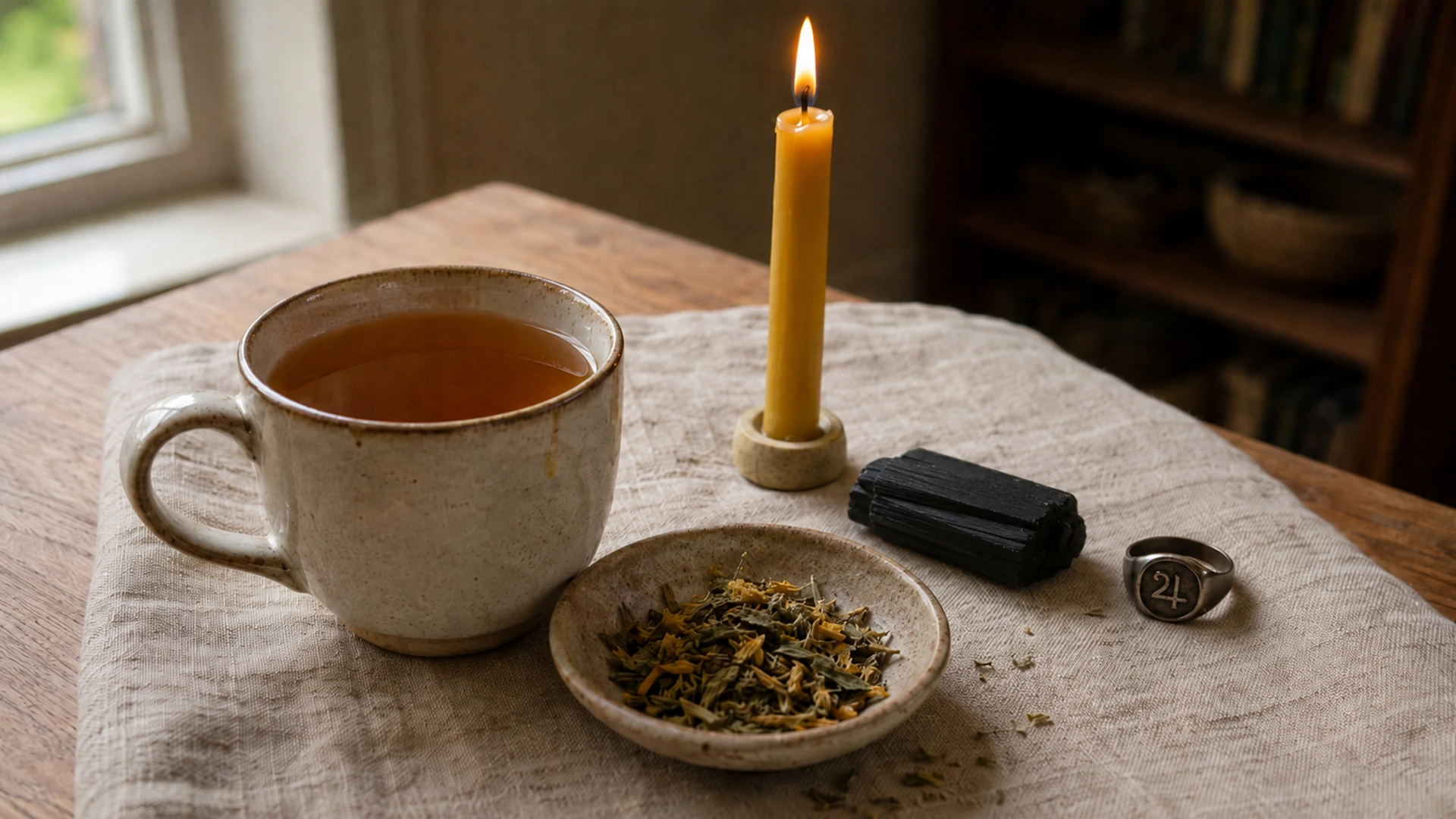
Agrimony is one of those herbs that earns its place in banishment work through a real track record, not just symbolic association. It has been used across European folk traditions specifically to drive out unwanted forces — harmful energies, spiritual attachments, and influences that linger where they are not welcome. This article walks you through a complete spiritual tea ceremony for banishment using agrimony: what makes this plant suited to this exact intent, how to prepare your space and tools, how to brew with awareness, and how to close the ceremony in a way that honors the work you've done. This is a practice you can return to whenever something needs to go.
Why Agrimony Is Suited to a Banishment Tea Ceremony
Agrimony's connection to banishment is grounded in both planetary correspondence and a well-documented folk history. The herb is ruled by Jupiter in traditional Western herbalism, but its protective and cleansing applications place it firmly in the territory of Jupiterian authority — the kind of energy that doesn't just shield, but commands. That commanding quality is exactly what banishment requires. You're not asking something to leave. You're declaring that it must. Agrimony carries that authority in its correspondence stack, and that's why it shows up repeatedly in grimoires and folk recipes specifically for expelling rather than simply warding.
In Anglo-Saxon herbal tradition, agrimony was one of the nine sacred herbs used against poison and malevolent forces. The Lacnunga, a collection of Anglo-Saxon medical and magical texts, references agrimony in protective charms aimed at removing harm that has already entered a person or place. That history matters here: agrimony is not primarily a prevention herb. It is a removal herb. It was reaching for unwanted things and pulling them out long before modern practitioners started working with it, and that lineage gives it real weight in this kind of working. For a fuller look at its magical correspondences and uses, see the complete agrimony magic correspondences guide.
There's also something useful in agrimony's sensory profile. Brewed as a tea, it produces a mildly bitter, slightly astringent cup with a faint apricot-honey note underneath. That bitterness is not incidental. Bitter flavors have long been associated in folk medicine and symbolic logic with cleansing and purging — they signal to the body that something is being cleared. In a banishment working, that bitter edge is a feature. Every sip carries a small physical reminder of the intent: this is a clearing. Something is being removed.
Burning agrimony, carrying it, or placing it at thresholds all work — but drinking it as a tea is a fundamentally different kind of magic. When you ingest an herb with intention, the working goes inside you. That matters for banishment specifically, because a lot of what we need to clear is not purely external. Thought patterns, energetic residue, emotional attachments to situations or people that no longer serve you — these live in the body as much as anywhere else. Drinking agrimony tea with clear intent brings the banishment work directly into your system, making it embodied rather than atmospheric. You are not just clearing the space around you. You are clearing yourself.
Preparing for Your Agrimony Tea Ceremony
Space
Before you brew, take time to set your space. This does not need to be elaborate, but it does need to be deliberate. Tidy the physical area where you'll be sitting — clutter is visually and energetically distracting, and you want your attention fully on the work. Turn off notifications. If other people are home, find a window of quiet. Banishment requires focus, and focus requires conditions that support it.
Timing
Timing is worth considering. The waning moon is the traditional choice for banishment work — as the moon decreases, what you want to release decreases with it. If you're working under a waning moon, you're already aligned with a natural energetic current that supports removal and ending. Saturday is the day of Saturn, which governs limitation, endings, and the clearing away of what no longer belongs, making it a strong choice for this ceremony. Agrimony's own day is Thursday, Jupiter's day — you can find Jupiter's hour for your location and date using our Jupiter's hour finder if you want to work with the herb's own planetary current directly, alongside or instead of the general Saturday banishment-timing above. That said, urgency matters more than perfection. If something needs to be banished, do the work when you need to do it.
Auxiliary Tools
Two tools reinforce the intent of this ceremony well:
- A yellow candle: Yellow candle magic carries the energy of Jupiter — the planet that rules agrimony — which means lighting one during this ceremony aligns your flame with the same authority the herb itself draws on. Jupiter governs command and rightful expulsion, the sense that something is being removed because it does not belong, and a yellow candle holds that energy visually throughout the working. Place it lit near your brewing space before you begin, and let it burn for the duration of the ceremony.
- Jet: Jet has one of the oldest documented histories in protective and banishing magic of any stone — it was carried by Anglo-Saxon and Roman practitioners specifically to drive out malevolent forces and cleanse what had already taken hold. That makes it an unusually direct companion to agrimony, which shares the same cultural lineage and the same orientation toward removal rather than prevention. Hold it in your non-dominant hand while you drink, or rest it beside your candle, and let its long history of this exact kind of work do what it has always done.
Safety Note
One practical note before you proceed: agrimony is generally considered safe for most healthy adults when consumed as a tea in normal amounts. However, it may interact with blood-thinning medications, and some sources suggest caution during pregnancy. If you are pregnant, nursing, on any regular medication, or managing a health condition, check with your doctor or a qualified herbalist before drinking agrimony tea. This is not meant to alarm you — it's just worth a quick check.
Brewing Agrimony With Intention
Gathering Materials
You will need about one heaped teaspoon of dried agrimony herb per cup of water. Use a mug or vessel that feels significant to you — not necessarily a dedicated ritual object, just something you've chosen deliberately. Have a strainer or infuser ready. This is not a tea that needs special equipment, but it does need your full attention while you make it.
Heating the Water
Start heating your water. The target temperature is just off a full boil — 90°C to 95°C (195°F to 200°F). While the water heats, use that time purposefully. Don't scroll your phone or drift. Stand near the stove or kettle and bring your mind to what you're banishing. Be specific. Agrimony's work is precise — it moves against what you name and direct it toward. Vague intentions produce vague results. Think about exactly what you want gone: the situation, the energy, the pattern, the presence. Name it clearly in your mind, or say it aloud if that helps you commit to it.
Pouring and Speaking Your Intention
When the water is ready, pour it over the agrimony. You can speak your intention directly over the cup as you pour. Something simple works well: name what you are banishing and state that it is being removed. You don't need formal language. What matters is that you mean it. The steam rising from the cup carries the herb's volatile compounds and, symbolically, the beginning of the clearing. Watch it for a moment. Let that image register.
Steeping
Steep for 10 to 15 minutes. Agrimony is a relatively mild herb and benefits from a longer steep to develop both its flavor and its medicinal-magical potency. While the herb steeps, keep your attention on the intent. You can hold your hands around the mug, feeling the warmth, and visualize the agrimony actively working in the water — drawing out, pulling at, dissolving whatever you've named. See it absorbed into the liquid. See the liquid darkening slightly as it takes on that energy in order to carry it through you and out. This visualization is not decoration. It is how your will acts on the material.
Strain the herb out before drinking. If you're using loose leaf and a strainer, take a moment when you remove the spent agrimony to acknowledge what it has done — it has taken on the charge of your intent. Set the strained leaves aside; you'll deal with them after the ceremony. Don't rush this step. The transition from steeping to drinking is a small ritual threshold, and treating it as one keeps your awareness sharp.
Drinking and Closing the Ceremony
Sit down with the cup in both hands and give it your full attention. That mild bitterness is already doing something — it's the same quality that makes agrimony a clearing herb in the first place, now registering directly on your palate. Beneath it is that faint apricot-honey note, the softer edge of the plant. Take each sip as a deliberate act. With every swallow, return your mind to the same clear intention: what is being removed, and the fact that it is leaving. You are not hoping it leaves. You are not asking. You are enacting its removal, sip by sip, and the agrimony is carrying that work into your body where it can operate from the inside out.
Pay attention to the taste. That mild bitterness is worth sitting with rather than trying to mask with honey or sweetener — at least for this particular ceremony. The bitterness is part of the sensory thread of the working. It signals to your nervous system and your subconscious that something is being cleared. If the taste is too strong for you at any point, small sips are fine, but stay present with the flavor rather than trying to avoid it.
When the cup is finished, take a few slow breaths. You may feel a quiet sense of completion, or you might feel lighter — or you might just feel like you've drunk a cup of tea. All of those are fine. The ceremony does not need to feel dramatic to work. What it needs is your clear intention sustained from beginning to end, and if you've done that, the work is done.
Now close the ceremony deliberately. Snuff your yellow candle rather than blowing it out — blowing can scatter the intention you've been building. Take your jet and place it somewhere it can sit undisturbed for at least 24 hours, away from your usual living space if possible, to continue its work. If you have a grounding practice — bare feet on the floor, a few minutes outside, a glass of water — now is a good time for it. Banishment work moves energy, and grounding helps your system settle after that movement.
Dispose of the spent agrimony leaves in a way that reflects the intent. The most traditional approach is to take them outside and scatter them away from your home, ideally at a crossroads, a moving body of water, or simply far from your front door. The direction of disposal matters symbolically: you're carrying the banished energy away and releasing it at a distance. If you live in an apartment with no immediate outdoor access, you can wrap the leaves in paper and place them in an outdoor bin rather than your household trash. The key is not bringing them back inside.
Journaling after the ceremony is worth doing, even if just a few lines. Write down what you named, what you felt, and anything that struck you during the working. Banishment ceremonies often take more than one session to feel complete, especially if what you're clearing is deep-rooted. Your notes give you a record to return to, and they help you track whether the working is taking hold over time.
When Agrimony Has Done Its Work: Making This Practice Yours
What you've done here is not a one-time cleanse. It's a repeatable practice with clear logic: agrimony's history as a removal herb, its Jupiter correspondence for authority over what stays and what goes, and the embodied nature of drinking it as tea all combine to make this ceremony genuinely suited to banishment in a way that burning or carrying the herb alone isn't. You engaged all of that deliberately, with intention, from the first visualization over the heating water through to the disposal of the spent leaves.
That matters because banishment is rarely a single event. Patterns come back. Influences resurface. Situations that seemed resolved have a way of reasserting themselves. The fact that this ceremony is simple enough to repeat means you can bring it back whenever something starts creeping in again. You don't need a full ritual setup every time — once you've done it once with full intention, you'll find that even a quieter repeat session carries real weight, because your body and mind already know what this tea means and what it does.
Agrimony is not the only herb suited to this kind of work. If you want to explore other banishment tea ceremonies, yarrow brings a sharper, more fiercely protective edge to the same intent, while hyssop works from a purification angle, clearing through cleansing rather than expulsion. Each herb works a little differently, and sometimes the one that fits depends less on the goal and more on the nature of what you're clearing.
If you want to explore the full range of ceremonial tea work by magical goal, the Spiritual Tea Ceremonies: A Complete Guide by Intent maps out what's available so you can find the practice that fits whatever you're working on next.