Hyssop: The Washing Herb That Inherited a Psalm
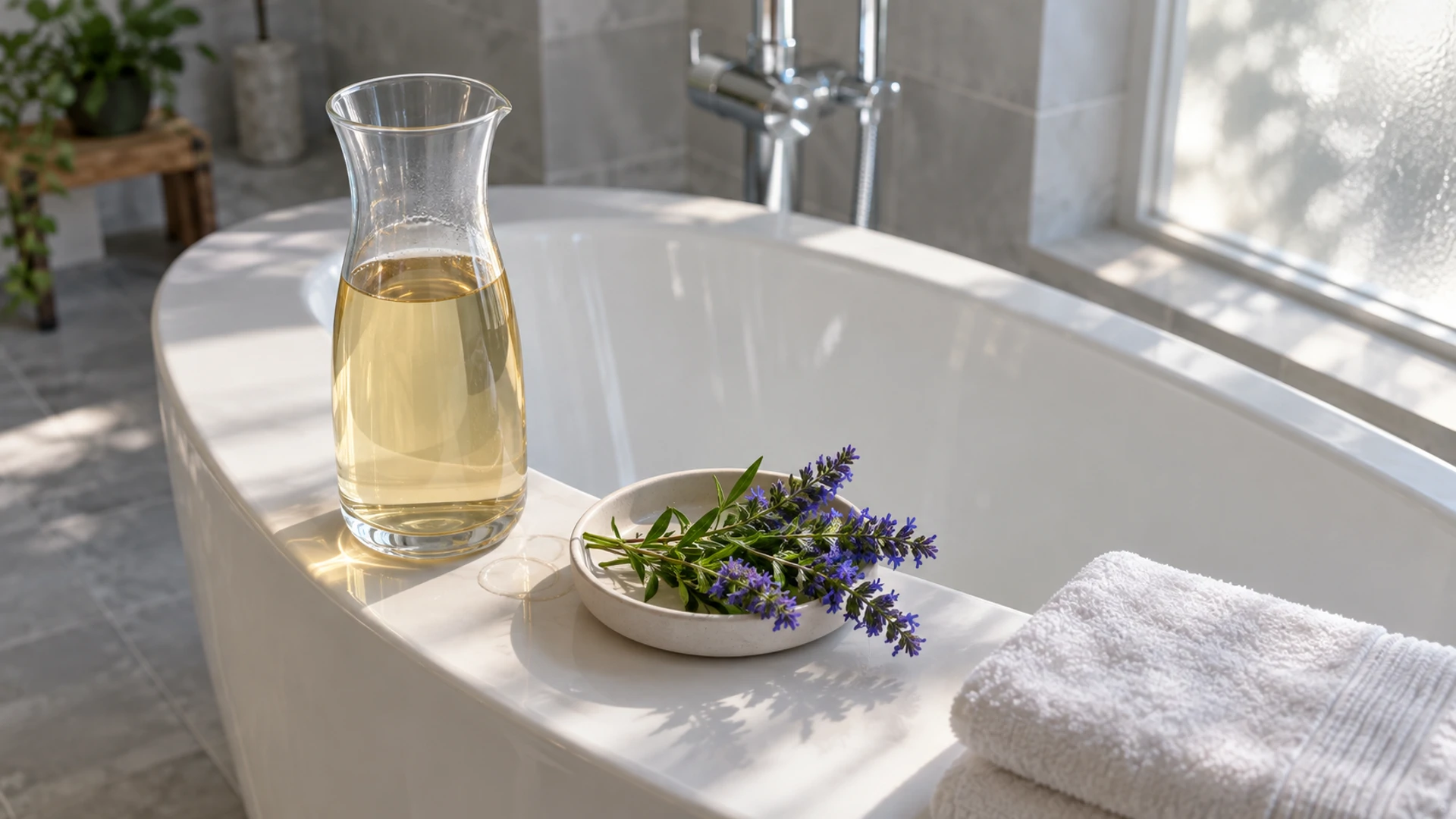
Hyssop is a cleansing herb worked through water — baths and sprinkling washes — rather than smoke, carrying the name that Psalm 51 made a byword for spiritual washing across centuries of liturgical and folk practice.
Clean by Water, Not by Smoke: Hyssop's Place in Cleansing
Most herbs in the cleansing category work through fire. You burn them, and the smoke does the work. White sage is forceful clearing — a strong, total reset of a space's atmosphere. Frankincense consecrates by lifting — it raises a space toward the sacred before ceremonial work, rather than only clearing it. Hyssop does neither of those things. Its method is aspersion: the act of sprinkling water, sometimes from a bundle of the herb itself, to wash a person or place clean. That is a liturgical register, and it comes directly from the psalm.
What makes hyssop distinct in its category is the direction of its action. Smoke fills a space; water touches it. When you sprinkle hyssop water across a threshold or pour it over your own body, you are enacting something specific — the idea that impurity can be rinsed away, that what is crossed or heavy can be washed off and leave with the water. That is a different claim from fumigation, and it calls for a different set of practices. Hyssop is not interchangeable with smoke herbs. It is the answer to a different kind of question: not "what do I burn to clear a space" but "what do I wash in to come clean."
Botanically, hyssop is Hyssopus officinalis, a member of the mint family (Lamiaceae). The parts used are the flowering tops and leaves. Its correspondences are Jupiter (both Culpeper and Cunningham assign it there), fire (Cunningham), and Thursday.
Which Hyssop Was in the Psalm?
Psalm 51:7 — "Purge me with hyssop, and I shall be clean" — is one of the most quoted lines in the history of purification. The Catholic Asperges rite, in which a priest sprinkles the congregation with holy water before Mass, opens with this psalm. The word "hyssop" became so bound up with the idea of being washed spiritually clean that it traveled through centuries of Christian practice carrying that meaning. The European plant, Hyssopus officinalis, inherited that reputation when it received the name.
The question worth knowing about is what the psalm's original Hebrew word, ezov, actually referred to. Most scholars believe it was almost certainly not the European hyssop sold today. The plant most often identified is Syrian oregano, Origanum syriacum — the za'atar herb of the Levant, a low-growing, strongly aromatic plant whose bunched branches would have worked well as a natural aspergillum for sprinkling. The name passed from Hebrew into Greek, then into Latin, and at each translation it attached itself more firmly to the European plant that happened to carry the closest available name. The European Hyssopus officinalis then absorbed not only the name but the full weight of the psalm's meaning. It is a piece of botanical history that shows how powerfully names shape a plant's magical identity — the herb did not change, but the reputation it carried grew enormously through the accident of translation.
In Hoodoo practice, hyssop baths are used specifically to wash away guilt and crossed conditions, often while reciting Psalm 51. The Hoodoo application is deliberate and direct: you pour the herb's infusion over yourself, you speak the words, and the combination of water, plant, and intention does the work of uncrossing. Two other plants share or borrow the hyssop name and are completely unrelated. Anise hyssop (Agastache) is a different genus with a very different scent and no connection to the liturgical tradition. Vervain occasionally turns up in older texts under the folk name "wild hyssop," which has nothing to do with Hyssopus officinalis — it is an entirely separate plant with its own tradition.
Buying the Right Hyssop, and a Caution About the Oil
When you are sourcing hyssop, look for Hyssopus officinalis on the label. Anise hyssop (Agastache foeniculum) is sold under similar common names in herb shops and at farmers' markets, and the two plants look and smell noticeably different — anise hyssop has a stronger, sweeter, licorice-forward scent and belongs to a different genus entirely. For the cleansing practices here, you want the true hyssop: the small, woody-stemmed mint-family herb with narrow leaves and dense spikes of small blue-purple flowers. Dried flowering tops are the easiest form to find, and they work well. To prepare the infusion, steep a small handful of dried herb in just-boiled water for ten to fifteen minutes, then strain and cool completely before use. You are making something closer to a strong tea than a tincture, but it is used externally, not drunk.
The safety note that matters most here is about the essential oil. Hyssop essential oil contains pinocamphone, a compound that is convulsant in sufficient quantity. The oil must never be taken internally, and it should be avoided entirely if you have epilepsy or are pregnant. This is not a minor caution — it is a hard line. The dried herb in normal amounts is generally well tolerated, and the practices on this page all work with a dilute water infusion of the dried plant, which is a different matter from concentrated oil. If you stay with the infusion and keep it external, you are working safely with what the tradition actually used.
Three Ways to Be Washed Clean With Hyssop
The Hyssop Sprinkler
Use this when a space or a person needs cleansing and you want to carry the physical act of sprinkling — the aspersion — through the working rather than lighting anything.
Prepare your hyssop infusion and let it cool to a comfortable temperature. Gather a small bundle of fresh or dried hyssop sprigs — a few stems bound at the base are enough — and dip the bundle into the infusion so the flowering tops absorb the water. Move through the space you are cleansing: doorways, corners, windowsills, or any threshold you want addressed. Flick the bundle with a light wrist motion to send drops of the hyssop water across the surfaces and into the air. Speak plainly as you go — your own words stating what you are washing out and what you are making room for. There is no prescribed formula here; the action carries the intention, and your words give it direction. When you are finished, the bundle can be left to dry and composted, or set aside for another working. Dispose of the remaining infusion by pouring it at a threshold or outdoors.
The Clean-Slate Bath
Use this when you are carrying something that feels stuck to you — guilt, a run of bad luck, a sense that things have gone crossed — and you need the cleansing to be personal rather than spatial.
Prepare a larger amount of hyssop infusion, enough to pour over your body. Strain it thoroughly and cool it to a temperature you can pour over yourself without discomfort. Shower or bathe first in your normal way; the hyssop bath comes after, as a final rinse. Stand in the tub or shower and pour the cooled infusion over your body, starting from the top of your head and letting it move down. If you want words to accompany this, Psalm 51 is what Hoodoo practice reaches for — read it slowly, with attention to what it is actually saying, rather than rushing through it as a formula. Your own plain statement of what you are releasing works equally well: name what you are washing away, and name what you are making space for. A Jupiter hour on Thursday fits the herb's correspondences if you want to time this intentionally. Let yourself air-dry or pat dry without scrubbing, so the hyssop water has time to settle.
Washing the Hands Before the Work
Use this as a short, deliberate threshold between ordinary life and any ritual you are about to begin — a way of arriving at the working clean rather than just present.
Prepare a small bowl of cooled hyssop infusion. Before you open your altar, cast your circle, or begin whatever working you have planned, hold your hands over the bowl and rinse them in the water — both hands, deliberately, palms and backs. Take a breath. State inwardly or aloud that you are setting ordinary concerns aside and bringing only clear intention to what follows. That is the whole practice. It takes less than a minute. Its value is in the physical act of marking a threshold: you are not the same after you wash your hands as you were before, and that shift in attention is exactly what this kind of purification is for.
Where Water Does the Work Smoke Cannot
Hyssop is the answer for readers who want a cleanse they can bathe in or sprinkle rather than burn. That is not a lesser option — it is a different tool for a different kind of work. Some cleansings are about a space's atmosphere; some are about what is sitting on a person. Water touches the second kind directly, in a way that smoke can only approach from the outside. The aspersion tradition that Psalm 51 made famous, and that Hoodoo carried into its own practice, understood this. Hyssop is what you reach for when the work is personal, when the crossed condition is something you are carrying, and when you want the clearing to feel like washing rather than fumigation.
If you want to see where hyssop sits alongside the other cleansing herbs — and the six other paths through plant magic — the witch's herbarium is the place to go next. The full picture of how cleansing, protection, banishing, love, prosperity, divination, and healing each draw on different plants, and different methods, is worth having.