Sunflower: Growing Toward Abundance
Sunflower (Helianthus annuus) is a solar plant worked for joyful abundance, wishes, and expansive success, with healing and confidence as its secondary current.
Growth Toward the Light: Sunflower's Place in Prosperity
Sunflower's magical angle is exactly what it looks like: growth toward the light. Its prosperity work is expansive, joyful, and oriented toward wishes and possibility rather than strategy or discipline. It does not drive money in, it does not lock wealth in place, and it does not crown an achievement. It grows. That quality puts it in a different lane from the other Sun-ruled success plant, bay laurel, whose office is the victor's crown: success, achievement, and recognition that has already been earned. Sunflower works earlier in the arc, during the reach rather than the arrival. And where patchouli builds wealth slowly and patiently through the earth, sunflower reaches upward and outward, full of light.
Its correspondences, as Cunningham records them, are the Sun, fire, and Sunday. These are the tools of confidence, vitality, and forward motion: the energy of something that turns to face the light and follows it. In practice that means sunflower works well in morning workings, in Sunday rituals, and alongside any intention that needs optimism and upward momentum. It does not bring the grinding, disciplined energy you would call on for a long financial strategy. It brings the energy of something planted in good soil and growing fast because the conditions are right.
Its secondary category is Healing and Peace, which shows up in its use for confidence and joy rather than for physical recovery. That is worth knowing when you are choosing between sunflower and another herb for a bath or a sachet: sunflower is not a grief herb or a calming herb. It is a brightening one. It moves outward where some of the other healing plants move inward. As a food plant, its seeds and oil have fed people across continents for thousands of years, and that deep nutritive history is part of what grounds its association with genuine abundance rather than just luck.
Indigenous Fields, an Eastward Face, and Chernobyl's Ponds
Sunflower was domesticated in eastern North America, with evidence of cultivation going back thousands of years. Many Indigenous nations grew it for food, oil, and dye, making it one of the oldest cultivated plants of the continent. Seeds were eaten, pressed for oil, and ground into meal; the petals produced yellow dye; the plant served as a food crop of genuine importance long before it reached European gardens. Its magical identity as an abundance herb has roots, then, in a real and ancient relationship between the plant and the people who grew it, not in a correspondence assigned after the fact.
The sunflower's famous solar tracking is real, but only for part of its life. Young sunflowers exhibit a behavior called heliotropism: the growing stem bends toward the sun during the day and reorients overnight, so the plant is always facing east in the morning. But once a sunflower matures and its stem stiffens, the movement stops. The mature head settles facing east and stays there, greeting the morning sun without turning away. This is the piece the popular image of sunflowers perpetually chasing the sun gets slightly wrong, and it is also more interesting: there is something deliberate in a plant that tracks and then commits.
After the Chernobyl disaster in 1986, sunflowers were planted on contaminated ponds near Chernobyl to draw radioactive elements from the water. The plants absorbed the elements through their roots, a process called phytoremediation, and studies published in the 1990s confirmed that the approach worked. That is not folklore or metaphor. Sunflowers were used to draw toxins out of water because of their actual chemistry, and the fact that this took place in the shadow of the largest nuclear accident of the 20th century gives the plant a resonance that goes beyond its cheerful reputation. As for the myth of Clytie, the water nymph who pined for the sun god and was transformed into a heliotrope, the original story concerns the heliotrope, not the sunflower. The sunflower was unknown in the classical world; it arrived in Europe only after Spanish contact with the Americas, and the Clytie-sunflower version of the myth is a later retelling made after the flower became familiar.
Seeds, Petals, Heads
Every part of a sunflower can be worked magically. Seeds are compact, charged with potential, and easy to carry; they are a natural fit for charm bags, wish workings, and any practice where you want to hold something small that holds a lot of promise. Petals are bright and easy to scatter or float, well suited to baths and altar offerings. Dried whole heads are striking altar pieces and can serve as the center of a prosperity display or a working that you tend over time. A living sunflower growing in a pot or a garden bed is its own kind of working: you tend the plant, you watch it grow, and its progress becomes part of the intention.
Three Sunflower Workings for a Growing Year
Planting a Sunflower for a New Venture
Use this at the start of a project, a new job, or any undertaking you want to watch develop over a season.
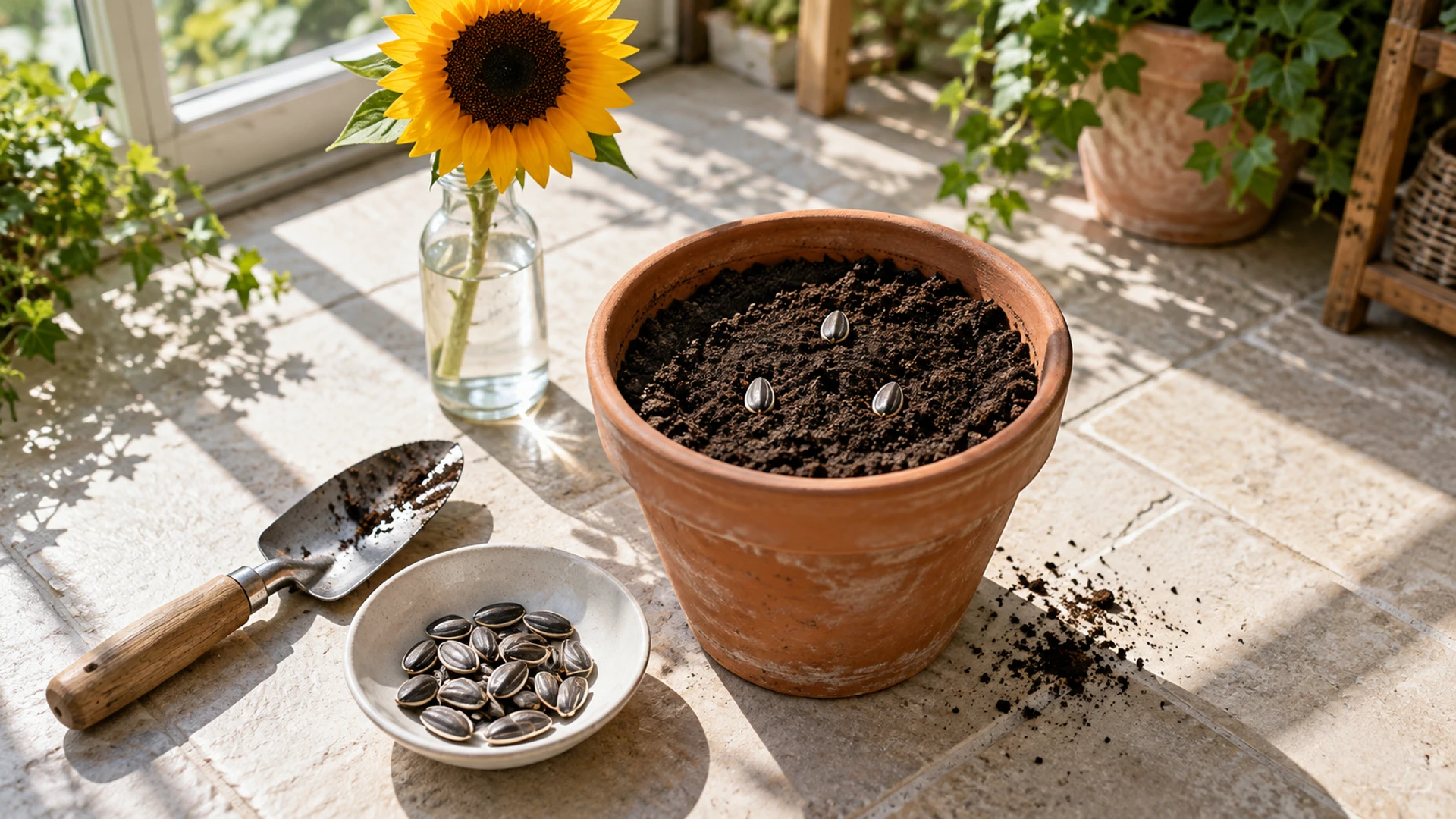
Choose a seed and hold it in your palm before you plant it. State your intention clearly, not as a wish but as a declaration: what you are beginning, what you want it to become. Plant the seed in good soil, outdoors if you can, in a pot if that is what you have. Tend it with the same consistency you bring to the venture itself. Water it, turn the pot toward the light, note when it sprouts and when it sets its first bud. Let the plant's growth be a living record of the working. When it reaches full bloom, take it as a sign that the intention has taken root. When it sets seed, collect a few to carry or use in a future charm. The cycle of planting, growth, and seed gives this working a long arc, which suits ventures that will take months to unfold.
Seeds in a Wish Charm
Use this when you have a specific wish to hold and carry, particularly for abundance or opportunity.
Write your wish on a small piece of paper in clear, present-tense language. Fold it toward you. Take a handful of sunflower seeds and hold them in both hands for a moment, letting your intention settle into them. Place the paper and the seeds together in a small cloth bag. If you have a yellow or gold candle available, you can light it while you work and let it burn down alongside you. Do this on a Sunday or during a Sun hour if timing matters to you. Carry the charm in a bag or pocket, or keep it on your altar. You can open it and add a seed when the working feels like it needs refreshing.
A Petal Bath for Confidence
Use this before a day that asks something of you: a presentation, an interview, a difficult conversation, any moment where you want to feel bright and capable.
Scatter sunflower petals into a warm bath and step in. Spend a few minutes simply being in the water, letting the color and scent of the petals do their quiet work. Think about what the day requires and let yourself feel ready for it rather than anxious. This is sunflower's Healing and Peace secondary at its most direct: not the healing of illness or grief, but the healing of a confidence that has gone a little flat. Keep it simple. The bath does not need to be elaborate to work.
Turned Toward the Sun
Sunflower's angle in the Prosperity and Success category is not about holding, defending, or even arriving. It is about reaching toward what you want with enough optimism to sustain the growth. That quality is specific and worth choosing for: when you need the energy of a beginning, of something lifting rather than landing, sunflower is the right plant.
If you want to see how sunflower sits alongside the other eleven prosperity herbs and how it fits within the six other categories of plant magic, the Witch's Herbarium guide is the place to go. It maps the full picture.