Ylang Ylang: The Wedding-Bed Flower
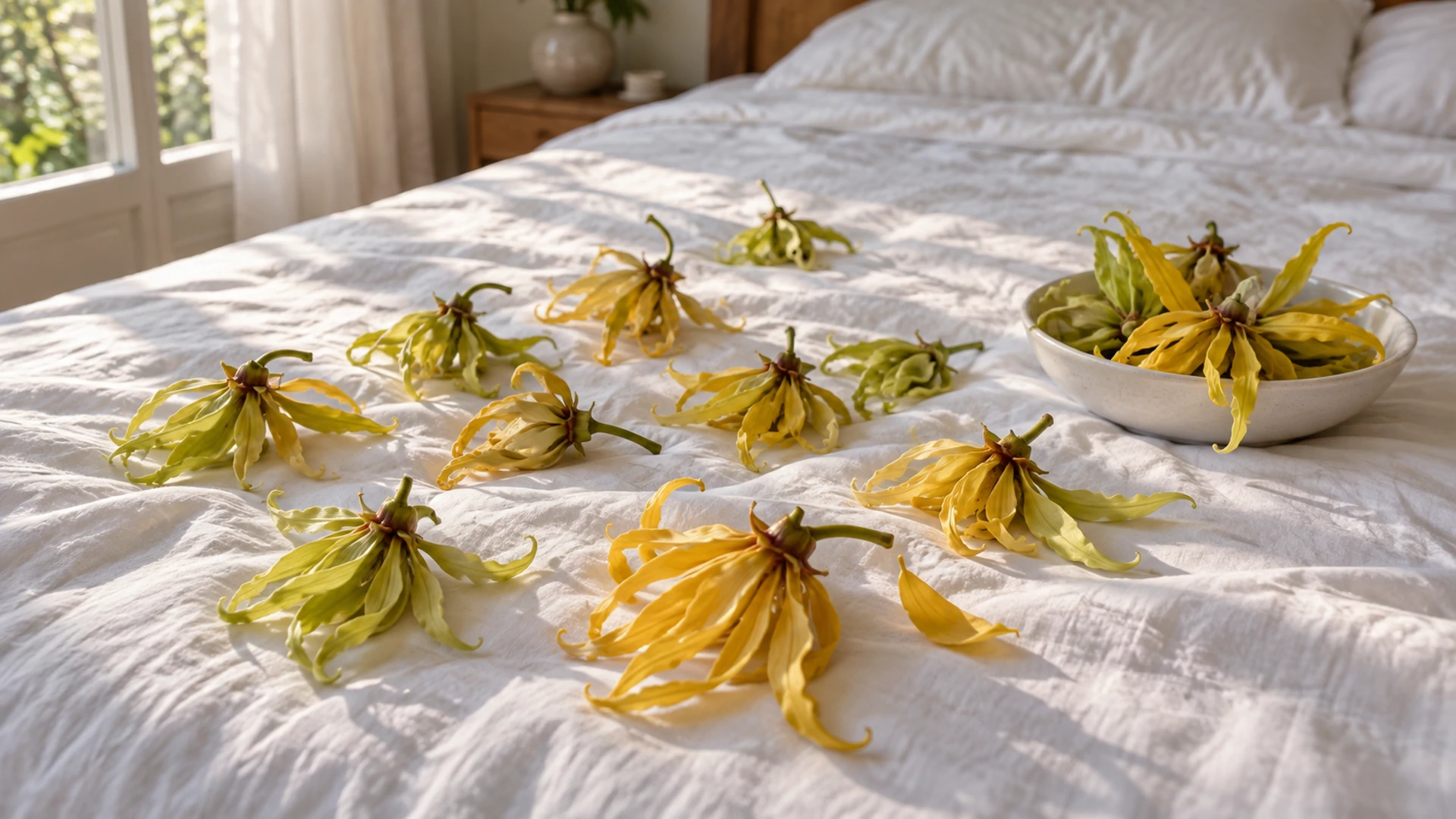
Ylang ylang (Cananga odorata) is a heavily sweet tropical flower worked in baths, anointing oil, and sachets for sensual intimacy, with calm as its second face. It has no historical planetary ruler; modern practice gives it Venus and water.
Sensual Intimacy: Ylang Ylang's Place in Love & Attraction
Of all the love flowers, ylang ylang is the most bodily. Where rose sits at the center of romantic love, reaching outward into self-love and the healing of the heart, and jasmine gives the lunar, night-scented love of sensuality and dreaming, ylang ylang's angle is narrower and more specific: confidence and ease in intimacy, the flower scattered across a wedding bed. Violet, at the other end of the spectrum, holds quiet devotion, modest and lasting. Ylang ylang does not do modesty. It does warmth, closeness, and the ease of two people fully at ease with each other.
That angle matters because it shapes how you actually use the flower in a working. Love magic is not a single category — it covers everything from rekindled passion to the long, steady devotion of decades, and the herb you reach for should match the specific thing you are trying to open or deepen. Ylang ylang fits the space between desire and tenderness, the moment when intimacy stops feeling like a performance and becomes easy. That is its gift, and it is a precise one.
Ylang ylang's secondary category is Healing & Peace, which makes sense once you sit with it. Calm and ease in intimacy are two faces of the same thing. Modern practice gives it Venus and water as its correspondences, both of which track with the Love & Attraction work it is best known for. There is no historical planetary attribution to draw on — European magical tradition had no framework for it, so it has no historical attribution.
Ilang-Ilang, Not "Flower of Flowers"
The name is a Spanish spelling of the Tagalog ilang-ilang. The widely repeated translation "flower of flowers" is a mistranslation. The Tagalog word ilang more accurately refers to wilderness — a remote, uncultivated place — and the flower's name most likely reflects where it grew rather than any superlative quality. It is a detail worth knowing because it grounds the flower in a real place and a real language rather than in a romantic gloss applied later.
In Indonesia the flowers are spread on the bed of newlyweds, the source of the custom of scattering ylang ylang flowers on a bed. In the Philippines they are strung into garlands alongside sampaguita, the national flower, for weddings and religious ceremonies alike. Cananga odorata belongs to the custard-apple family (Annonaceae), a tropical family with almost no presence in European or Middle Eastern botanical tradition, which explains why the flower has no place in Culpeper and no classical planetary attribution. Today the Comoros, Madagascar, and Mayotte supply most of the world's ylang ylang oil, with the Comoros producing a particularly prized crop. The tree itself is native to Southeast Asia and is now grown across the tropical world for the perfume industry.
Grades of Oil, and a Little Goes a Long Way
Ylang ylang oil is sold in grades — Extra, I, II, III, and complete — based on when the distillate is drawn off, with Extra taken first and carrying the most concentrated, floral top notes. Complete is the full distillation run together. For magical use, Extra or complete are both fine depending on what you can find, but Extra is the most fragrant and the one to use in the smallest possible quantity. The oil can sensitize skin at high concentration, and the heavy scent causes headaches in some people, sometimes quickly. One drop in a carrier oil, not five, is the right scale for anointing work. In a room — whether diffused or from flowers — less is always more. The flower itself is less overwhelming than the concentrated oil, which is why the older tradition of scattering actual flowers rather than using the essential oil still makes good sense.
Three Ylang Ylang Workings for Intimacy
Flowers Scattered on the Bed
This working is for a night two partners have already chosen to make intentional — not to manufacture something, but to soften the ordinary static of daily life and arrive at the evening with presence.
Scatter fresh or dried ylang ylang flowers across the bed before the evening begins. Fresh flowers carry the scent most gently; dried flowers last longer and can be swept away or kept in a small bowl nearby. As you scatter them, hold clearly in mind what you want to open: ease, warmth, presence with each other. The Indonesian newlywed custom that underlies this working is not about casting a spell on another person — it is about preparing a space that invites both people into the same softened, deliberate state. The flowers do not do the work for you; they help you arrive there.
One Drop in an Anointing Oil
This works best when you have a specific evening in mind and want to carry the intention on your body, whether you are dressing a candle, touching your wrists, or both.
Add a single drop of ylang ylang Extra to a small amount of a neutral carrier oil — jojoba, sweet almond, or fractionated coconut oil all work well. If you are dressing a pink candle for intimacy and warmth, draw the oil from the wick outward toward you. If you are wearing it, touch the inside of your wrists and focus your intention there before the evening begins. Timing this to a Friday, or to a Venus hour, gives the working an additional layer of coherence — the modern Venus attribution makes both a natural fit. Keep the drop count literal. One drop of a concentrated oil like ylang ylang Extra is already significant fragrance-wise, and the working does not become more powerful by doubling it.
A Sachet for Calm Before Closeness
This is for ongoing support rather than a single night — a small, steady presence that keeps the quality of ease available rather than calling it in for one occasion.
Fill a small cloth sachet with dried ylang ylang flowers and keep it near the bed. You can tuck it under a pillow or leave it on a bedside surface; either works. This draws on the flower's Healing & Peace secondary — the calm face of ylang ylang rather than the more forward sensual one. Refresh the flowers when the scent fades, which is usually every few weeks for dried material. The sachet asks nothing elaborate of you: just the intention you set when you made it, and the occasional moment of attention when you notice it.
Sweetness Without Hurry
Ylang ylang does not force anything. Its angle — sensual intimacy, confidence and ease in closeness — is one of the more specific gifts the Love & Attraction category has to offer, and that specificity is worth trusting. You do not reach for it when you want to draw love in from a distance or heal a heart that has been broken. You reach for it when what you want is for two people who already want to be together to arrive there more easily.
If you want to see where ylang ylang sits alongside the other nine love herbs — and across the six other categories from protection to prosperity — seven paths through plant magic is the place to start.