Rose Geranium: Love Kept Steady at the Door
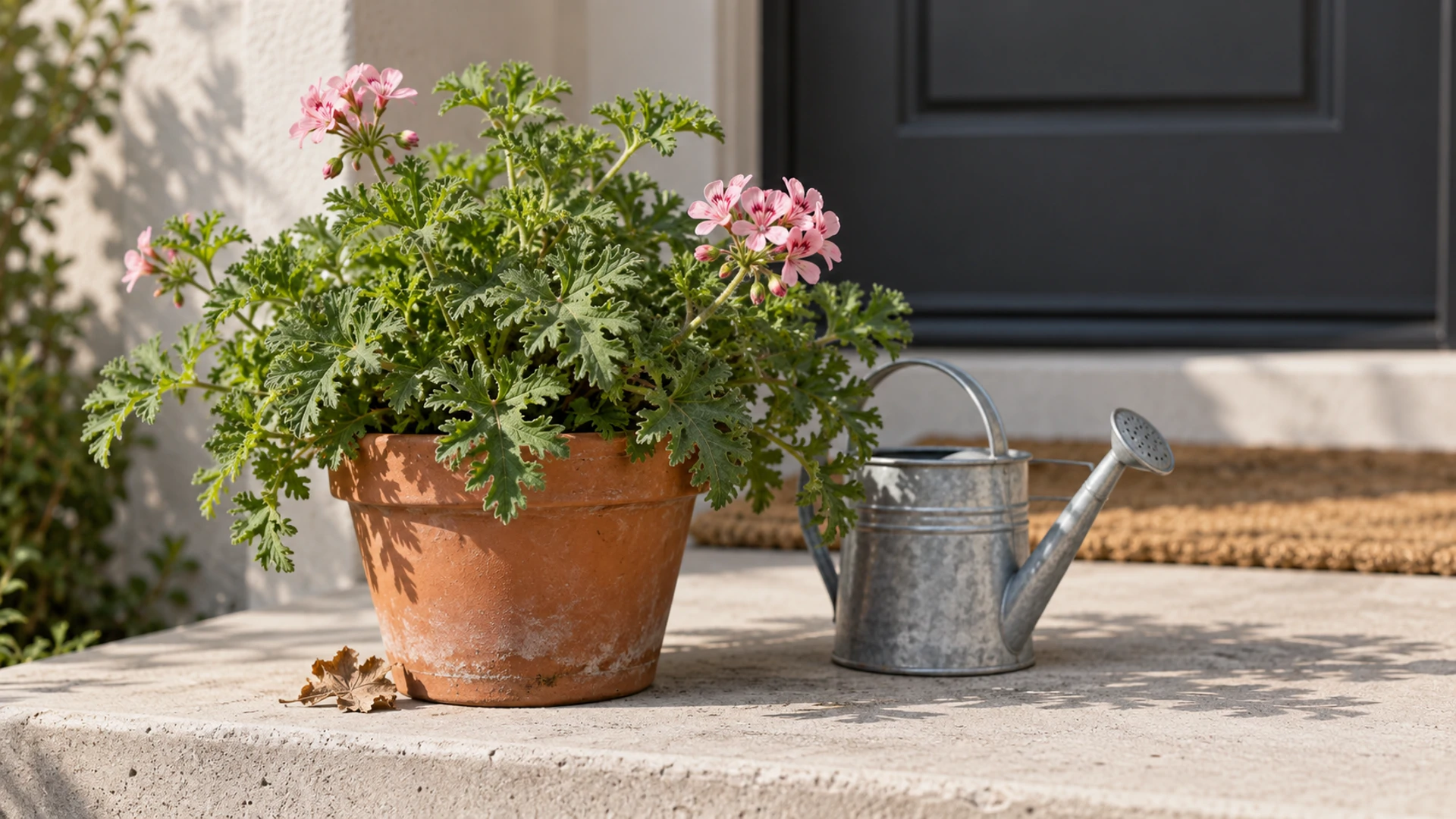
Rose geranium is a rose-scented houseplant worked in love baths, sachets, and as a potted doorway plant to keep a relationship in harmony and guard it from outside interference. It is Venus-ruled, water-aspected, and its primary magical role is holding what love has already built.
Love Kept in Harmony: Rose Geranium's Place in Love & Attraction
Every love herb has an angle. Rose is central romantic love — love at its center, reaching outward into self-love and the healing of the heart. Violet is quiet devotion — modest, faithful, lasting affection. Rose geranium sits in a different place entirely. Its angle is love kept in harmony: holding an existing relationship steady and guarding it from outside interference. It does not ignite new desire or pull a stranger close. It works on what is already there, steadying the shared life, softening friction, keeping the connection intact when outside pressures start to wear at it.
Cunningham assigns rose geranium to Venus and water, with love and protection as its primary purposes. Friday is its day. That double assignment — love and protection together — is exactly what defines this herb's character. Most love herbs lean entirely into attraction or devotion; rose geranium leans into both at once, because real partnership needs both. Keeping a potted rose geranium at the entrance to a home is its most traditional protective use, where it acts as a living ward over the threshold, guarding the relationship that lives inside it. That secondary role in Protection & Warding is not incidental — it is woven into how the plant was kept and used for centuries.
Rose geranium's oil has long been used to extend or imitate costly rose oil, which makes it the practical substitute for rose in love work. This is not a lesser role. When you need the steadying, grounding warmth of rose for a bath, a sachet, or a candle dressing and cannot source true rose otto — which takes thousands of kilograms of petals per kilogram of oil and is reliably adulterated — rose geranium steps in without apology. It carries a similar Venusian signature, and the overlap in scent is close enough that the two have been commercially blended for generations. Where rose opens and deepens, rose geranium holds and protects. That is its genuine contribution, not a substitution but a distinct virtue.
A Geranium That Isn't a Geranium
The plant sold and grown as rose geranium is Pelargonium graveolens and its related hybrids, all members of the geranium family (Geraniaceae). But it is not the true Geranium — the cranesbills, a group that includes herb Robert and the wild meadow geraniums of European hedgerows. The confusion goes back to early botanists who grouped Pelargonium and Geranium together before the distinction between the genera was properly understood. By the time the taxonomy was sorted, the common name had already stuck. This matters in practice because the two plants have different scents, different magical associations. When a recipe or a grimoire says geranium, it almost always means Pelargonium.
Rose geranium reached Europe from South Africa's Cape region in the 17th and 18th centuries, arriving as part of the wave of Cape flora that fascinated European collectors during that period. It became a fixture of Victorian parlors and windowsills — cultivated indoors for its scent, kept in pots near windows where the leaves could be brushed and released their fragrance. Its oil, extracted by steam distillation of the leaves and stems, became valuable to perfumers precisely because it could stand in for rose. Rose geranium oil stretched the supply of genuine rose, added body to blends, and in cheaper products replaced rose entirely. That history of substitution is why the plant carries rose's Venusian energy in practice — it was doing rose's work in perfume long before anyone wrote it into a magical correspondence list.
Leaves, Oil, and the Pets in the House
Rose geranium is easy to keep as a potted plant — it prefers a sunny windowsill, drains well, and produces scented leaves throughout the growing season. Fresh leaves go directly into baths and sachets with no preparation beyond washing; dried leaves are more concentrated in scent and hold up well in charm bags. The essential oil is otherwise mild on skin when properly diluted, which makes it workable for anointing and candle dressing without the sensitivity concerns that come with some other floral oils. One firm safety note: rose geranium is harmful to cats and dogs. The plant and its oil are both toxic to household pets, so if you keep animals, the potted plant goes where they cannot reach it, and oils are stored and used out of their space.
Three Rose Geranium Workings for a Steady Partnership
A Rose Geranium by the Door
Use this when a relationship you value feels exposed — when outside stress, other people's opinions, or the general friction of shared life with the world starts pressing in on something that matters to you.
Choose a healthy potted rose geranium and settle it at the main entrance to your home — on a step, a porch ledge, or as close to the threshold as the light allows. Before you set it down, hold the pot in both hands and spend a moment thinking about what you want the plant to hold: not a specific outcome, but the quality of steadiness, the sense that what you and your partner have built is worth keeping safe. You do not need words for this, though you can speak it aloud if that feels right. The plant's job from that point is ongoing — water it, tend it, let it grow. A living ward works because it is alive; neglecting it breaks the intention. Place it where cats or dogs cannot chew the leaves or soil.
Leaves in a Love Bath
Use this before an evening with a partner when you want to arrive present, open, and warm — not worked up or distracted by the day behind you.
Pull a small handful of fresh rose geranium leaves from the plant and bruise them lightly between your palms to release the scent. Drop them into a warm bath and let them steep for a few minutes before you get in. As the water takes on the fragrance, let yourself settle. This is rose geranium standing in for rose in its most direct form — the same Venusian, water-aspected energy, more accessible and more immediate than sourcing true rose petals or genuine rose otto. Stay in the bath long enough to actually relax. The point of the working is the shift in your own state, not the ritual itself. Come out of it ready to be present with someone you love.
A Harmony Sachet for a Shared Home
Use this when two people who genuinely love each other are rubbing each other wrong — the kind of low-grade friction that comes from sharing a life, not from a serious rupture.
Make this on a Friday or during a Venus hour to align the work with Venus's influence. Fill a small cloth pouch with dried rose geranium leaves — a tablespoon or two is enough. Hold it between your hands and focus on the specific quality you want to restore: ease, patience, the willingness to give each other room. Place the sachet in the bedroom or the main shared living space, somewhere it will not be disturbed. Replace the leaves when the scent fades.
Peace Inside the Partnership
Rose geranium's place in love magic is not about longing or pursuit. It is about the quieter, harder work of keeping a relationship livable — holding it against outside pressure, smoothing the places where two people's daily lives grind against each other, staying open when the easier choice is to close down. That is the specific work Venus-ruled water herbs do at their best, and rose geranium does it with an accessibility and practicality that more expensive or harder-to-source love herbs cannot match.
If you want to see where rose geranium sits alongside the other love herbs — jasmine, damiana, violet, vanilla, hibiscus, and the rest — and how love and attraction as a category compares to the six others in plant magic, the Witch's Herbarium guide lays all of it out in one place.