Jasmine: The Love Flower That Opens at Night
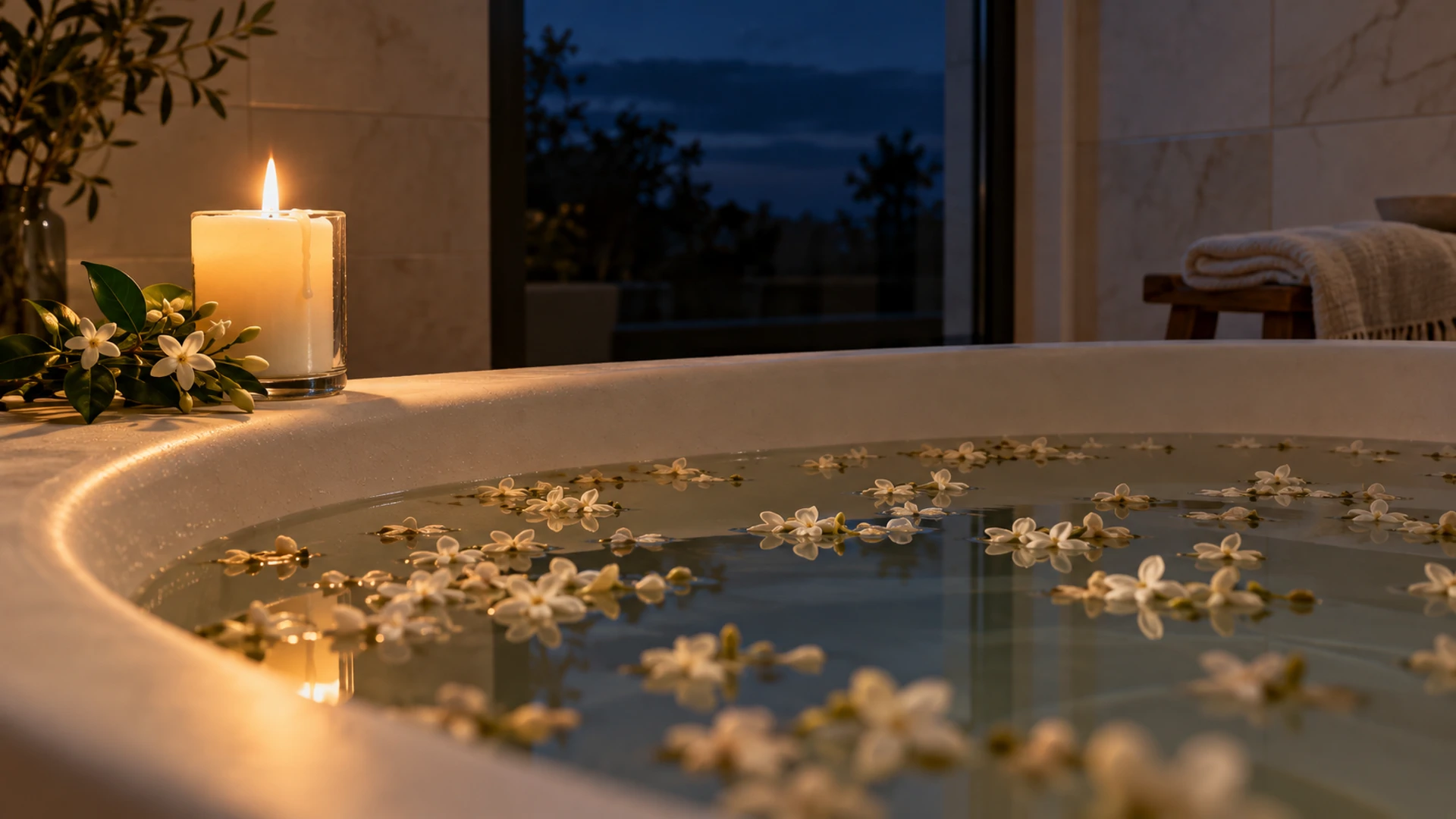
Jasmine is a night-scented love flower worked in sachets, baths, and tea for sensual love and prophetic dreams. Its strongest reach in magic is toward the lunar, dreaming side of love — desire that comes alive after dark, and the visions sleep can bring.
Night and Dream: Jasmine's Place in Love and Attraction
Every love herb has an angle, and jasmine's is unmistakable: it is the lunar, night-scented love of sensuality and dreaming. Where rose is central romantic love — love at its center, reaching outward into self-love and the healing of the heart — jasmine is what happens at the edges of that love, in the dark, in sleep, in the part of desire that lives closer to intuition than to action. Jasmine doesn't announce itself in daylight. It waits.
Its correspondences follow naturally from the flower itself. Cunningham assigns jasmine the Moon and water, with Monday as its day. The attribution makes sense: jasmine flowers release their strongest fragrance at night, once the temperature drops and pollinators emerge that are active after dark. That biological fact shaped the entire magical personality of this plant long before anyone wrote it into a grimoire. Some modern practitioners assign Venus instead, and that reading isn't wrong — jasmine is undeniably Venusian in feel, warm and seductive. But the Moon fits its actual behavior better.
Jasmine's secondary category is Divination and Spirit Work, specifically through prophetic dreams — another lunar territory. This isn't a stretch or a forced pairing. A plant that opens at night, that you carry under your pillow, that perfumes your sleep: it is already doing dream work by its nature. Working jasmine for sensual love and working it for lucid or prophetic dreaming draw from the same source. They are both about the part of experience that opens when the rational mind quiets. In the broader Love and Attraction category, jasmine sits in a different register than ylang ylang — the sensual intimacy of the wedding-bed flower — even though ylang ylang is strung with sampaguita (J. sambac) in Philippine garlands. Ylang ylang is presence, immediacy, skin. Jasmine is dreams, longing, the space between people in the dark.
Three Jasmines and a Poisonous Namesake
The three species most commonly used in practice all belong to the olive family, Oleaceae. Jasminum officinale, common jasmine, is the climbing vine found throughout European gardens and the source of the oldest written lore. J. grandiflorum, sometimes called Spanish or royal jasmine, is the main perfume jasmine and the species most often processed into absolute for use in fragrance and ritual anointing. J. sambac, Arabian jasmine, is the variety used in jasmine tea and woven into the garlands that matter in South and Southeast Asian devotional and ceremonial life. The name behind all three is the Persian yasaman, carried into Arabic and then into European languages through the long route of the spice and perfume trade.
J. sambac carries the most specific cultural weight. It is Indonesia's national flower, known there as melati, and it is worn at weddings and used in religious offerings across the archipelago. In the Philippines, sampaguita — also J. sambac — is the national flower, strung into garlands alongside ylang ylang for weddings and worship. These garlands are not decorative in a casual sense. They are offerings. The flower's freshness matters; it is strung and used the same day. When you work with J. sambac, you are working with a plant that carries centuries of devotional intention from communities who treated it as sacred. That context is worth holding.
Two plants borrow the jasmine name and are not jasmine at all. Star jasmine, Trachelospermum jasminoides, is a completely unrelated vine sold widely as a garden plant. It smells similar and looks similar, which is how the name stuck, but it is not a Jasminum species and does not carry the same magical or botanical profile. The more serious case is Carolina jessamine, also called yellow jessamine, Gelsemium sempervirens. It is highly poisonous — all parts of it — and it is sometimes sold or gathered under the name jasmine. If you are buying fresh jasmine or harvesting anything in the field, this identification matters enormously. Yellow jessamine has killed people. True Jasminum flowers are white or pale yellow and the plant belongs to the olive family; if what you have doesn't match that, don't use it.
Flowers, Absolute, and the Cup
The most common ways to work with jasmine in practice are also the most straightforward: dried flowers go into sachets and baths, jasmine absolute is used for anointing candles and the body, and jasmine tea — almost always made from J. sambac — brings the plant into ritual drinking. Each form does something slightly different. Dried flowers hold the plant's presence in a soft, slow way, releasing scent gently over time and lending themselves to anything meant to work through the night. The absolute is concentrated, extracted from enormous quantities of flowers, and it carries the full aromatic weight of the plant in a small amount — a few drops in a carrier oil is enough. It can sensitize the skin, especially with repeated use, so it is always diluted before it touches the body or a candle. The tea is its own ritual form, scented but not overwhelming, and drinking it is a deliberate act of bringing jasmine inside you. If ritual tea work calls to you, the jasmine tea ceremony for love takes that practice further.
Three Jasmine Workings for the Evening
A Jasmine Sachet Under the Pillow
Use this when you want to open yourself to love through dreaming — not to force a specific outcome, but to let your sleeping mind reach toward what your waking self wants.
Fill a small cloth sachet with dried jasmine flowers. White or cream fabric works well; linen holds scent gently without trapping it. Hold the sachet in both hands before bed and speak your intention plainly — something like wanting to dream toward love, or wanting to see clearly what your heart is asking for. Tuck it under your pillow or inside your pillowcase so the scent stays close. Keep a journal on your nightstand. When you wake, write before you check your phone, before you speak, before the dream dissolves into the morning. The practice works best done consistently over several nights rather than as a single experiment. Jasmine's prophetic-dream quality is cumulative: the images it surfaces rarely arrive fully formed on the first night.
An Evening Candle Anointed With Jasmine
Use this on an evening already set aside for love — not to call a specific person, but to open the evening itself to warmth and connection.
Take a white or pink candle and mix a small amount of jasmine absolute into a carrier oil — a few drops to a tablespoon of almond or jojoba oil. Dress the candle by running the oil from the base to the wick. Light it only after dark. Monday evenings carry the Moon's energy naturally, and timing the working during a Moon hour sharpens the resonance further. Sit near the candle while it burns, not doing anything in particular — not scrolling, not working. Let the scent of the jasmine do what it does. This isn't a complicated working; its power is in the stillness and the intention, in the deliberate decision to give an evening over to love rather than filling it with noise.
A Night Bath of Jasmine Flowers
Use this when you want to step fully into jasmine's energy — to let the plant's water and lunar nature work directly on the body, on the senses, on the skin.
After dark, run a warm bath and float a generous handful of dried jasmine flowers on the surface. No oils, no other additions — let the flowers be the whole thing. Before stepping in, pause at the edge of the tub and take one breath. State your intention simply: you are stepping into this water open to sensual love. Soak for as long as the warmth holds. When you drain the bath, let the flowers go with the water and don't retrieve them. The working is complete when the water runs clear.
Love That Waits for Dark
Jasmine's particular gift in love magic is its timing. It doesn't rush. It opens when other things close. That quality — the willingness to wait for the right conditions — is worth thinking about in your own practice. Love that is sensual, dreaming, and lunar doesn't arrive on demand; it surfaces when the noise quiets and the conditions are right. Working with jasmine is partly about learning to create those conditions for yourself.
Jasmine is one of ten love herbs in a larger map of magical herbalism. If you want to see where it sits alongside the others — and how love as a category relates to prosperity, protection, banishing, and the rest — seven paths through plant magic is where to go next.