Hibiscus: The Red Flower of Desire and Devotion
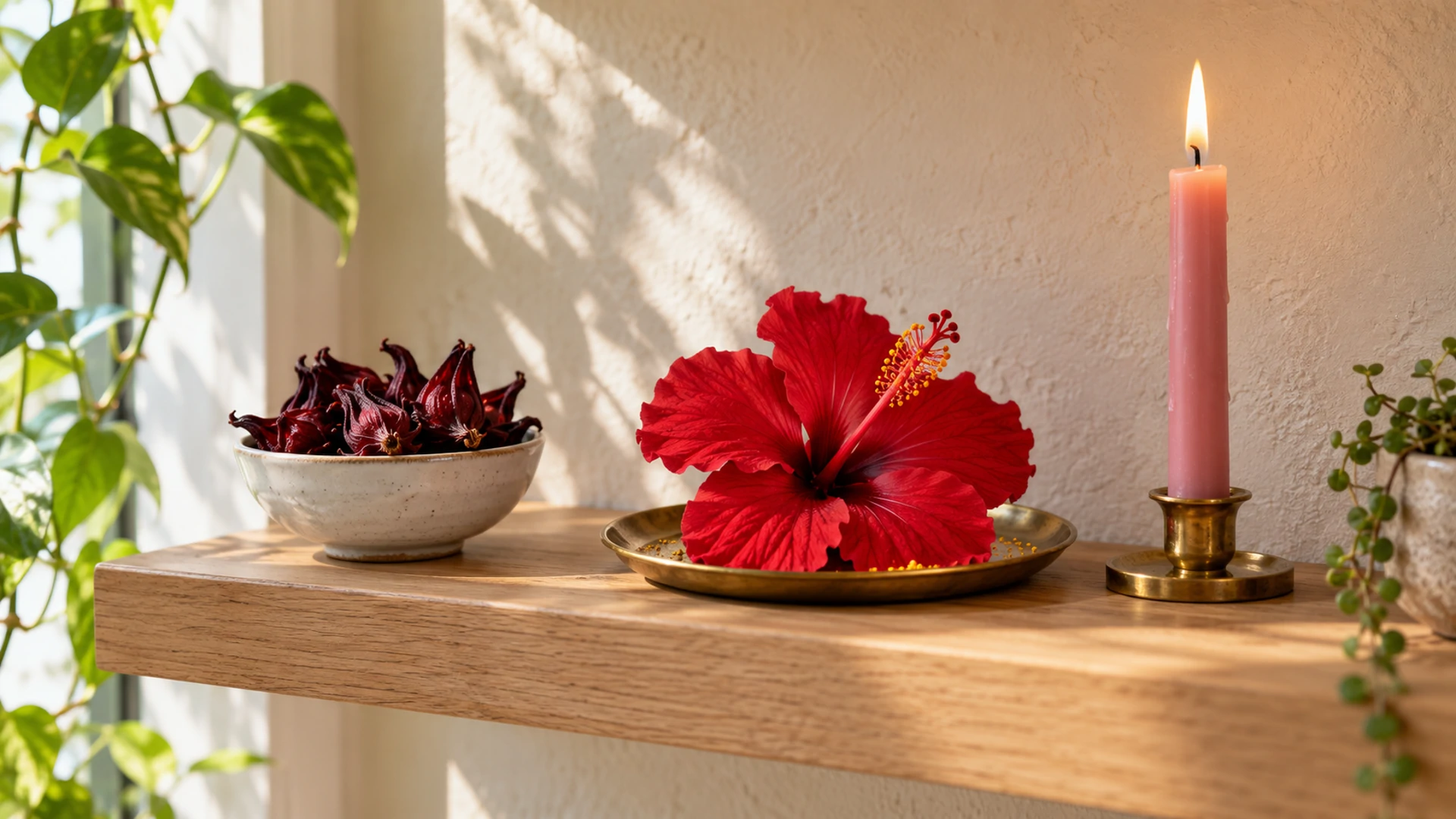
Hibiscus is a red-flowered love herb worked in two distinct forms: as a ritual tea brewed from roselle calyces for passion and desire, and as a fresh flower offered in devotion on an altar. Its angle in love magic is the passionate red offering, desire and devotion given as an act of giving rather than asking.
The Passionate Red Offering: Hibiscus in Love & Attraction
Hibiscus falls under Venus and water in Cunningham's correspondences, and its day is Friday. That combination already tells you something about how it operates: Venus rules love and beauty, water governs the emotional body, and Friday is the day you do the work that calls love in rather than pushes it. The color of the plant reinforces all of it. Red is the color of desire, of blood moving quickly, of wanting something enough to act. When you work with hibiscus, you are working with love that shows up fully, not love that hedges itself.
Its place in the Love & Attraction category sits alongside other love herbs, but hibiscus has its own angle. Compare it to rose, which is central romantic love at its core, reaching outward into self-love and the healing of the heart. Compare it to violet, which is quiet devotion: modest, faithful, lasting affection that does not announce itself. Hibiscus is neither of those. It is the passionate red offering, desire and devotion given as an offering. There is something generous in that framing. You are not working hibiscus to extract something from a situation; you are bringing your own desire openly and placing it somewhere sacred.
Hibiscus carries a secondary role in Divination and Spirit Work, specifically through its long history as a flower of devotional offering. Cunningham also lists divination among its uses. That secondary layer matters because it means hibiscus is not purely about the emotional experience of love. It has a ritual dimension, a flower-as-prayer quality that makes it well-suited to altar work. The red flower placed on an altar is not decoration. It is an act of communication with whatever you are invoking.
Two Plants Called Hibiscus
Both plants that carry the hibiscus name belong to the mallow family, Malvaceae, but they are different species doing different work. The first is roselle, Hibiscus sabdariffa, whose deep red calyces, the fleshy sepals that surround the seed pod after the flower drops, are what you find dried in bags labeled hibiscus tea. This is the plant behind agua de jamaica in Mexico, karkadé in Egypt and parts of the Middle East, and bissap across West Africa. The calyces dry well, keep their color, and brew into a tart, deeply crimson tea that tastes nothing like a floral tisane. It is bold and slightly acidic, and that character carries into its magical use.
The second plant is Chinese hibiscus, Hibiscus rosa-sinensis, the large ornamental flower with the dramatic stamen. This is the plant used in worship, not brewing. In Bengal, the red form, called jaba, is the favored flower offered to Kali and to Durga. Its color is specific to why it is used: red is the color of the goddess's fierce power, her vitality, her capacity to both destroy and protect. Placing a jaba flower as an offering is a devotional act rooted in Bengali Hindu practice, and it is worth understanding the plant through that lens rather than abstracting it into generic love symbolism. Chinese hibiscus is also Malaysia's national flower, a detail that speaks to how widely this plant has been adopted across South and Southeast Asian cultural life.
One piece of cultural shorthand has drifted widely: the idea that wearing a hibiscus flower behind the left ear signals that you are taken, and behind the right that you are available, or some variation of that arrangement. This is a popular modern custom rather than an ancient tradition, and it is worth holding it as exactly that: a charming contemporary practice without deep ceremonial roots.
Brewing Roselle Safely
Before you brew roselle for any love ritual, one safety fact is worth knowing plainly: roselle tea lowers blood pressure, and it can interact with blood-pressure medication. If you are on medication for hypertension, talk to a doctor before drinking hibiscus tea regularly. It is also avoided in pregnancy. These are real considerations, not fine-print disclaimers, and they belong in the practice itself rather than tucked away at the end. For most healthy adults, a cup of roselle tea is simply a tart, beautiful drink with a long history across several continents. Dried calyces are easy to find in well-stocked grocery stores, Latin markets, and herb suppliers; they keep well in a sealed jar and hold their color and potency for a year or more. Chinese hibiscus, the ornamental species, is used as a fresh flower and not brewed for drinking.
Three Hibiscus Workings in Red
A Roselle Love Tea
This practice works best when you are preparing to open yourself to love, to deepen a connection already forming, or to step into an evening with presence and warmth rather than guardedness.
Brew a cup of dried roselle calyces in hot water for five to seven minutes, long enough for the liquid to run a deep, saturated red. Do this on a Friday or during a Venus hour, when the planetary current supports what you are calling in. As the tea steeps, hold the cup and think about what you are bringing to the evening or to the relationship: your attention, your warmth, your willingness to be seen. Drink slowly. The flavor is tart and present, which is the point. This is not a passive cup of tea; it is a conscious act of preparation. Hold the blood-pressure and pregnancy cautions in mind before you begin, and skip this practice if either applies to you. The working is in the intention set over the cup, not in how much you drink.
Dried Calyces in a Desire Sachet
Carry this sachet when you want to move from feeling desire quietly to feeling confident enough to express it, or when you are calling in an energy of passion and boldness in your relational life generally.
Take a small red cloth bag or a square of red fabric. Add a generous pinch of dried roselle calyces, chosen for their color as much as their scent. Hold the sachet in both hands before you close it and speak into it clearly, not a request directed at a specific person, but a statement of what you are carrying: desire that is honest, confidence in your own appeal, openness to love that meets you where you are. Tie it closed with red thread. Carry it in a pocket, in a bag, or place it somewhere you see it each morning. The red of the calyces is doing its own work simply by being present, a color signal your own attention returns to. Refresh the calyces every new moon if you keep the sachet long-term.
A Single Red Flower Offered
This practice suits moments when you want to give something to love rather than ask for it, placing your desire on the altar as an act of devotion rather than petition.
Take one fresh red Chinese hibiscus flower and place it on your altar, in a small dish, or beside a candle. The gesture draws on the same logic as the Bengali devotional offering of jaba to Kali: you are giving something beautiful and red, something that cost you a small act of seeking it out, as a way of honoring the power you are working with. A pink candle nearby is a natural companion if you are calling in tender love alongside the passion. The flower will not last long. That is fine. Its work is in the moment of placing it, not in how long it stays.
Red, Given Freely
What makes hibiscus worth reaching for is that it works love from the side of giving. You are not holding your desire back waiting to see how something lands. You are bringing it forward, putting it somewhere, making it real. That quality of the passionate red offering distinguishes hibiscus from the quieter love herbs and makes it particularly suited to moments when you need to act rather than wait.
If you want to see how hibiscus sits alongside the other nine love herbs and how all seven categories of plant magic relate to each other, the place to start is seven paths through plant magic. The fuller picture of what each herb does, and why it does something different from its neighbors, becomes clearer when you see them all together.