Passionflower Tea Ceremony for Harmony: Quieting the Nervous System That Feeds the Conflict
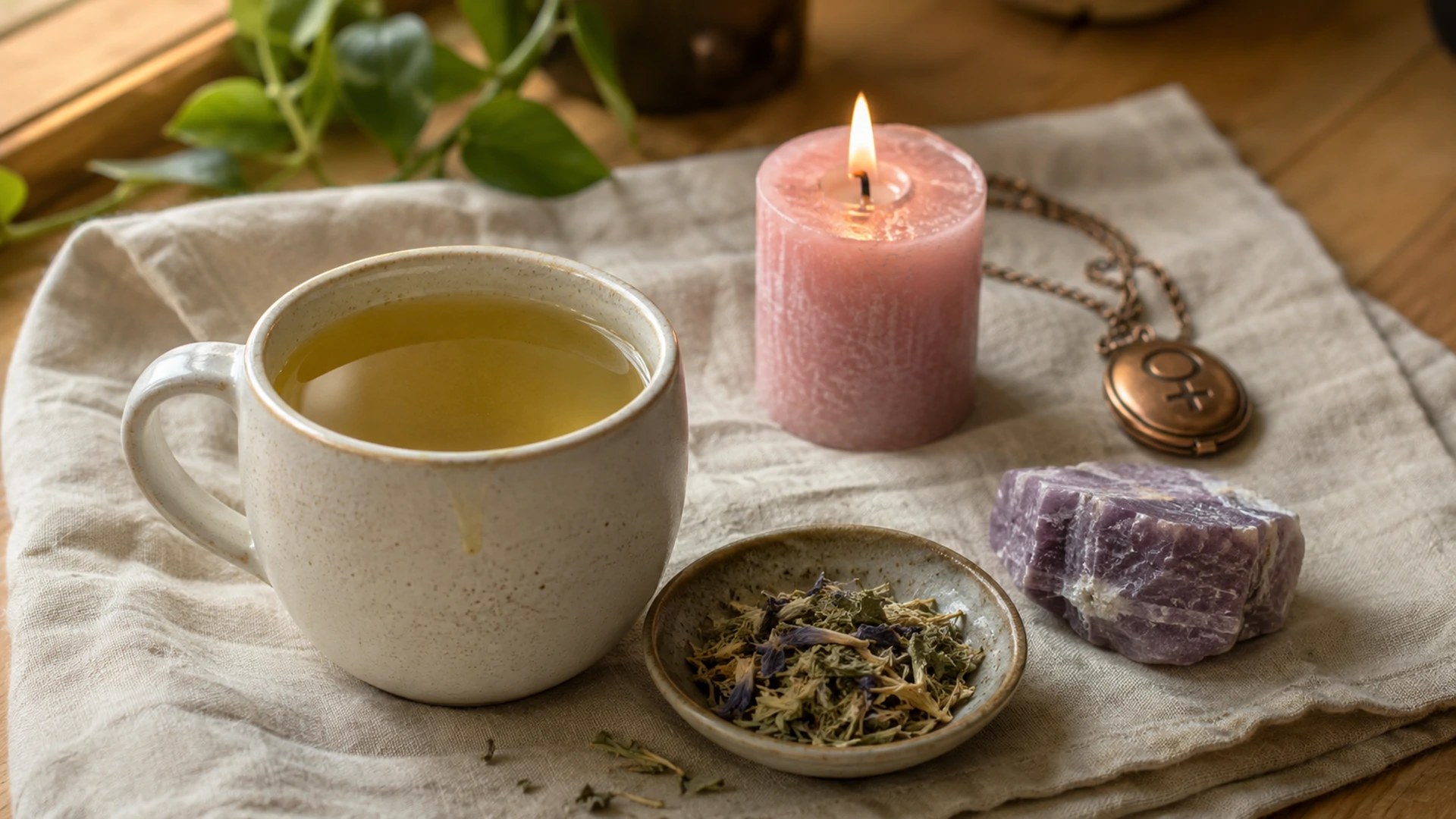
A spiritual tea ceremony is one of the most direct forms of plant magic available to you. When you drink an herb, you're not placing it on an altar or burning it at a distance — you're taking it into your body, which means the working happens inside you rather than around you. For harmony, that matters enormously. And for this particular intent, Passionflower is one of the most precise choices you can make. This guide will walk you through a complete Passionflower tea ceremony for harmony, from understanding why this plant carries that correspondence to the final closing of the ritual.
Why Passionflower Is Suited to a Harmony Tea Ceremony
Passionflower's magical case for harmony isn't built on vague energetic alignment — it rests on two very concrete foundations. The first is planetary rulership. Passionflower is governed by Venus, the planet that oversees love, beauty, relationships, and — critically — the capacity for things to coexist in balanced relationship with one another. Venusian herbs don't just attract affection; they soften conflict, dissolve rigid boundaries between people, and encourage the kind of receptivity that makes harmony possible. When you work with a Venusian plant for harmony, you're drawing on that planet's office directly.
The second foundation is its documented history as a nervine — an herb used across European and Indigenous American traditions to calm an overactive nervous system. North American Indigenous peoples, including the Cherokee, used Passionflower as a calming remedy for anxiety and restlessness long before European contact. Spanish missionaries encountered it in the Americas in the 16th century and named it for the Passion of Christ, reading its complex floral geometry as symbolic. That specific sensory quality — the way the plant's compounds physically release muscular tension and quiet mental noise — is exactly what makes it suited to harmony work. You cannot create harmony while your nervous system is in conflict with itself. Passionflower addresses that at the root.
If you want to go deeper into Passionflower's full range of magical correspondences beyond harmony, the complete profile covers its elemental associations, other intent categories, and ritual applications.
There is also something specific to drinking this herb rather than working with it in another form. Burning Passionflower or carrying it in a sachet keeps its energy external — it influences your environment or acts as a symbolic anchor. Drinking it as tea brings it inside the boundary of your body. The working becomes physiological as well as symbolic. Your body participates in the ceremony as an active site, not just a vessel holding an intention. For harmony — a state that ultimately has to be felt internally before it can be expressed outward — this is the most appropriate method of working with the plant.
Preparing for Your Passionflower Tea Ceremony
Space
Before you brew anything, your space needs to reflect the intent. Harmony is a Venusian quality, so you want your environment to feel genuinely comfortable and calm — not just cleared, but warm. Soft lighting works better here than bright overhead light. If you have windows, keep them visible rather than closed off; Venusian harmony is about openness, not containment. Remove anything from your immediate space that represents an active conflict or unresolved tension, even something as small as a pile of mail you've been avoiding.
Timing
For timing, the most supportive window for this ceremony is a Friday, which is the day ruled by Venus. You can find Venus's hour for your location and date using our Venus's hour finder to time your ceremony with even more precision. Morning or early evening works well. If you want to layer in lunar timing, a waxing moon supports harmony you're building or restoring, while a full moon is appropriate if you're reinforcing an existing state of peace you want to sustain. Avoid the dark moon for harmony work — that phase is better suited to banishment and endings.
Auxiliary Tools
Two supporting tools to set on your altar or nearby surface will reinforce the working:
- A pink candle: Pink candle magic works in the same Venusian current as Passionflower itself — where green candles tend toward growth and external restoration, pink carries the warmer, more intimate quality of emotional softening. In a Passionflower ceremony, that alignment is precise: you're not just trying to smooth over a conflict from the outside, you're inviting a genuine thaw. A pink candle lit before you brew quietly mirrors what the herb is doing inside you, turning the whole space into a container for that quality rather than just your cup.
- Lepidolite: Lepidolite is one of the few stones that works on the same register as Passionflower's nervine action — it carries a genuinely calming quality that reaches the emotional body rather than just the surface. Where many crystals for harmony work outward toward relationships, lepidolite works inward first, quieting the internal agitation that makes harmony feel impossible to hold. Placing it beside your cup while you brew and holding it briefly before you drink creates a steady, unhurried quality in the space — the kind of stillness the herb itself is trying to open in you.
Safety Note
One safety note before you proceed: Passionflower is generally well-tolerated as a tea, but it has a few common contraindications worth knowing. It may interact with sedative medications and blood thinners, and it is not recommended during pregnancy. If any of these apply to you, speak with your doctor or a qualified herbalist before including it in your practice.
Brewing Passionflower With Intention
Gathering the Herb
Gather your dried Passionflower herb — the aerial parts (leaves, stems, and dried flower material) are what you'll use. You'll need approximately one to two teaspoons of dried herb per cup of water. This is a gentle brew, not a heavily concentrated infusion, which is appropriate: harmony doesn't come from forcing anything.
Heating the Water
Begin heating your water while your candle is already lit and your lepidolite is in place. Don't walk away from the kettle during this part. Stand with it, or sit close by. Watch the water. As it heats, let your attention move to whatever specific disharmony you're working on — a relationship that's frayed, an internal conflict between two parts of yourself, a household that's been running at a higher pitch than you want. Don't analyze it or try to solve it in your head right now. Just name it clearly to yourself. That naming is the first intentional act of the ceremony.
Pouring and Speaking Your Intention
The water temperature for Passionflower should be just below a full boil — around 90 to 95°C (195 to 205°F). A full rolling boil can drive off some of the more delicate aromatic compounds. If you're using a standard kettle without temperature control, bring it to a boil and let it sit for one minute before pouring. As you pour the water over the herb, say — aloud if possible, internally if needed — what state you are calling in. Not what you're releasing, not what's wrong, but what harmony actually looks, feels, and moves like in this situation. Be specific. "The relationship between me and [person] flows without friction." "My inner conflict about [situation] resolves into clarity and peace." Speaking the desired state rather than the problem is intentional: you are directing the working toward a real outcome.
Steeping
Let the Passionflower steep for seven to ten minutes. Seven is a Venusian number in classical numerology, and the longer steep will draw out more of the herb's bittersweet quality — a sensory reminder that harmony isn't the absence of complexity, but the resolution of it. While it steeps, sit quietly. Hold your lepidolite if it's there. You don't need to chant or maintain rigid focus — let your mind rest on the image of the harmonious state you named. If your thoughts drift, return. This is less a meditation and more a slow holding of intention, the way you'd hold a door open for someone rather than straining to push through a wall.
After steeping, remove the herb. Some people strain it fully; some leave a small amount of residue in the cup. If you're working with a tea ball or strainer, remove it with a conscious gesture — a small exhale, or a simple internal acknowledgment that the herb has done its work in the water and that work is now complete. The tea at this point is pale gold to soft green in color, with a mild earthy-sweet scent. That scent itself is worth a moment of attention: smell it before you drink. Passionflower's gentle, slightly grassy fragrance is Venusian in character, and letting it reach you before the first sip extends the ceremony into another sensory register.
Drinking and Closing the Ceremony
Drink slowly, sustaining the working through the act of consumption rather than rushing to finish the cup. Hold the cup with both hands. Let the warmth of it be part of what you're receiving. Take your first sip consciously, with the intention you spoke during brewing still present in your mind. You don't need to maintain perfect concentration through every sip, but return to your intention at least once between the first third and the final third of the cup. Think of it as a gentle pulse rather than a continuous strain.
As you drink, pay attention to your body's response. Passionflower in tea form works quickly in some people and more gradually in others, but you may notice your shoulders drop slightly, your jaw unclench, or your breath deepen without any effort on your part. When that happens, receive it. That physical shift is part of the magical working, not separate from it. The herb is fulfilling its office, and your body is becoming the space where harmony settles first.
When the cup is finished, sit for a moment before moving. Don't immediately stand, reach for your phone, or shift into another task. Give yourself one to two minutes of stillness. This is the close of the active ceremony, and it's also the point where the working consolidates. Feel the warmth in your chest and stomach. Let the quiet be the point.
For closing the ritual formally, you have a few options depending on your practice. Grounding is always appropriate after internal work — pressing your palms flat on the floor or table, feeling the solidity of the surface, and consciously releasing any residual energy you don't want to carry. If you journal, write a brief entry: the intention you set, any physical or emotional sensations during the ceremony, and what harmony means to you in this specific situation right now. Not what you hope for eventually — what it means now, in this working.
For the herb itself: if you used loose leaf and strained it, return it to the earth if possible. Take the spent herb outside and place it at the base of a plant or in soil. If that's not practical — you're in an apartment, or it's the middle of winter — it can go into the compost or biodegradable waste. The logic here is consistent with Venusian magic: return what served you gracefully to the cycle it came from. Don't discard it carelessly into the trash if you can avoid it; that small act of respectful disposal is itself part of how you close the energetic loop of the ceremony. Allow the candle to finish burning if it's small, or snuff it — don't blow it out — and set it aside for the next time you hold this ceremony.
Letting Passionflower's Peace Become a Practice
What you did in this ceremony wasn't passive. The reason Passionflower works so well for harmony — and why this specific ceremony is worth returning to — is that the herb's Venusian rulership and its physical action as a nervine address the same problem from two directions at once. It works symbolically through the planet's correspondence with balance and relational ease, and it works directly on the nervous system that has to be calm enough for harmony to actually take root. Most harmony workings address one side of that. This one addresses both, which is why the tea ceremony format is the right container for it.
This is a repeatable practice. You don't need a special occasion or a crisis to hold it. Any time you feel friction in a relationship, conflict between competing demands on your attention, or simply a heaviness in your household that you want to shift, this ceremony is available to you. Hold it on a Friday. Light your pink candle. Brew the Passionflower slowly. Let the working happen at the pace the herb sets, not the pace your anxiety wants. That patience is part of what you're practicing.
Passionflower isn't the only herb well-suited to this intent. If you want to explore how other plants approach the same goal, the Lavender Tea Ceremony for Harmony works through a similar Venusian current but brings a sharper clarity to it — Lavender's nervine quality is more clarifying than sedating, which makes it the better choice when the disharmony you're working through has a mental or communicative edge. The Violet Tea Ceremony for Harmony takes a gentler route still, drawing on Violet's association with humility and quiet reconciliation — useful when the situation calls for softening rather than resolving.
If you want to expand your tea ceremony practice beyond harmony work entirely, the full library of ceremonies organized by intent is a good next step. Spiritual Tea Ceremonies: A Complete Guide by Intent covers a wide range of herbs and goals, all structured around the same principle that makes this Passionflower ceremony work: the right plant, the right intent, and your focused will doing the actual work.