Damiana Tea Ceremony for Love: The Herb That Kindles Desire
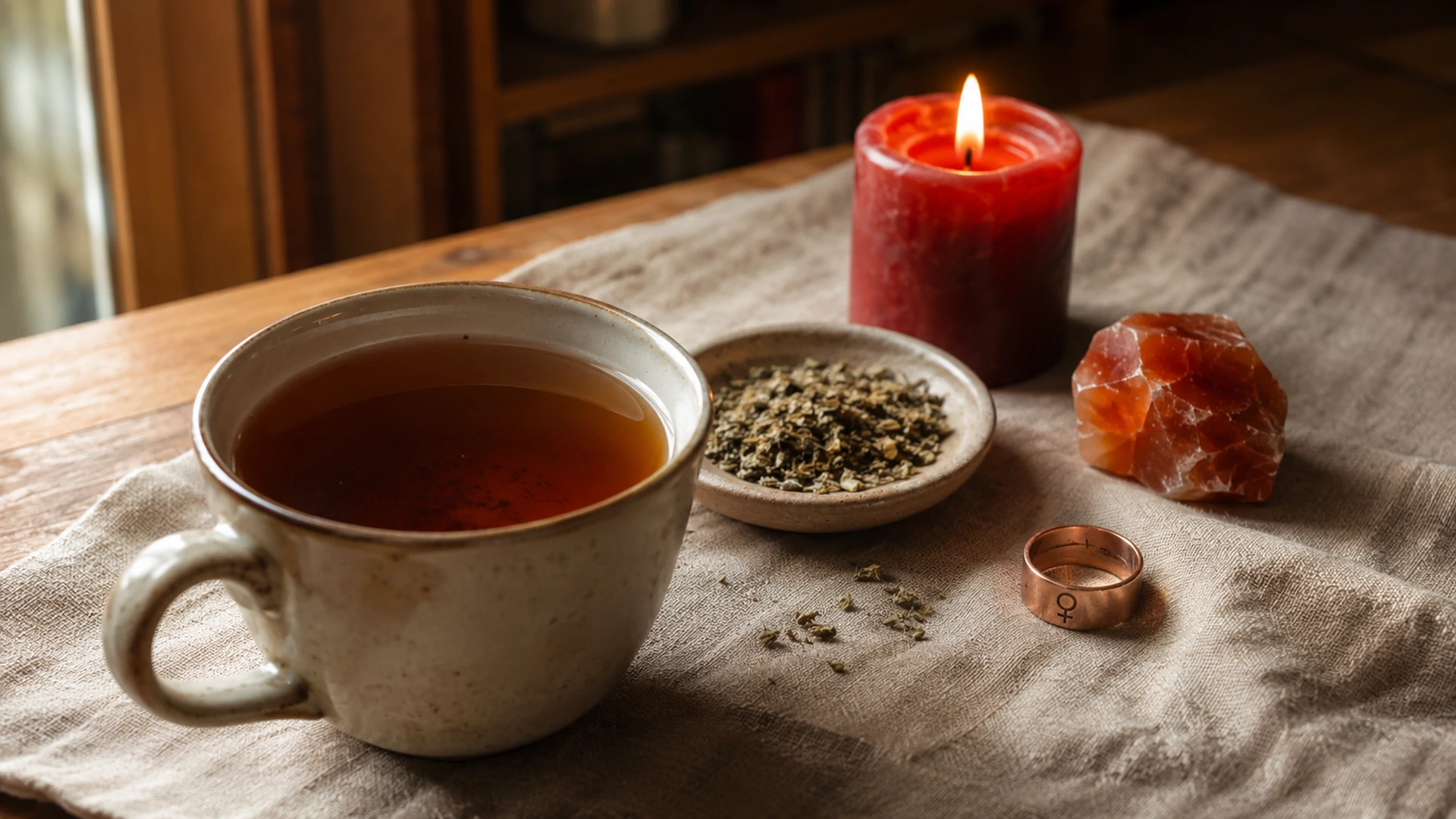
If you're drawn to working with Damiana for love, you've landed on one of the most naturally suited herbs in the Western magical tradition for exactly that purpose. The Damiana tea ceremony for love is a full embodied ritual — not just a symbolic gesture, but a practice that uses your body, your breath, and your focused will as the engine of the working. This guide covers everything: why Damiana specifically belongs in love magic, how to set up the ceremony, how to brew with intention, and how to close the ritual cleanly so your energy carries forward rather than just dissipating into the air.
Why Damiana Is Suited to a Love Tea Ceremony
Damiana (Turnera diffusa) is governed by Venus — the planet of love, attraction, beauty, and emotional connection — and aligned with the element of Fire. That Venus-Fire combination is significant. Venus pulls love toward you; Fire supplies the heat, the desire, and the animating force that turns attraction into something felt and real. Most love herbs sit squarely in Venus's cool, watery domain. Damiana brings warmth and urgency into the equation, making it especially useful when you want to kindle something: new attraction, renewed passion, or the confidence to open your heart after it has been closed.
Historically, Damiana's reputation as a love herb runs deep. Indigenous communities across Mesoamerica — particularly in Mexico and Central America — used it in preparation for intimate rituals, as a tonic for desire, and as a ceremonial herb associated with pleasure and connection. Spanish colonizers documented its use as an aphrodisiac as early as the 17th century, and it carried that reputation into European folk herbalism. What matters here isn't the pharmacology so much as the unbroken thread of human intention woven into this plant across centuries. That kind of accumulated symbolic weight matters in magic. When you work with Damiana for love, you're drawing on a very long tradition of people doing exactly the same thing.
Sensory qualities reinforce this further. Damiana's aroma is slightly sweet, slightly earthy, with a warm herbal bitterness underneath. The warmth it produces when consumed — a gentle, spreading heat — has a distinctly embodied quality that maps cleanly onto the felt experience of desire and emotional warmth. In magic, we work with symbolic resonance constantly: we use red because red looks like blood and fire, we use thorns to represent barriers. Damiana's warmth is not metaphorical — you feel it. That physical sensation becomes part of the intentional experience during your ceremony. You can read more about how Damiana sits within the full picture of its magical correspondences in the Damiana in Magic: Correspondences, Uses & Safety article.
Drinking Damiana as a tea is a fundamentally different kind of magic than burning it, carrying it in a sachet, or adding it to a spell jar. When you drink the herb, you internalize it. The working isn't placed outside of you in a candle flame or a piece of cloth — it moves through your body. You become the vessel. This matters enormously for love magic specifically, because love begins inside you: in your openness, your self-worth, your willingness to feel and be felt. Drinking the herb as a conscious ritual act affirms that the source of your love magic is you — your will, your warmth, your capacity. The tea is a physical anchor for that intention, not a substitute for it.
Preparing for Your Damiana Tea Ceremony
Choosing Your Space
Preparation isn't just logistical — it's the first act of the ritual. The space you create before you brew signals to your mind that something intentional is beginning. Clear the area where you'll sit: remove clutter, wipe down surfaces, and if possible open a window briefly to let stale air move out. You don't need an altar or a dedicated magical space. A clean kitchen table with a candle and your cup is enough. What matters is that the space feels deliberately chosen, not accidental.
Timing
For timing, Friday is the traditional day of Venus and the most aligned choice for love workings. If you want to sharpen the timing further, you can find Venus's hour for your location and date using our Venus's hour finder — that window carries the same current on any day of the week. If a Friday ceremony isn't practical, any day works — intention is the engine, timing is a reinforcing layer, not a requirement. For moon phase, the waxing moon (the period from new moon to full moon) supports magic that draws things toward you — new love, more affection, growing connection. The full moon itself is ideal for amplifying attraction and emotional depth. If you're working to heal or release a pattern that's been blocking love, the waning moon is your window. Choose based on what you're actually trying to move.
Auxiliary Tools
Two auxiliary tools are worth including, because each one adds a sensory and symbolic layer that focuses your attention during the ceremony:
- A red candle: Red candle magic sits at the intersection of desire and will — it's the color traditionally lit when the working is about heat, pursuit, and the kind of attraction that you feel in your chest before you feel it anywhere else. Damiana's centuries-old reputation is built on exactly that quality: not the soft opening of the heart, but the kindling of it. A red candle burning beside your cup keeps that specific current alive in your visual field throughout the ceremony, giving your attention somewhere to land between sips.
- Carnelian: Carnelian is one of the oldest stones used in love and desire workings — ancient Egyptians wore it to strengthen vitality and confidence, and those same qualities are exactly what Damiana asks of you. Love magic fails most often not from lack of desire but from hesitation, self-doubt, and the subtle closing of the heart before connection can arrive. Hold carnelian in your non-dominant hand while you drink. Its warmth and weight give your body something grounded to hold onto while your intention does its work.
If your working leans toward emotional tenderness or healing a closed heart rather than kindling heat, you can substitute a pink candle and rose quartz to soften the working's tone. But for Damiana's native energy — fire, desire, and the confidence to open — red and carnelian are the sharper fit.
Safety Note
A brief safety note before you brew: Damiana is generally considered safe for healthy adults in moderate amounts consumed as a tea. However, it should be avoided during pregnancy. It may interact with diabetes medications due to its effect on blood sugar, and anyone taking prescription medications or managing a chronic condition should check with a doctor or qualified herbalist before consuming it. If you have a history of hormone-sensitive conditions, the same applies. Treat this as ordinary care rather than a red flag — the kind of check worth doing before working with any plant you'll be drinking.
Brewing Damiana With Intention
Settling In
The brewing process is where the ceremony formally begins. Before you touch the herb or the kettle, take a moment to settle. Sit down. Put your phone away or silence it. Take three slow breaths — not dramatic ritual breathing, just long enough to feel your shoulders drop and your focus narrow. You're not transitioning from ordinary life into magic. You're recognizing that this moment is already set apart, and you're choosing to be fully present in it.
Measuring and Setting Intention
Measure out approximately one heaping teaspoon of dried Damiana leaf per cup of water. As you do this, hold your intention clearly in your mind. Not a vague wish for love — something specific enough to feel. Whether that's a new romantic connection, a deepening of an existing relationship, or a genuine expansion of your own capacity to love and be loved, let that specific feeling take shape in your chest before the water even heats. The herb you're handling is going to carry that intention forward. Your focused awareness while touching it matters.
Heating the Water
Bring your water to just below a full boil — around 90°C (195°F) is ideal. Boiling water can make Damiana taste sharper and more bitter than necessary, which doesn't serve the ceremony or your enjoyment. As the water heats, light your candle. Watch the flame for a moment. If you're using carnelian, hold it in your non-dominant hand and notice its weight. Let these simple sensory anchors pull your attention fully into the present rather than letting your mind wander toward outcomes. The ceremony is happening now, not in some imagined future where the intention has already landed.
Pouring
Pour the hot water over the dried herb — in a cup with a small strainer, a teapot, or a French press all work equally well. The moment the water meets the plant, something shifts. The aroma blooms immediately: earthy, faintly sweet, warm. Let yourself smell it consciously. Inhale slowly and recognize that warmth as the same quality you identified earlier — Venus and Fire, desire and connection, the herb's long history of love magic meeting your specific intention right now.
Steeping
Steep for 10 to 15 minutes. Longer steeping produces a stronger, more bitter cup; 10 to 12 minutes gives you a balanced flavor that's easier to drink mindfully. While the herb steeps, don't scroll your phone or walk away. Sit with the cup. You can speak your intention aloud if that feels right — something simple and present-tense, stated as already true rather than as a request. "Love flows through me and toward me." "I am open, and I am worthy." Whatever phrasing resonates and feels like something you genuinely mean rather than something you're hoping to trick the universe into believing. Your will is the operative ingredient here. The words shape the will.
When the steep is complete, remove or strain the herb. If you dressed your candle before lighting it — with rose oil or another love-correspondence oil — this is the moment to appreciate that the preparation carried your intention forward into the brew as well. The ceremony is already in motion. You've been performing it since you sat down.
Drinking and Closing the Ceremony
Lift your cup with both hands. Feel the warmth through the ceramic. This is a small but meaningful act — holding something warm with both hands is physically grounding and pulls your awareness into your body rather than your anxious or hoping mind. Take a breath before your first sip. You're not rushing through a beverage. You're performing an act of conscious receiving.
Drink slowly. Between sips, let yourself feel. Notice the warmth spreading from your throat downward. Let that warmth become associated in your mind — deliberately, consciously — with the feeling of love that you're working to invite or deepen. This is how embodied magic works: you pair a physical sensation with an intentional meaning, and your nervous system starts to associate the two. You're not just thinking about love; you're practicing the felt experience of it while the herb moves through your body. That's the difference between a symbolic gesture and a real working.
If your mind wanders — and it will — gently bring it back to the sensation of warmth and the face or feeling at the center of your intention. You don't need perfect concentration. Even partial, returning focus is enough. Magic isn't broken by wandering thoughts. It's built by coming back, again and again, to what you mean.
When you've finished the tea, sit quietly for a moment before you move. Let the ceremony have a pause, a breath, a natural ending point rather than immediately jumping up. If you journal, this is an excellent moment to write: what you felt during the ceremony, what images or thoughts surfaced, any resistance you noticed, anything that surprised you. Your journal becomes a record of the working — and when you return to this ceremony in the future, reading your past entries will show you how far the practice has carried you.
To close, extinguish your candle intentionally — blow it out or snuff it, whichever you prefer — and speak a simple word of closing. "It is done," "So it is," or even just a quiet "thank you" directed at the herb, the intention, or whatever larger force you work with. Dispose of the spent herb leaves respectfully: scatter them in your garden or a green space outdoors, add them to your compost, or wrap them in paper and release them in a body of water. Returning them to the earth is a symbolic completion — the intention has been set, the working is moving, and the physical vessel of the herb returns to where it came from.
Ground yourself afterward. Eat something, drink plain water, move your body briefly. Embodied magic asks your body to do real work, and grounding closes the loop so you don't carry the heightened focus of the ceremony into the rest of your evening as restlessness or distraction.
Let Damiana Keep Opening Your Heart
Here's what you've actually done in this ceremony: you used a Venus-ruled, Fire-element herb with centuries of documented love correspondence to anchor a fully embodied, physically felt act of will toward love. You didn't just think about love or wish for it — you heated water, handled a plant, made something warm, and drank it with your hands wrapped around the cup and your intention held clearly in your mind. That's real. That's the working. The warmth of Damiana in your body became a felt analog for the warmth of love, and your will directed that sensation toward a specific outcome. Not because the herb has magic independent of you — but because you used it to focus and embody something you already carry.
This ceremony is repeatable. It's not a one-time spell you perform and then forget. The more consistently you return to it — on Fridays, at the full moon, whenever you feel love contracting in your life — the more your mind and body recognize it as a meaningful practice rather than an isolated event. Ritual repetition builds a kind of internal pathway: you steep the Damiana, you feel the warmth, and your will knows exactly what to do with it. That pathway is what you're really building, one ceremony at a time.
If you want to explore love magic through other herbs with their own distinct Venus correspondences and sensory profiles, the Jasmine tea ceremony for love and the Rose tea ceremony for love both offer rich alternatives — each one bringing a different quality to the same core intent. And if you're building out a broader practice of magical tea work, Spiritual Tea Ceremonies: A Complete Guide by Intent maps the full landscape of intent-based tea ceremony so you can find your next working.