Passionflower: The Flower That Quiets a Busy Mind
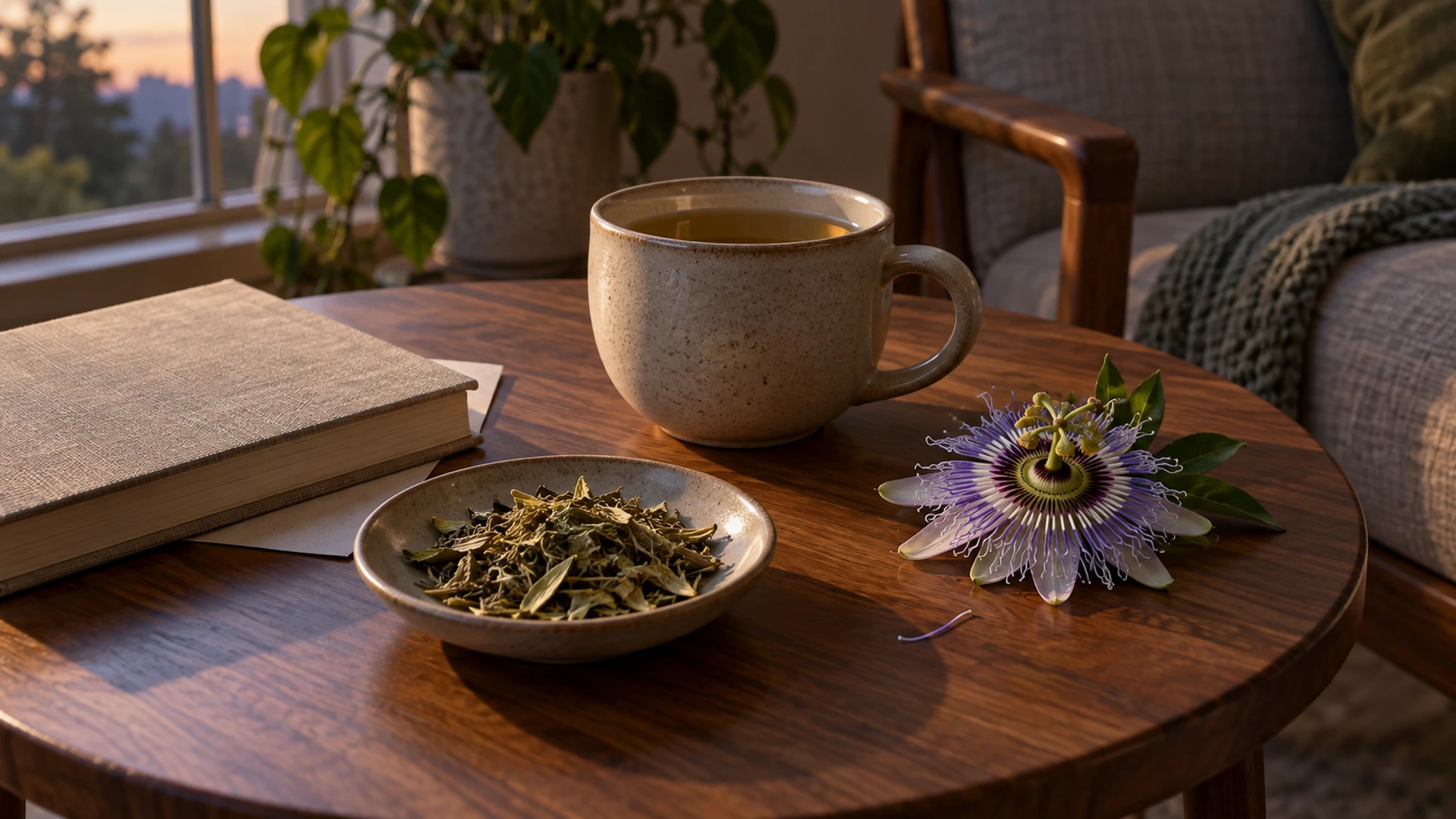
Passionflower — the maypop, Passiflora incarnata — is brewed as a night tea and sewn into sleep sachets to quiet a busy mind, with friendship as its second face. The working parts are the leaves, stems, and intricate flowers, carried into ritual to still what will not slow down on its own.
Quieting: Passionflower's Place in Healing
Within the Healing & Peace category, passionflower holds the quieting role. Not the broad, all-round calm of lavender, and not the gentle sunlit settledness of chamomile — those two work on a person who is simply wound up or needs easing toward rest. Passionflower is the herb you reach for when the mind will not stop. It is the most sedating of the calming herbs, and that distinction matters when you are choosing what to work with.
Cunningham lists peace, sleep, and friendship for passionflower, which maps well onto how it functions in practice. Peace and sleep are the obvious pair — the herb's action is toward stillness. Friendship is the one that surprises people, and it comes from passionflower's secondary category, Love & Attraction. This is not the hot, driven magnetism of damiana, which heats desire. Passionflower brings people close through ease and goodwill rather than pull. It is the love herb for the bond that doesn't burn.
The correspondences, per Cunningham, are Venus, water, and Friday. Venus fits both faces of the herb: the gentle healing side and the friendship-and-love secondary. Water fits the sedating, receptive quality — this is not a fire herb that propels action but one that draws inward and deepens stillness. Friday is the natural working day for anything under Venus's office, which makes it the right day for sleep sachets and friendship altars alike.
A Crown of Thorns in a Flower
When Spanish missionaries encountered Passiflora incarnata in the Americas, they read the flower's structure as a complete allegory of the Passion of Christ. The corona — that layered ring of filaments — became the crown of thorns. The five anthers represented the five wounds. The three stigmas stood for the nails. This interpretation was not kept to private notes; the Roman scholar Giacomo Bosio gathered the symbolism into a 1609 treatise on the Cross and spread it across Europe. The flower's common name comes directly from that reading, and the name has stayed even as the religious framing has largely faded from everyday use.
Passiflora incarnata is native to the southeastern United States, where the Cherokee and other nations ate the fruit and used the plant medicinally.Its folk name is maypop. Purple passionflower is another common name, for the soft violet of the blooms. These names matter for identification, because the plant people think of as passionflower in a garden context is often something else entirely.
Maypop, Not the Garden Blue
Blue passionflower (Passiflora caerulea) is the passionflower most people grow on a trellis, and it looks close enough to maypop that the two are easily confused. They are not the same plant and are not interchangeable. Blue passionflower contains cyanogenic compounds; the herbal and magical plant is P. incarnata, and the species distinction is worth confirming before you work with what you have.
The working forms are leaves, stems, and flowers — used as a tea, dried and sewn into sleep sachets, or laid whole on the altar. Passionflower is sedating, so it is not combined with sedatives, alcohol, or driving, and it is avoided in pregnancy. If you want to go deeper into the tea side of things, the passionflower tea ceremony for harmony gives a full ritual framework for working with it in cup form.
Three Passionflower Workings for a Quiet Mind
A Night Cup for a Racing Mind
This working is for evenings when the day's unfinished business keeps circling back and won't let the mind settle.
Before you brew your cup, take a piece of paper and write down everything that is still running through your head — tasks, worries, half-finished thoughts, things that didn't resolve. Don't organize the list, just get it onto the page. Fold the paper and set it somewhere out of sight: in a drawer, under a book, anywhere that is deliberately not in front of you. Then brew your passionflower tea. Hold the cup in both hands for a moment before drinking, and let the intention be simple: the list is written, it is held somewhere safe, and this cup marks the boundary between the working day and rest. Drink it slowly. The paper stays where it is until tomorrow.
A Passionflower Sleep Sachet
This is a quiet, low-effort working for bringing the herb's calming presence into the sleep space on an ongoing basis.
Take a small square of fabric — something soft, in a color that reads as peaceful to you — and fill it with dried passionflower: leaves, stems, and flowers together if you have them. Tie it closed. This is best made on a Friday or during a Venus hour, when Venus's influence is at its clearest. As you tie the knot, hold in mind what you want the sachet to carry — specifically, the settling of a mind that stays busy too long into the night. Tuck it under your pillow. Replace the dried herb when its scent fades.
Flowers on the Altar for a Friendship
This working draws on passionflower's secondary as a Love & Attraction herb, specifically its face of friendship and goodwill rather than romantic pull.
Write a friend's name on a small piece of paper and place it on your altar. Lay dried passionflowers over it — as many as you have, arranged simply. The intention is care: holding the friendship with warmth and ease. Leave the flowers in place for as long as they hold their form, then return them to the earth.
When the Mind Will Not Stop
Passionflower's angle — quieting — is what makes it distinct inside the Healing & Peace category. It is not trying to lift you up or build you toward something. It is specifically for the moments when the most useful thing you can do is stop. That is the ground passionflower holds.
If you want to see passionflower alongside the other herbs of Healing & Peace, and the six other categories of plant magic, seven paths through plant magic is the place to start.