Zircon, the December Birthstone: Crossing the Threshold Without Losing Your Footing
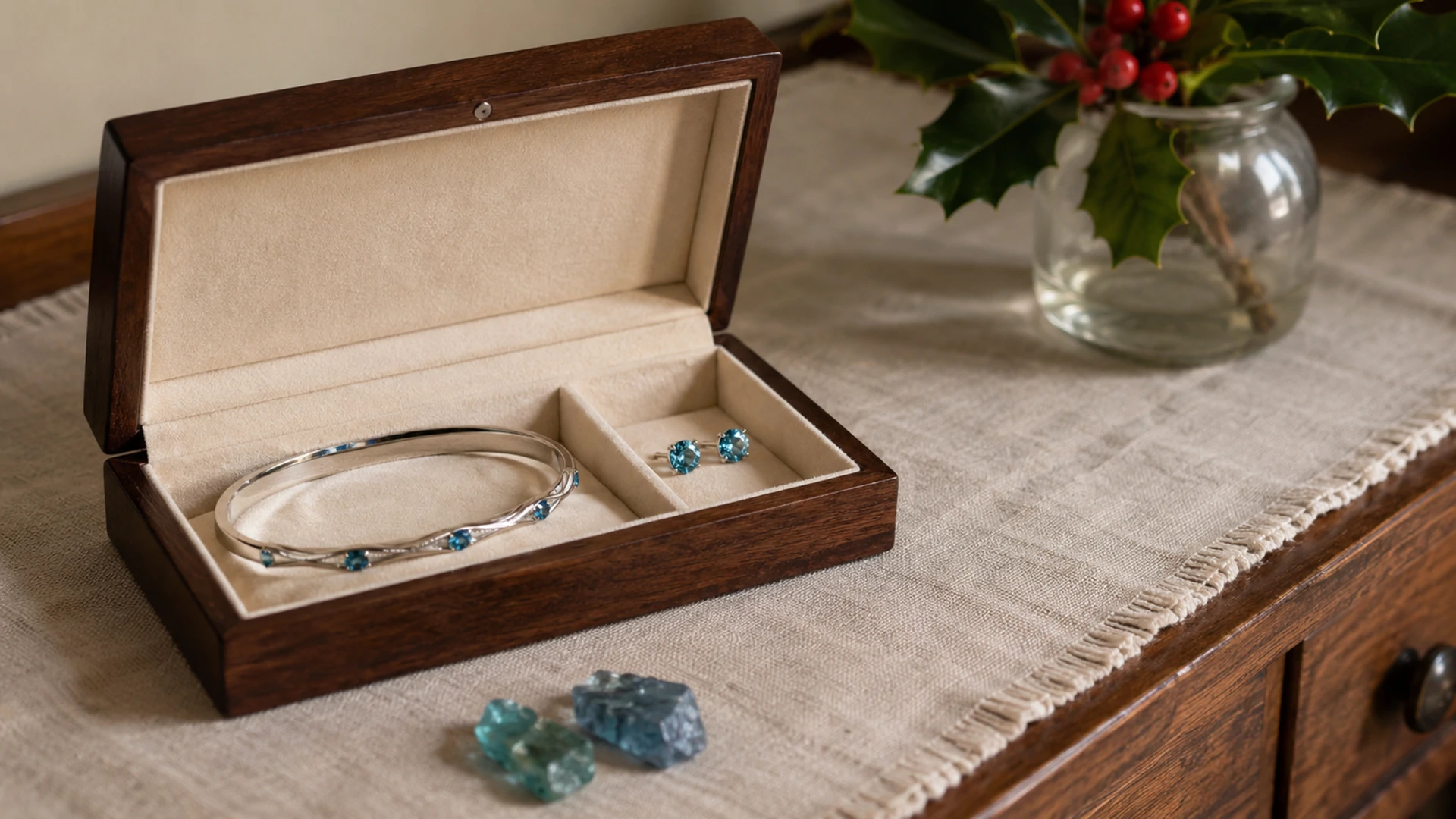
Zircon is one of the oldest minerals on Earth, and it lands in December as a birthstone with a reputation that predates most of the gem traditions we think of as ancient. If you were born in December, this stone carries a specific resonance for you — not just as a pretty gem tied to the month, but as a historically grounded talisman aligned to the energetic signature of where you entered the world. This article is about working with Zircon specifically as the December birthstone: what that relationship means, how to build rituals around it, and how to carry that energy into everyday life.
What Zircon Means as the December Birthstone
Zircon's place in December isn't arbitrary. The stone has been associated with protection, wisdom, and safe passage through darkness for centuries, and those qualities fit December exactly. December sits at the year's furthest tilt away from the sun in the northern hemisphere — the month of the winter solstice, the longest night, and the moment when the old year begins its final exhale before death and renewal. The traditional spiritual work of December has always been about crossing a threshold with clarity, shedding what you've carried too long, and arriving at the new year with intention rather than inertia. Zircon governs all of that.
December holds two zodiac signs. Sagittarius runs through most of the month, and Capricorn arrives at the solstice. These two signs carry a specific psychological tension that Zircon addresses directly. Sagittarius is expansive, philosophically restless, and prone to overextension — it wants to believe in everything, promise everything, and travel everywhere at once. Capricorn contracts all of that into discipline, long-term structure, and sober ambition. Zircon sits right at that hinge point. Its energy is simultaneously clarifying and grounding: it sharpens the mind without deflating enthusiasm, and it anchors intention without making everything feel heavy. For December-born people, it works on exactly the tension they live with — how to stay visionary without losing your footing.
Historically, Zircon appeared in talismanic traditions across medieval Europe and South Asia as a stone that drove away evil spirits, brought peaceful sleep, and sharpened the mind. In Hindu gemological texts, it was classified under the category of gems that conferred wisdom and protection. The name itself is thought to derive from the Arabic zarqun (vermilion) or the Persian zargun (gold-colored), reflecting the stone's range of warm tones. Medieval European lapidaries described it as a ward against plague, lightning, and deception — a stone you wore when you needed to navigate dangerous or uncertain territory.
In 1952, the Jewelry Industry Council of America updated the official birthstone list and placed Zircon in December — specifically replacing Lapis Lazuli, which had held that position alongside Turquoise. That's a different story than what happened with Blue Topaz or Tanzanite, both of which were added to December later as new options. Zircon didn't get appended to the list; it stepped into an existing stone's place. That matters because it speaks to how seriously the gem trade took its historical credentials. A mineral with a documented magical lineage stretching back through medieval Europe and South Asia was a credible successor to Lapis Lazuli in a way that a newer stone simply wasn't.
Zircon's position as a December birthstone is worth taking on its own terms rather than treating it as the footnote version behind Turquoise and Blue Topaz. Those are the stones that get the most commercial attention, and Tanzanite is the newest addition to the month, remarkable for its rarity but carrying a very different energetic signature — oriented toward spiritual vision rather than grounding and protective clarity. Zircon's credentials are the opposite of new. It is one of the oldest minerals on Earth, with crystals dated to 4.4 billion years, and the folk magic traditions that gave it December relevance were already well-established long before any official list formalized them. Working with Zircon as a December birthstone is different from working with it as a general protective or clarifying stone, because birthstone work involves a personal resonance with the time of year you were born. Zircon, for a December-born person, isn't just a stone you're using — it's a stone whose history has been running longer than almost anything else you'll ever hold.
Zircon's Hardness, Care & Origins
Natural Zircon registers between 6 and 7.5 on the Mohs hardness scale, and the range matters. Different zircon types vary in their internal crystal structure, and the lower end of that range is genuinely softer than many stones commonly worn daily. The more practical issue is brittleness at facet edges — Zircon can chip with hard contact, so faceted pieces in rings especially benefit from protective settings that don't leave the edges exposed. Pendants and earrings are lower-risk. If you're buying Zircon for regular wear, that's worth knowing upfront rather than discovering after a knock against a countertop.
Most blue Zircon sold today — the color most associated with December — has been heat-treated. Natural Zircon occurs in a wide range of colors including brown, red, orange, yellow, and colorless, and the blue you'll find in jewelry is almost always produced by heating brown or colorless material at controlled temperatures. This is a parallel story to how most Blue Topaz and much Citrine reaches the market: the treatment is stable, standard in the trade, and doesn't diminish the stone's practical or magical qualities, but it's worth knowing so you're not misled. If you specifically want untreated Zircon, colorless, orange, and red material is more likely to be natural.
Major sources today include Australia, Sri Lanka, Cambodia, Myanmar, Thailand, and Nigeria. Australian zircon crystals are particularly significant geologically — some of the oldest dated minerals on the planet come from the Jack Hills region of Western Australia, with individual crystals confirmed at 4.4 billion years old. That's older than any known rock formation on Earth. Whatever magical tradition you place Zircon in, that age is worth sitting with. Most protective stones have histories measured in centuries. This one's history is measured in geological time.
How to Use Zircon as Your Birthstone in Magic Rituals
Charging and Carrying Your Birthstone
The foundational birthstone practice is simple and worth doing before anything else: charge the stone to you specifically. Hold your Zircon in your dominant hand and breathe slowly and deliberately until you feel settled. Speak your full name aloud, then your birth date, then a one-sentence statement of what you're asking the stone to reinforce in your life right now. It might be clarity, protection, grounded ambition, or something more specific. Breathe onto the stone three times — this is an old consecration technique, literally giving the stone your breath, your life force. Let it sit in winter sunlight or under a cold, clear night sky for a full day and night cycle, ideally around the solstice or new moon. After that, keep it on your body — in a pocket, tucked into a bra, or in a small pouch at your waist. Re-breathe and re-speak your intention once a month to keep the connection active.
Candle Magic Pairing for Clarity and Grounding
Zircon pairs beautifully with a white candle for clarity work, or with a deep blue candle when the intention leans toward protection and mental focus. Dress your candle with a grounding oil — cedarwood and frankincense both align with Zircon's protective nature — and inscribe it with your intention using a pin or stylus. Set the Zircon at the base of the candle so the light falls directly across it. As the candle burns, hold your gaze on the stone and let your mind fix on whatever outcome you're working toward. Don't try to force a vision — let the clarity come on its own. This works particularly well for December workings around the new year, when you're setting intentions for the coming cycle rather than resolving something in the present. A chime candle is ideal here because it burns completely in a single session, carrying the working to completion in one focused sitting.
Winter Solstice Threshold Ritual
The winter solstice is the most powerful timing point for December birthstone work, and Zircon is a stone made for threshold crossings. On the solstice evening, sit with your Zircon in a quiet space with a single candle as your only light source. Take a piece of paper and write out, in plain language, everything you're leaving behind from the current year — habits, relationships, patterns, disappointments, unfinished business you've decided to close. Read each one aloud, hold the Zircon in your non-dominant hand as you do, and imagine the stone absorbing the weight of it as a neutral witness. Then burn the paper in the candle flame and set the Zircon in a bowl of clean water to clear overnight. The next morning — the first morning after the longest night — retrieve the stone, dry it, and hold it again, this time stating what you're carrying forward. The ritual marks the hinge of the year with your own conscious decision about what crosses the threshold with you.
Crown and Third Eye Clarity Practice
Zircon carries a genuine correspondence with mental clarity and heightened perception, which gives it a real application at the crown and third eye positions. Lie flat on your back in a quiet space. Place your Zircon at the center of your forehead or just at the crown of your skull — either works, and you can try both over different sessions to feel the difference. Rest your hands at your sides and breathe slowly. The intention here isn't dramatic psychic activation; it's more like tuning a frequency. Zircon at the crown helps quiet the Sagittarian scatter-energy that December-born people often carry — the sense of too many thoughts moving in too many directions at once. Hold the position for ten to fifteen minutes. Many people find that what comes up during this practice isn't visions but simple, quiet clarity about a question they've been turning over. That's Zircon working correctly.
Dream Clarity and Night Protection Working
Zircon's medieval reputation as a stone that brought peaceful sleep and warded off nighttime spirits has a direct application in modern practice. Place your charged Zircon under your pillow or on the bedside surface nearest your head before sleep, especially during the long dark nights of December. Before you lie down, hold the stone briefly and state what kind of rest you need — clarity, peaceful sleep, or specific insight about a question. Zircon won't produce theatrical dream visions the way mugwort or blue lotus preparations might, but it creates a kind of mental stillness that allows for cleaner dreaming. What it specifically addresses is the anxious, spinning quality of December mental energy, where the weight of the ending year and the uncertainty of the new one keeps the mind from settling. Keep a journal nearby and write down anything that surfaces in the first five minutes after waking, before ordinary thought moves back in.
Year-End Altar Placement for Release and Renewal
If you maintain a working altar, Zircon belongs on it throughout December in a specific orientation. Place it in the northern quadrant of your altar surface, which corresponds to earth, winter, and endings in most Western magical traditions. Surround it with items that represent things you want to clarify or complete before the year closes — a written intention, a symbol of something you're working to finish, a small object connected to an ongoing working. Let it sit undisturbed on the altar through the month, working passively as a clarifying and grounding anchor for everything placed near it. On New Year's Day or the day after the solstice, clear the altar entirely, cleanse the Zircon, and move it to the eastern quadrant to mark the new cycle beginning. This gives the stone two distinct ritual roles within the same month, tracking the full arc of December from threshold to crossing.
Wearing & Carrying Zircon for Daily Protection
Jewelry
The oldest way to work with Zircon is to wear it against the skin, and this is still the most reliable daily application. Rings, pendants, and bracelets all work, but direct skin contact matters — the stone's clarifying and protective qualities are traditionally understood to operate through physical proximity. If you're a December-born person wearing Zircon regularly, you're drawing on the same birthstone resonance that makes charged ritual work effective, just in a quieter, ambient form. A Zircon set in silver is particularly traditional, since silver has long been associated with the moon and with protective boundaries, and the combination reinforces both qualities. Given Zircon's tendency to chip at facet edges, a bezel or protective setting is worth choosing over a prong setting for anything you plan to wear every day.
In the Home
Zircon placed near entryways does consistent work as a protective threshold stone. The front door is the obvious placement, but windowsills in rooms where you sleep or work are equally effective. Its historical associations with warding off deception and unwanted spiritual intrusion make it well-suited to any space where you need to keep the energetic atmosphere clear and stable. Unlike some protective stones that feel heavy or dense in a room, Zircon reads as clarifying rather than fortifying — it keeps things clean rather than barricaded, which makes it comfortable in living spaces.
For Travel
Zircon's medieval reputation as a stone for safe passage translates directly into contemporary use. Keep a small tumbled piece in a travel bag, carry-on, or car. December travel in particular — through winter weather, holiday crowds, emotionally charged family situations — benefits from the stone's grounding and clarifying qualities. It doesn't prevent difficulty, but it supports the mental steadiness you need to move through it well. That Capricorn quality of staying practical and focused when everything around you is chaotic is exactly what Zircon reinforces when you're out in the world.
In the Workspace
A Zircon kept on the desk or near your monitor works on the mental scatter that Sagittarius energy amplifies — the difficulty staying with one task, the pull toward too many directions at once. You don't need to do anything formal with it; proximity is enough. Many people find that working near their birthstone simply produces a subtle but consistent sense of focus and groundedness that accumulates over time, especially when the stone has been charged through the practices in the previous section.
Zircon and the Other December Birthstones
Turquoise is the stone that held December alongside Lapis Lazuli before the 1952 list revision. When the Jewelry Industry Council updated the official birthstone assignments that year, Lapis Lazuli was removed from December and Zircon took its place — meaning Turquoise and Zircon became the new December pairing, a combination that has held ever since. These two stones share December but pull in different directions. Turquoise is a stone of communication, emotional protection, and spiritual connection — it works outward, bridging the self to the wider world. Zircon works inward, clarifying and steadying the mind. Used together in December practice, they cover both sides of the month's threshold work: Turquoise helps you articulate what you're releasing and what you're stepping into, Zircon keeps you grounded enough to actually do it.
Blue Topaz was added to the December list in 1977, well after Zircon's 1952 designation. The two stones share something interesting on the surface: most blue Topaz in the market is colorless or pale Topaz that has been irradiated and heat-treated to achieve its blue color, and most blue Zircon goes through a comparable heat treatment from brown or colorless material. Same visual result, very different mineral families. In practice, Topaz carries correspondences around mental clarity and truth-speaking — it's an active, communicative stone. Zircon's clarifying quality is more internal and protective. If you're choosing between them for December work specifically, Topaz suits workings around speaking clearly and cutting through confusion with others; Zircon suits workings around finding your own ground.
Tanzanite is the newest December birthstone, added to the official list in 2002 — and it sits at the opposite end of the spectrum from Zircon in almost every meaningful way. Zircon crystals are among the oldest material on Earth, at up to 4.4 billion years. Tanzanite was only discovered in 1967, exists in a single location in Tanzania, and carries a genuinely rare energetic signature oriented toward spiritual vision, higher perception, and the liminal. Where Zircon grounds and clarifies, Tanzanite opens. Together they create a complementary pairing for solstice work specifically: Tanzanite for the receptive, visionary part of the long night, Zircon for the grounded, intentional crossing into the new year that follows.
Zircon Crystal Combinations: What Pairs Well
Zircon and Black Tourmaline Both stones carry strong protective correspondences, but they operate differently. Black Tourmaline is a dense absorber — it pulls in and neutralizes negative or chaotic energy from the surrounding environment. Zircon clarifies and wards rather than absorbs, creating an internal steadiness that makes you less susceptible to being affected in the first place. Together, they layer external environmental protection with internal mental clarity, covering both vectors simultaneously. This is one of the most complete protective pairings you can work with, especially during high-stress December travel or family gatherings.
Zircon and Clear Quartz Clear Quartz amplifies the intentional field of any stone it works alongside. When paired with Zircon, it magnifies the clarifying current without introducing any competing correspondences of its own — quartz is neutral in that sense, a pure amplifier. For any working where you need Zircon's qualities to operate more strongly or over a wider space (an altar working or room placement, for instance), placing a clear quartz point directed toward the Zircon significantly increases its reach.
Zircon and Labradorite Labradorite governs intuition, the liminal, and protection of the aura — it's traditionally understood to seal the energy field against leakage and interference while heightening perceptual sensitivity. Zircon grounds and clarifies the mind. Used together, they address a specific December tension: the desire to stay open to insight and intuition without becoming unmoored or energetically porous during the psychically active period around the solstice. Labradorite keeps you receptive, Zircon keeps you steady.
Zircon and Smoky Quartz Smoky Quartz is one of the premier stones for releasing what's finished — it transforms stagnant, dense, or unwanted energy rather than just blocking it. Paired with Zircon's threshold-crossing and year-end release qualities, this combination is particularly effective for the December practice of consciously shedding the old year. Zircon holds the intention clearly; Smoky Quartz does the actual energetic dissolution of what you're letting go. Use them together in the winter solstice threshold ritual described in the previous section.
Zircon and Fluorite Fluorite is specifically associated with mental order, focus, and clearing psychic clutter — it's often called a stone of discernment. This maps directly onto Zircon's clarifying function and reinforces it from a slightly different angle. Where Zircon clarifies through a kind of protective stillness, Fluorite actively organizes and sorts mental energy. For December-born Sagittarians in particular, who often experience mental overload from too many simultaneous ideas and enthusiasms, this pairing is genuinely useful for day-to-day work and decision-making.
December Is Yours, and So Is This Stone
Zircon sits in December because it carries exactly what December requires: the ability to cross a threshold without losing your footing, to release what's finished without losing faith in what's coming, and to hold clarity when the world is noisy and the year is pressing toward its end. That's not generic protective stone energy — it's a precise match for the seasonal and astrological tensions that a December birthday places you inside.
What you've seen in this guide is the full shape of that relationship: the historical grounding that put Zircon in this month, the specific Sagittarius-to-Capricorn hinge it addresses, six rituals that work that energy from different angles, and the daily carrying practices that keep the connection alive without ceremony. The birthstone relationship isn't passive — it deepens the more you work with it intentionally. A charged Zircon you've been wearing for three months has a different quality than one you bought yesterday, because you've built a real energetic rapport with it.
If you're just beginning to explore your birthstone practice, or if you want to understand how Zircon fits within the full tradition of monthly stones, the complete guide to every month's birthstone lays out the whole picture. December gave you a stone that's been working in the world for longer than almost anything else on Earth. That's worth taking seriously.