Angelica Root: The Archangel's Boundary
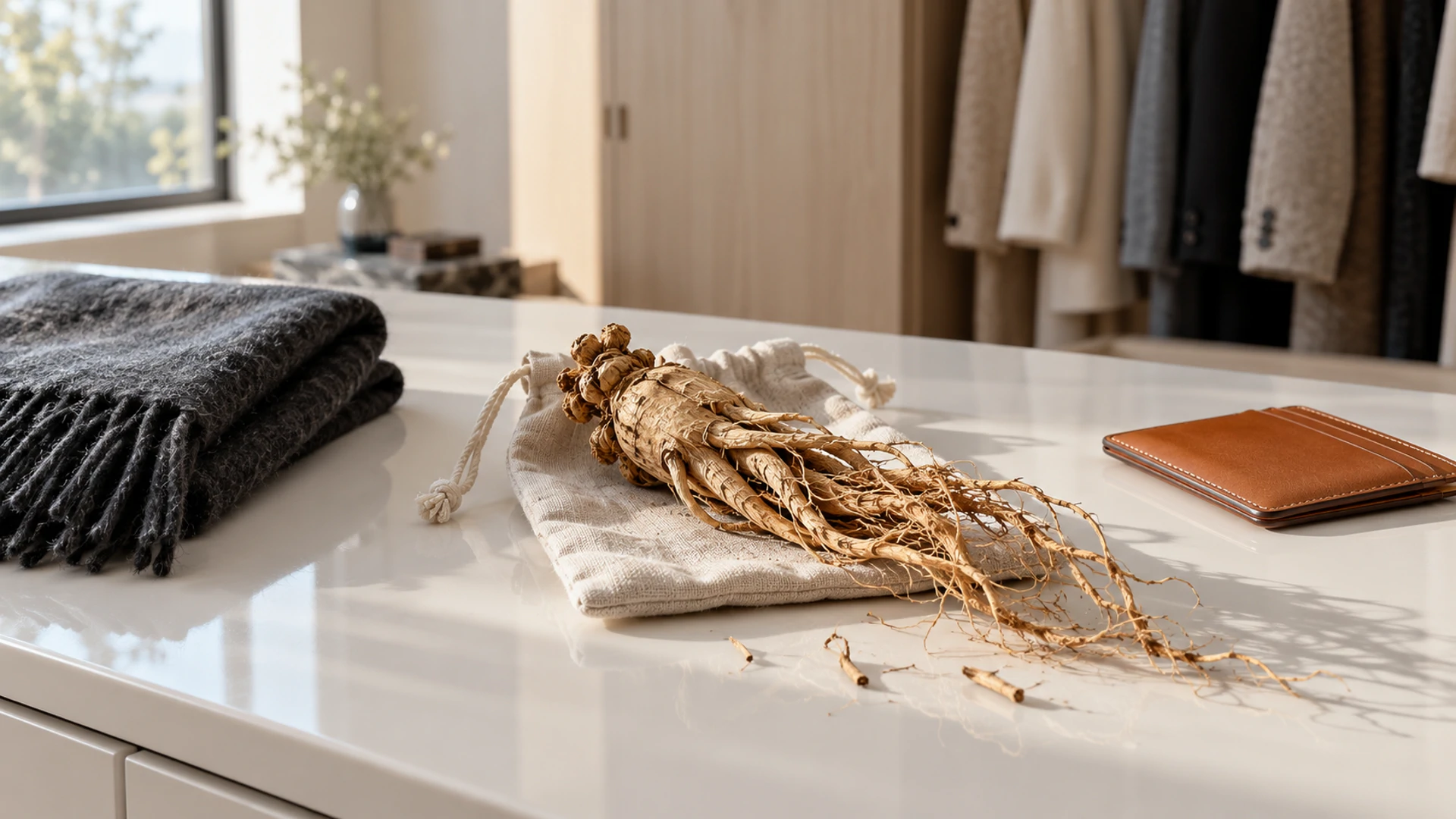
Angelica root is a protective root carried or powdered to declare a firm boundary — named for an archangel and long held in Northern European folk belief to ward against witches, spells, and elf-shot. In Hoodoo it goes by Holy Ghost root, and its secondary thread runs through Healing & Peace, tied to a plague-remedy legend.
A Declared Boundary: Angelica's Place in Protection
What makes angelica distinctive as a protection herb is the quality of the boundary it sets. This is not a quiet, holding ward. It is a declaration — you carry it, you place it, and the statement it makes is assertive rather than passive. When you work with angelica root, you are invoking a named spiritual authority, not simply marking a perimeter. That specificity is exactly why it works so well in situations where you need a boundary to be felt, not just maintained.
Compare it to two close neighbors in the protection category. Solomon's seal seals and holds — it binds and closes a protection already set, keeping a situation locked so it stays that way. Garlic actively repels — it drives off what approaches the threshold rather than only holding it. Angelica declares. It names the line out loud, backed by something larger than the practitioner's will alone. All three are protection work; they are doing three different things within that category.
The correspondences follow the herb's energy closely. Culpeper placed angelica under the Sun in Leo; Cunningham gives it the Sun and fire, with Sunday as its day. That solar attribution makes sense for a root this assertive — Sun-ruled herbs tend toward clarity, authority, and the kind of light that doesn't ask permission. Its secondary category is Healing & Peace, which traces directly to its history as a plague-remedy herb, covered in the next section. In Hoodoo, this root is called Holy Ghost root, a name that speaks to its reputation for working under divine protection and carrying real spiritual weight in protection and wisdom workings.
Michael or Raphael? The Name and the Plague Legend
The archangel name has two competing explanations, and neither is settled enough to crown as the official one. The first ties angelica to the Archangel Michael, because the plant tends to bloom around the old feast of the Apparition of St. Michael, observed on the 8th of May. The timing made the association feel natural to people who lived by the liturgical calendar: here was a powerful, visually striking plant flowering at the feast of the warrior archangel, and the connection stuck. The second explanation involves a dream: an angel — in this version usually identified as Raphael — appears in a dream during a plague outbreak and reveals the root as a cure. This is the story that cemented angelica's reputation as something more than an ordinary medicinal herb. It was heaven-sent intelligence, given in a dream, for the survival of the living. The plague-remedy story is legend, not documented history, but legend does real work in magical tradition, and this one did a great deal of it.
Northern European folk belief took the archangel connection seriously and ran with it. Angelica root was held to be protective against witches, against spells directed at a person or household, and against elf-shot — the folk diagnosis for sudden illness or pain with no visible cause, attributed to invisible arrows shot by elves or spirits. This gives angelica a protection range that covers both the human and the spirit-adjacent, which is unusual. Most warding herbs are aimed at one or the other. Angelica's solar authority and angelic name gave it credibility across both, and folk practitioners in Scandinavia, the British Isles, and the broader Northern European tradition kept it in use for that reason. Whether Michael or Raphael brought it into the world, the root arrived with a story behind it, and that story is part of what it carries.
Buy It, Never Forage It
The single most important practical fact about angelica is its family. Angelica archangelica belongs to the carrot family, Apiaceae — the same family as water hemlock and poison hemlock, two of the most lethal plants of the temperate world. These plants share a growth habit, a habitat preference, and enough visual similarity that even experienced foragers have made fatal mistakes. Angelica root is bought from an established herbal supplier, full stop. Wild-harvesting without expert-level botanical identification is not a calculated risk; it is a genuinely dangerous one. Worth noting for buyers: Dong quai, sold widely in herbal shops, is Angelica sinensis — a different species with its own traditional uses. It is not a substitute for Angelica archangelica, and the two are not interchangeable in magical work. Look for the right name on the label.
The root is the part used for magic — either whole, carried or placed, or powdered and worked into protection blends and threshold lines. On the safety side, angelica contains furocoumarins, compounds that make skin photosensitive. If you are handling powdered root or using an angelica bath, keep the work to evenings and avoid strong sunlight on treated skin afterward. The herb is avoided entirely during pregnancy, and anyone on blood thinners should consult before using it in any form. These are practical notes, not reasons to avoid the herb — they are reasons to work with it at the right time and in the right way, which is true of any root worth taking seriously.
Three Ways to Carry the Archangel's Root
The Root in the Pocket for a Hard Season
This practice is for a sustained stretch of time — a hostile workplace, a difficult family visit, a period when you need a firm boundary to hold across days or weeks rather than a single evening.
Start on a Sunday or during a Sun planetary hour, when the root's solar correspondence is fully supported by the timing. Take a whole dried angelica root — not powdered, but whole, so it holds its form through daily carry. Hold it in both hands and state the boundary out loud: what you are declaring, what you are not open to, what the root is there to assert on your behalf. Keep it specific. Then place it in a small cloth pouch or wrap it in a piece of natural fabric and keep it in a pocket or bag where it stays on your person through the day. The root does not need to be visible to work; it needs to be present. Replace it at the end of the hard season, or sooner if it breaks or crumbles, which some practitioners read as the root having absorbed what it was set to hold.
A Line of Powdered Root Across the Threshold
This practice is for the home's main entry — useful when the threat feels less personal and more directional, something coming in from outside.
Mix powdered angelica root into a protection powder — it combines well with other Sun-ruled ingredients — and lay a thin, deliberate line across the inside of the front doorframe, pressed close to where the door meets the floor. As you lay it, speak the boundary you are setting: who is welcome, what is not. Keep the work brief and wash your hands immediately after; skin contact with the powder should not linger. The line will scatter with foot traffic, which is expected. Sweep it up when it scatters and renew it — this is threshold maintenance, not a one-time working. The sweeping is not a failure of the protection; it is part of how threshold magic works. You return to it, you reinforce it, and the returning itself is an act of will. Some practitioners renew theirs weekly, some monthly, some only when something feels off. Let the space tell you when it needs attention.
The Evening Angelica Bath for Recovery
This practice draws on angelica's Healing & Peace secondary and its plague-remedy legend — it is for spiritual recovery after a long illness or an exhausting, draining period, not for treating any condition.
Make a strong infusion by simmering a small amount of dried angelica root in water, then straining it thoroughly so no plant material remains in the liquid. This must be done in the evening — both because the furocoumarins in angelica root cause sun sensitivity and because evening timing suits the recovery intention: the day is done, you are washing the residue of difficulty off. Add the strained infusion to a warm bath and spend time in it with intention, not distraction. You are not treating an illness; you are doing the spiritual work of marking a transition — the hard period has passed, and this bath draws a line between that and what comes next. This practice is not for use during pregnancy, and the evening timing is not optional. Do not follow an angelica bath with sun exposure on the skin that was in contact with the water. After the bath, dress warmly and rest. The work is complete.
A Boundary With a Name Behind It
Angelica's specific gift is that it does not simply hold a line — it announces one. In a category full of warding herbs with their own distinct angles, angelica is the one you reach for when a boundary needs to be stated, not whispered. The angelic name behind it is not mythology dressed up as magic; it is what the herb actually carries in practice. You feel it in the assertiveness of the working. This is protection that speaks.
If you want to see how angelica sits alongside the other thirteen herbs of the Protection & Warding category, and how the full range of plant magic is organized across seven intentions, the Witch's Herbarium guide is where to go next.