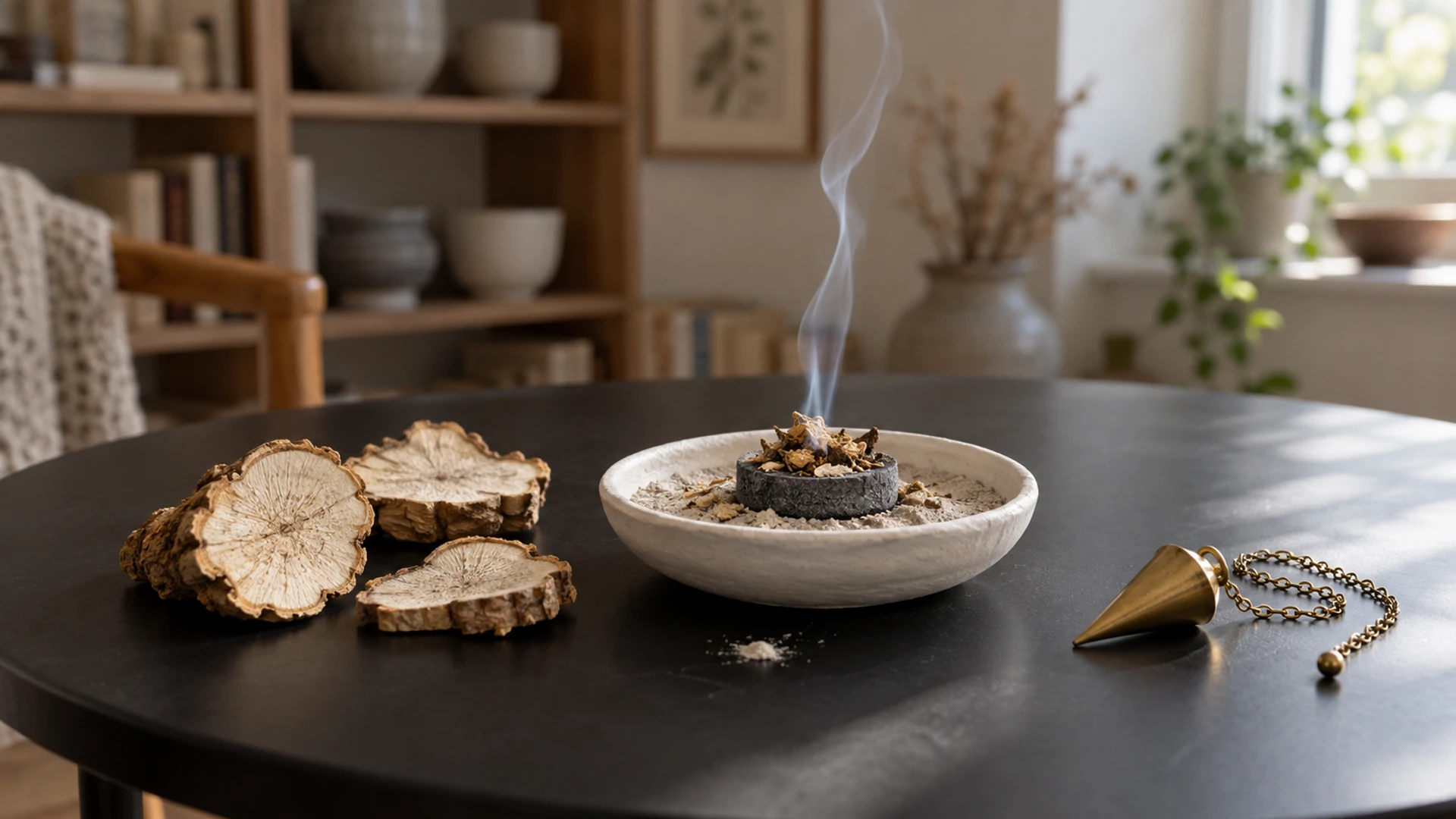
Elecampane (Inula helenium) in Magic: Correspondences, Uses & Safety

Elecampane is one of those herbs that rewards the practitioner who takes the time to really learn it. It doesn't have the same mainstream recognition as lavender or rosemary, but in European folk magic it has been considered a powerhouse for centuries — particularly for psychic development, spirit work, and protective magic. The plant itself is striking: a tall, robust perennial with bright yellow daisy-like flowers and a thick, aromatic root that carries most of its magical potency. In magical herbalism, elecampane sits firmly in the category of herbs that open, expand, and protect — and once you understand why, it becomes an incredibly versatile tool in your practice.

The Spiritual Meaning of Elecampane

Elecampane's spiritual identity is built around two complementary forces: expansion and protection. It is an herb associated with opening the inner senses — psychic vision, dream clarity, and attunement to spirit — while simultaneously shielding the practitioner who steps into those more vulnerable spaces. That combination makes it unusual. Most herbs lean clearly one way or the other, but elecampane holds both qualities with real authority.


The root of the plant is where most of its magical energy is concentrated, and that's telling. Roots in magical symbolism represent depth, hidden knowledge, and access to what lies beneath the surface. Elecampane's root is thick, resinous, and intensely aromatic — it practically announces itself. When you work with it, you're working with something that has a strong sense of its own nature, and that directness translates into your magical work too. This is not a subtle herb. It moves energy deliberately and with force.


Its solar and mercurial nature gives it a dual spiritual quality that many practitioners find especially useful. On one hand it carries the expansive, illuminating energy of the sun — clarity, vitality, authority, and the ability to cut through confusion. On the other it carries mercury's edge: communication, movement between realms, and the capacity to carry messages and intentions across boundaries. That combination is what makes elecampane so effective in psychic and spirit work specifically. It doesn't just open a door — it lights the hallway.


Mythologically, the plant has a deep connection to Helen of Troy, which is woven directly into its Latin name, Inula helenium. Legend holds that Helen was gathering elecampane when she was abducted by Paris, and that the flowers sprang from her tears. Whether or not you work with Greek mythology in your practice, that story layers the herb with themes of longing, power, beauty, and the emotional force that drives transformation. Some practitioners working with Venusian or Aphrodite-adjacent themes incorporate elecampane for exactly this reason, even though its primary planetary assignment is the Sun.


At its spiritual core, elecampane is about sovereignty. It supports you in seeing clearly, moving through subtle realms with your senses intact, and returning to your body grounded and shielded. If you are building a practice around psychic development, ancestral work, or deepening your intuition, this herb deserves a real place on your shelf.

Elecampane Correspondences and How to Apply Them

Understanding an herb's correspondence profile isn't just an academic exercise — it tells you exactly why the herb works for certain intentions and how to align your workings to get the most from it. Every correspondence is a thread connecting the herb to a broader network of energies, symbols, and forces. When your intention, your tools, and your herb all share correspondences, you're not just adding ingredients together — you're amplifying a coherent signal.


Here's the full correspondence profile at a glance:

  • Planet: Sun (with secondary Mercury influence)
  • Element: Air
  • Gender: Masculine
  • Deities: Helios, Apollo, Hermes, Helen of Troy
  • Magical properties: Psychic enhancement, spirit communication, protection, love and attraction, clarity of vision, purification
  • Associated crystals: Clear Quartz, Labradorite, Amethyst, Sunstone
  • Chakra: Third Eye (Ajna), with secondary Solar Plexus resonance

The Sun correspondence is the most important one to understand because it shapes everything else. Solar herbs carry qualities of light, clarity, willpower, and authority. When you use elecampane in a working, you're bringing in an energy that illuminates — it makes things visible, dispels confusion, and supports self-confidence. This is why elecampane shows up in workings for psychic clarity rather than in vague or dreamy intuitive work. It sharpens.


The Air element reinforces this. Air is the element of the mind, of communication, of movement and transmission. Elecampane doesn't just help you receive psychic impressions — it helps you understand them, articulate them, and carry them back with you clearly. If you've ever done divination or spirit work and come away with impressions that dissolved before you could make sense of them, elecampane is worth incorporating precisely because of this Air quality.


The masculine gender correspondence means elecampane is projective in nature — it sends energy outward rather than drawing it inward. This is an important distinction when you're building a spell. Projective herbs are used to push intentions into the world, to create movement, to cut through obstacles, and to actively repel unwanted energy. This makes elecampane particularly effective when paired with a receptive herb like mugwort in psychic or dream work — the elecampane projects clarity and protection while the mugwort opens the receptive channels.


The Third Eye as the primary chakra association makes complete sense given the herb's core properties. The Third Eye governs intuition, psychic perception, inner vision, and the ability to see beyond the surface of things. Working with elecampane supports all of these functions — and the secondary Solar Plexus resonance is what prevents that work from becoming ungrounded or destabilizing. The Solar Plexus is your center of personal power and will. Elecampane keeps your feet under you even while it opens your senses.

How to Use Elecampane in Magic

Elecampane's versatility is one of its great strengths. The dried root is the most commonly used part in magical practice, though the dried leaves and flowers also carry the herb's energy. The root has a distinctive earthy, resinous, slightly bitter scent that deepens when burned or simmered — it's recognizable and strong, which is part of what makes it such a reliable magical anchor.


As incense or loose smoke blend: This is one of the most traditional and effective ways to use elecampane. Burning the dried, powdered root on a charcoal disc creates a thick, aromatic smoke that is excellent for cleansing a space before psychic work, scrying, or spirit communication. The smoke can be directed over tools like tarot cards, pendulums, or scrying mirrors to enhance their clarity and open their channels. You can blend elecampane root with frankincense for solar amplification, or with mugwort for a potent psychic enhancement blend. Always burn in a well-ventilated space.


In sachets and mojo bags: Add dried elecampane root to a sachet for psychic protection when doing spirit work, mediumship, or deep trance work. A small sachet tucked under your pillow or placed on your bedside altar supports prophetic dreams and clear dream recall. For a focused psychic protection sachet, combine it with angelica root and a piece of labradorite. Hold the finished sachet in your hands, breathe your intention into it deliberately, and trust that the combination works because you've set it in motion — the herbs are your tools, not the source of the power.


In candle magic: Finely ground elecampane root can be used to dress candles for psychic work, spirit communication, divination rituals, and solar-themed spells for clarity and personal authority. If you're working with a yellow or gold candle for clarity and mental focus, rolling it in powdered elecampane after anointing it with oil is a clean and effective method. For protection workings, it pairs well with a white candle dressed with protective oil. If you want to learn more about the full process of dressing candles with herbs, the complete guide to candle dressing covers the technique in depth.


In ritual tea and potions: Elecampane root can be simmered as a decoction — a decoction is simply a tea made by boiling a hard material like bark or root rather than steeping it — and consumed as part of a ritual for psychic enhancement or dream work. Simmer a teaspoon of dried root in two cups of water for fifteen to twenty minutes, strain well, and sweeten with honey if needed. Drink it as part of a deliberate ritual before meditation, divination, or before sleep if you're working on dream clarity. See the safety section before drinking, though — there are real considerations with internal use. If you want to deepen your understanding of how to build meaningful ritual tea practice, the guide to spiritual tea ceremonies by intent is an excellent companion resource.


In spellwork and ritual layouts: Elecampane root pieces can be placed on your altar during any working centered on psychic ability, spirit contact, or solar energy. During divination sessions, placing a small amount of dried root near your reading space helps sharpen the signal. You can also create a simple floor wash — an infusion of elecampane strained and added to your cleaning water — and wash the threshold or floors of a space where you do spiritual work, to clear and consecrate it before an important ritual. This is a particularly old European practice and it remains effective because the act of physical cleansing combined with clear intention is a powerful alignment of will and action.


In oil and perfume blends: Because elecampane essential oil is available (though relatively rare), it can be incorporated into ritual anointing oils for psychic work or solar workings. Use it in very small proportions — the scent is intense and the oil can be a sensitizer for some skin types. More commonly, practitioners infuse dried root in a carrier oil like jojoba or almond for several weeks to create a gentler infused oil suitable for anointing candles, tools, or the Third Eye point on the forehead. If anointing skin, do a patch test first and keep concentrations low.

Elecampane in Magical History

Elecampane has a documented presence in magical and folk practice across multiple cultures, and understanding that history gives you a richer sense of the herb's character. It has been cultivated in Europe since at least the classical era — the Romans grew it as both a medicinal and a sacred plant, and Pliny the Elder wrote about it in the first century CE. Its presence in early texts is a reminder that this is not a herb with a vague or constructed magical history — it has genuinely been in continuous use for over two thousand years.


In European folk magic: Elecampane was widely used in British and Germanic folk traditions under various names, including elfwort and elf dock — names that directly connect it to the practice of working with the fae and spirit realms. It was believed to grant the ability to see spirits and faeries, and was used in preparations intended to open the second sight. In some traditions it was burned to call spirits or hung in bundles to protect a household from their interference, demonstrating again that dual protective-and-opening quality at the heart of the herb's nature. It also appeared in love charms and attraction workings, particularly in Germanic folk traditions, where it was associated with drawing a beloved toward you.


In classical Mediterranean magic: The Helen of Troy connection places elecampane firmly in the world of Greco-Roman magical thought. Beyond the myth, ancient practitioners used it in workings connected to solar deities like Apollo and Helios — particularly in rituals for prophecy and divination. Apollo as the god of the oracle and of clear-seeing maps directly onto elecampane's psychic clarifying function. Offerings of the root were made at solar shrines, and it was believed to strengthen the inner light necessary for prophetic vision.


In medieval European practice: During the medieval period, elecampane appeared in grimoires and herbals as a component in preparations for second sight and spirit conjuration. It was listed in some recipes for flying ointments — preparations believed to facilitate spirit travel and out-of-body experiences — though the hallucinogenic elements of those formulas came from other ingredients rather than elecampane itself. Its role was more as a clarifier and opener, preparing the mind and subtle senses for the deeper work. It also appeared in protective amulets carried by travelers, valued for its ability to guard against malevolent spirits and magical attack on the road.

Safety and Practical Cautions

Elecampane is not a dangerous herb in moderate external use, but there are real safety considerations worth knowing before you work with it, particularly if you plan to use it internally or in extended skin contact applications.


Allergic reactions: This is the most important caution. Elecampane belongs to the Asteraceae family — the same family as ragweed, chrysanthemum, daisies, and chamomile. If you have known allergies to plants in this family, treat elecampane with serious caution. Sensitization reactions can occur on the skin when handling fresh plant material or concentrated preparations, causing contact dermatitis in susceptible individuals. Always do a patch test before using any elecampane-infused oil on your skin, and handle fresh or dried root in a ventilated space if you know you're sensitive.


Internal use: Elecampane root has a long history as a medicinal herb, and a decoction is not inherently dangerous for most healthy adults in reasonable quantities. However, it should be avoided during pregnancy, as it has traditionally been used to stimulate uterine contractions and carries a real risk in that context. It should also be avoided while breastfeeding. People with known Asteraceae allergies should not consume it at all. If you are taking any prescription medications, consult a qualified herbalist or healthcare provider before using it internally, as there is limited but real potential for interactions.


Essential oil use: Elecampane essential oil contains high concentrations of alantolactone and isoalantolactone — sesquiterpene lactones that are known skin sensitizers. The essential oil should never be applied directly to the skin undiluted, and even diluted preparations can cause sensitization with repeated use. Inhalation of the undiluted oil directly from the bottle is also best avoided. For magical oil work, a carefully prepared infused oil at a low herb-to-carrier ratio is generally safer and more practical than working with the essential oil directly.


Sourcing and storage: Buy dried elecampane root from a reputable herbal supplier that sources organically or sustainably. The root should have that characteristic strong, camphor-like aroma — if it smells flat or dusty, the material is old and its magical potency will be diminished. Store it in an airtight container away from light and moisture. Properly stored, dried elecampane root retains its quality for up to two years.

Continue Building Your Herbal Practice

Every herb you work with belongs to a broader category — cleansing, protection, attraction, or banishment — and knowing where a plant sits in that framework is what turns a shelf of dried botanicals into a real practice. If you're ready to see how Elecampane fits alongside the other foundational herbs, read Herbs in Magic: A Beginner's Guide to Magical Herbalism. It maps out the four core categories of herbal magic and walks you through the key plants in each one.

Start where you are, follow what calls to you, and trust that your practice will deepen with every plant you come to know.


FAQ - Elecampane in Magic

What is elecampane used for in magic?

Elecampane is primarily used in magic for psychic enhancement, spirit communication, divination support, and protective workings. It is a solar herb associated with clarity and inner vision, making it especially useful for practitioners developing their intuitive abilities or doing regular spirit or ancestral work. It also has traditional uses in love and attraction magic in European folk traditions.

Can beginners use elecampane in their practice?

Yes, absolutely. Elecampane is a well-documented and widely available herb with a long track record in magical practice. For beginners, the easiest and safest starting points are using dried root in sachets, adding it to incense blends burned on a charcoal disc, or placing it on an altar during divination or meditation. You don't need to work with it internally or use the essential oil to benefit from it magically.

What part of the elecampane plant is used in magic?

The root is the most commonly used part and the most potent magically. It is available dried and sometimes powdered from herbal suppliers. The dried leaves and flowers also carry the herb's energy and can be used in incense blends or sachets, though most traditional and modern magical applications specifically call for the root.

What planet rules elecampane?

Elecampane is primarily a solar herb, ruled by the Sun. This gives it qualities of clarity, illumination, authority, and vitality. Some practitioners also recognize a secondary Mercury influence, which aligns with the herb's association with communication, psychic reception, and movement between realms. This dual planetary quality is part of what makes it so effective for spirit contact and psychic work.

Can I burn elecampane as incense?

Yes. Burning powdered or crumbled dried elecampane root on a charcoal disc is one of the most traditional and effective ways to use it. The smoke is thick and aromatic and is excellent for clearing a space before psychic work, consecrating divination tools, or creating an atmosphere conducive to spirit contact. Always burn in a well-ventilated space, and be cautious if you have known sensitivities to Asteraceae plants.

Is elecampane safe to drink as a tea?

For most healthy adults, a moderate decoction of elecampane root is not inherently dangerous and has a long history as an herbal preparation. However, it must be avoided during pregnancy due to its historical use as a uterine stimulant. People with Asteraceae family allergies should not consume it. If you are taking prescription medications or have any health conditions, consult a qualified herbalist or healthcare provider before drinking it.

What crystals pair well with elecampane in magic?

The crystals that align most naturally with elecampane are clear quartz for amplifying psychic clarity, labradorite for protection during intuitive and spirit work, amethyst for deepening psychic receptivity, and sunstone for reinforcing the solar energy of the herb. You can place any of these alongside elecampane on your altar or include them in a sachet together to create a more focused working.

What is the difference between elecampane and other psychic herbs like mugwort?

The key difference is in how each herb functions energetically. Mugwort is a lunar, receptive herb — it softens the boundary between waking consciousness and the dream or spirit world, opening you up passively to impressions. Elecampane is solar and projective — it sharpens and clarifies, actively protecting and illuminating rather than simply opening. Many experienced practitioners use both together for this reason: elecampane projects clarity and protection, while mugwort opens the receptive channels. They complement each other very well.
June 16, 2026

About the Author — Claire

Claire is a New York-based magical practitioner and folklore researcher with years of study spanning mythology, astrology, tarot, herbalism, and grimoire traditions. She approaches magic as a disciplined practice rooted in will and intention — and writes about it with the same depth, honesty, and enthusiasm she brings to her own craft. Whether you're just starting out or deep in your practice, her articles give you real knowledge you can actually use.

More about the author →