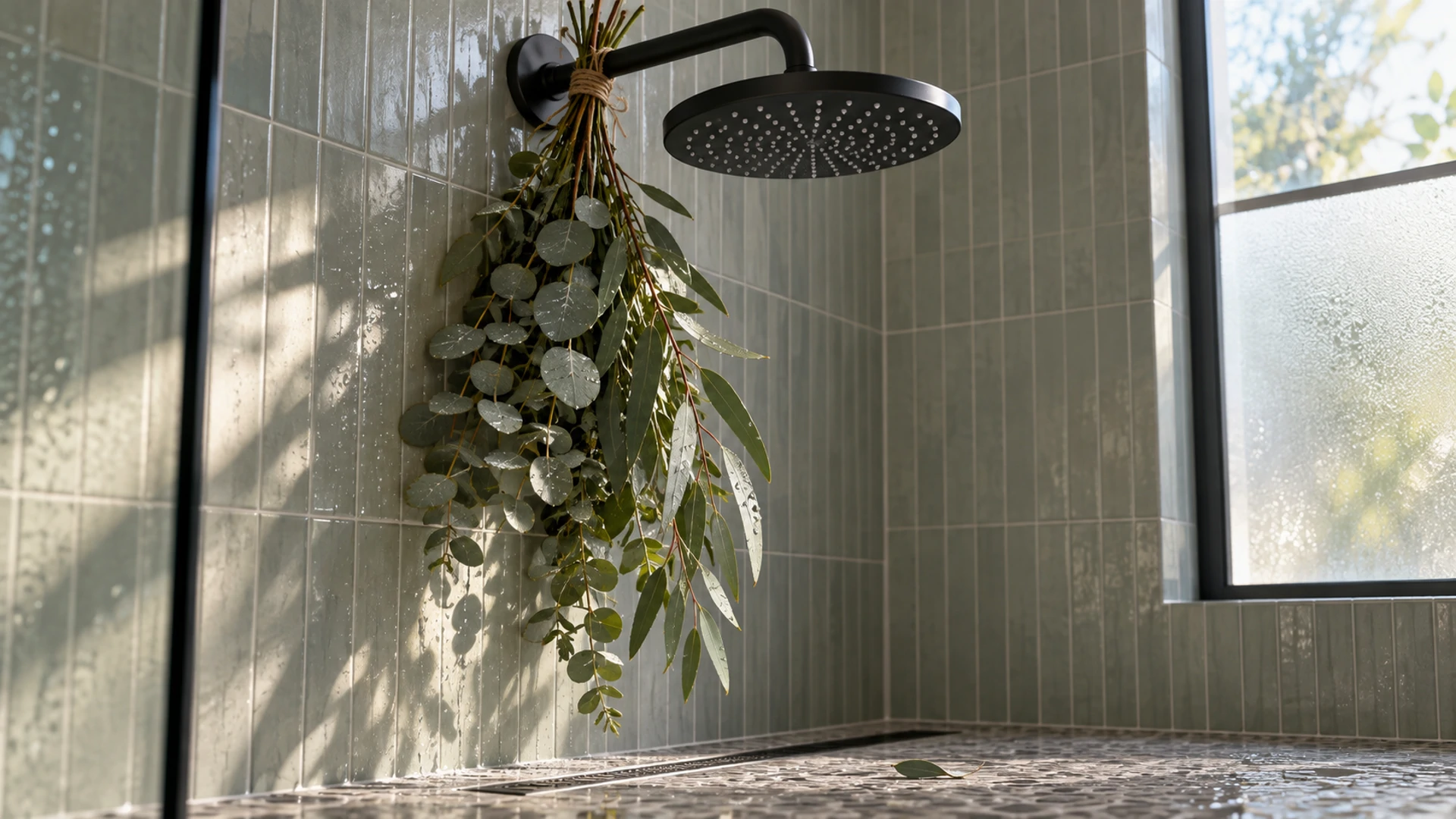
Eucalyptus (Eucalyptus globulus) in Magic: Correspondences, Uses & Safety

If you've ever walked into a room after burning eucalyptus and felt the air shift — lighter, cleaner, more awake — you've already experienced what makes this plant so valuable in magical practice. Eucalyptus (Eucalyptus globulus) is one of the most effective cleansing herbs available to modern practitioners. Its sharp, camphor-like scent cuts through stagnant energy the way few other plants can, and its associations with healing, protection, and mental clarity make it a genuinely versatile tool in the magical toolkit. Whether you're clearing space after conflict, supporting a healing working, or building a protection practice, eucalyptus earns its place on the altar.

The Spiritual Meaning of Eucalyptus

Eucalyptus carries a quality that's hard to ignore: presence. When it enters a space, it commands attention. In spiritual terms, that quality translates to purification — the ability to dispel what shouldn't be there and restore clarity to what remains. This is a plant that doesn't soften the energetic landscape. It clarifies it.


At its core, eucalyptus is a plant of renewal. Its growth pattern reflects this — eucalyptus trees can regenerate after being cut down or burned, sending new shoots up from the root system with startling speed. That regenerative quality mirrors what the plant does energetically: it doesn't just remove negative energy, it creates conditions where healing and fresh growth can take root. When you work with eucalyptus, you're working with something that understands both the clearing and the rebuilding.


Eucalyptus also holds strong associations with the breath — literally and symbolically. Its volatile oils open airways and ease congestion, and in magical terms this translates to a connection with mental clarity, truth, and the removal of illusion. If you feel clouded, stuck in confusion, or blocked in your thinking, eucalyptus is one of the first plants to reach for. It cuts through the fog so you can see and think clearly again.


There's a protective dimension to eucalyptus as well. Its sharp, assertive scent creates a kind of energetic boundary — it signals clearly that a space has been cleansed and claimed. Many practitioners use it specifically for this reason: not just to remove what's unwanted, but to hold a clean energetic field after the working is done. Eucalyptus doesn't just open the window; it keeps the air fresh after you do.

Eucalyptus Correspondences and How to Apply Them

Understanding the correspondences of an herb is what allows you to use it with real precision. Correspondences are the symbolic and energetic associations that connect a plant to specific magical forces — planets, elements, deities, and properties. When you align your working with these associations, you're not just using an herb for its scent. You're placing it within a framework that amplifies your intention and focuses your will.


Here's the full correspondence profile at a glance:

  • Planet: Moon
  • Element: Air
  • Gender: Feminine
  • Deities: Artemis, Hecate, Hygeia
  • Magical properties: Purification, healing, protection, mental clarity, banishing, renewal
  • Associated crystals: Clear quartz, amethyst, selenite, aquamarine
  • Chakra: Throat chakra and Third Eye chakra

The Moon rulership is one of the most useful things to understand about eucalyptus in practice. The Moon governs cycles, intuition, emotion, and the unseen — and eucalyptus, as a lunar herb, works best when you want to peel back layers and address what's actually happening beneath the surface. Lunar herbs often support internal work: releasing what no longer serves, healing emotional wounds, surfacing hidden truths. If you're doing any kind of introspective or transformative magic, eucalyptus belongs in that working.


The Air element connection reinforces the mental clarity angle. Air governs thought, communication, perception, and the movement of information. Combined with the Moon's intuitive quality, eucalyptus sits at the intersection of rational clarity and emotional honesty — it's excellent for workings where you need to see a situation clearly without emotional distortion. This also makes it useful in divination rituals, where cleansing your space and sharpening your perception directly improves the quality of what you receive.


The deity associations help you understand the character of eucalyptus even more precisely. Artemis governs wilderness, the moon, and physical healing. Hecate governs crossroads, banishing, and the clearing of thresholds. Hygeia is the Greek goddess of health and preventive healing. Together these three deities paint a clear picture: eucalyptus is a healer, a guardian, and a cleanser of boundaries. When you work with it, you're working with that same energetic signature.


The associated crystals are worth noting if you build crystal-herb combinations into your practice. Clear quartz amplifies the cleansing and clarity work. Selenite, like eucalyptus, is deeply tied to purification and energetic clearing — the two together create a powerful cleansing combination. Amethyst pairs with eucalyptus for healing and intuitive work, and aquamarine supports the communication and throat chakra dimension of the plant. Any of these pairings will strengthen a eucalyptus-based working.

How to Use Eucalyptus in Your Practice

One of the great strengths of eucalyptus is how many forms it takes in practice. Fresh leaves, dried herbs, essential oil, incense, and infused water all behave a little differently and suit different kinds of workings. Knowing which form to reach for is part of building a real, functional practice with this plant.


Smoke cleansing and incense are probably the most common ways practitioners work with eucalyptus. Burning dried eucalyptus leaves — either alone or blended with other cleansing herbs like white sage, rosemary, or juniper — produces a sharp, clarifying smoke that moves through a space and breaks up stagnant energy fast. Use it before ritual to clear the space, after conflict or illness to reset the energy of a room, or at the start of a new cycle to mark a clean beginning. Move the smoke deliberately, with clear intention about what you're clearing and what you're inviting in to replace it. Your intention is what makes this more than air freshener.


Essential oil gives you eucalyptus in its most concentrated, most portable form. A few drops on a diffuser stone or in an oil burner will cleanse and protect a space continuously. You can anoint candles, tools, or the edges of doorframes and windowsills for protective workings. Add a drop or two to a neutral carrier oil and anoint your temples or wrists before meditation or divination to sharpen your perception. Never apply eucalyptus essential oil undiluted to skin — it's highly concentrated and will irritate or burn. Always dilute in a carrier oil at a ratio of no more than 2 to 3 percent essential oil.


Sachets and herbal bundles allow you to place eucalyptus's protective energy in a fixed location. A small cloth sachet filled with dried eucalyptus leaves — optionally combined with lavender for calm, cedar for protection, or rosemary for clarity — can be tucked under a pillow for protective sleep magic, hung near an entryway to guard the threshold, or placed in a sick room to support healing. Write your intention on a slip of paper and seal it inside the sachet to anchor the working clearly.


Floor washes and cleansing sprays are among the most effective tools for whole-room energetic cleansing, and eucalyptus works beautifully in both. For a floor wash, steep dried eucalyptus leaves in boiling water, strain, and add the cooled liquid to your mop water. Wash floors moving from the back of the home to the front door, directing energy out with each stroke. For a spray, combine distilled water with a few drops of eucalyptus essential oil and shake well before each use. Mist corners, doorframes, and any areas where energy feels heavy or stuck.


Candle dressing is another practical application. Anoint a white or pale blue candle with diluted eucalyptus oil while focusing on your intention — healing, clarity, protection, or purification — then roll it in dried crushed eucalyptus leaves if you want to strengthen the connection to the herb itself. White candles work well for healing and purification. Pale blue supports mental clarity and communication. Let the candle burn down fully in a single session if the working allows for it, holding your intention clear throughout.


Ritual baths are one of the most powerful ways to use eucalyptus when the working is personal — when you're clearing your own energy rather than a space. Steep a strong infusion of dried eucalyptus leaves, strain it thoroughly, and add the liquid to a warm bath. You can also add a few drops of eucalyptus essential oil to a tablespoon of carrier oil or a cup of Epsom salt before adding it to the water. Soak with intention, visualizing the water drawing out stagnant or harmful energy and replacing it with clarity and health. Rinse off at the end to signal completion of the working.

Eucalyptus Across Cultures: A Brief Magical History

Eucalyptus is native to Australia, which means it entered the broader cross-cultural magical conversation relatively recently compared to herbs like rosemary or frankincense. But in the places where it has been used, the pattern is consistent: eucalyptus was recognized as a healing and purifying plant almost everywhere it took root.


For Aboriginal Australians, eucalyptus — particularly the leaves and steam from boiled leaves — was central to healing practices for thousands of years. The plant was used to treat wounds, fevers, and respiratory illness, and its role as a medicine gave it a sacred dimension. Healing and the spiritual were not separated in traditional Aboriginal knowledge systems, and eucalyptus occupied that liminal space between the physical and the sacred naturally. Its use was embedded in country, in relationship with the land, and in the understanding that the plant itself carried intelligence and power.


When European colonizers brought eucalyptus back from Australia in the late eighteenth century, it spread rapidly across Europe, North Africa, and South America, largely because of its reputation as a powerful medicinal plant. In Mediterranean folk traditions, particularly in Southern Europe and North Africa, eucalyptus quickly became incorporated into household protective and healing practices. Branches were hung in homes to ward off illness and evil. The leaves were burned to clear sickrooms. Its speed of adoption in these cultures reflects how immediately recognizable its protective and purifying character was — even practitioners working in completely different magical frameworks reached the same conclusions about what eucalyptus does.


In Latin American curanderismo — a healing tradition that blends Indigenous, Spanish, and African spiritual practices across Mexico and Central and South America — eucalyptus became a staple cleansing herb. It features prominently in limpias, which are ritual cleansings performed to clear negative energy, illness, or harmful spiritual influences from a person's body and energy field. Bundles of fresh eucalyptus leaves are swept over the body, sometimes combined with prayer, smoke, and other cleansing herbs. The physical sensation of the leaves and the sharp scent are understood to break up and remove what is blocking the person's health and wellbeing. This practice is still widely performed today.

Safety and Precautions When Working with Eucalyptus

Eucalyptus is a powerful plant, and powerful plants deserve careful handling. Most of the risks associated with eucalyptus in practice come down to how concentrated the preparation is and how it's being used, so understanding the boundaries clearly is what keeps your practice safe.


The most important rule is this: eucalyptus essential oil is never safe to ingest. Even small amounts — as little as a few milliliters — can cause serious toxicity in adults, and far less can be dangerous for children. Do not add eucalyptus essential oil to teas, tinctures, or any preparation meant to be swallowed. The dried herb brewed as a very mild infusion has a longer history of traditional use, but if you're considering any internal preparation, consult a qualified herbalist or medical professional first. This is non-negotiable.


Topical use of eucalyptus essential oil requires dilution — always. Apply it directly to skin and you risk chemical burns and sensitization. Dilute in a carrier oil at no more than 2 to 3 percent, meaning roughly 1 to 2 drops of essential oil per teaspoon of carrier oil. Perform a patch test on the inside of your wrist before using any new eucalyptus oil preparation on a larger area of skin.


If you have asthma, severe respiratory conditions, or are sensitive to strong volatile compounds, burn eucalyptus in well-ventilated spaces only, and do not diffuse it in enclosed rooms for extended periods. It's also worth noting that eucalyptus is not safe for cats or dogs — pets should not be in the same room when eucalyptus is being burned or diffused, and dried eucalyptus should be kept out of their reach. If you work with a familiar or keep pets in your practice space, this is an important precaution.


Eucalyptus is not recommended during pregnancy. The concentrated volatile oils can cross the placental barrier, and while the dried herb in very mild preparations may have a lower risk profile, concentrated forms — especially essential oil — should be avoided entirely until you've had a conversation with your healthcare provider.


None of these precautions should discourage you from working with eucalyptus — they should simply orient you toward using it intelligently. The plant is excellent in smoke cleansing, topical preparations, floor washes, and ritual sprays. Work with it in those forms and you'll have access to everything it offers with minimal risk.

Continue Building Your Herbal Practice

Every herb you work with belongs to a broader category — cleansing, protection, attraction, or banishment — and knowing where a plant sits in that framework is what turns a shelf of dried botanicals into a real practice. If you're ready to see how Eucalyptus fits alongside the other foundational herbs, read Herbs in Magic: A Beginner's Guide to Magical Herbalism. It maps out the four core categories of herbal magic and walks you through the key plants in each one.

Start where you are, follow what calls to you, and trust that your practice will deepen with every plant you come to know.


FAQ - Eucalyptus in Magical Practice

What is eucalyptus used for in magic?

Eucalyptus is primarily used for purification, energetic cleansing, healing, and protection. It clears stagnant or negative energy from spaces and people, supports healing workings, and sharpens mental clarity. It's one of the most versatile cleansing herbs available to modern practitioners.

What planet and element rule eucalyptus?

Eucalyptus is ruled by the Moon and aligned with the Air element. The Moon connection makes it excellent for emotional healing, introspective work, and release rituals. The Air element ties it to mental clarity, communication, and truth.

Can I burn eucalyptus leaves for cleansing?

Yes. Burning dried eucalyptus leaves is one of the most common and effective ways to cleanse a space. You can burn them alone or blend them with other cleansing herbs like rosemary or juniper. Move the smoke intentionally through the space while holding a clear intention for what you're clearing.

Is eucalyptus safe to use as an essential oil in magic?

Eucalyptus essential oil is safe for topical and aromatic use when handled correctly. Never ingest it — even small amounts are toxic. Always dilute it in a carrier oil before applying to skin, using a ratio of no more than 2 to 3 percent essential oil. Avoid using it around pets, during pregnancy, or in enclosed spaces for extended periods.

What crystals work well with eucalyptus in magical workings?

Clear quartz, selenite, amethyst, and aquamarine all pair well with eucalyptus. Selenite and clear quartz amplify its purification energy. Amethyst deepens the healing and intuitive dimensions of a working. Aquamarine supports clarity and communication, which ties into eucalyptus's Air element correspondence.

Which deities are associated with eucalyptus?

Eucalyptus is commonly associated with Artemis, Hecate, and Hygeia. Artemis governs the moon and physical healing. Hecate is connected to banishing, thresholds, and the clearing of harmful energies. Hygeia is the Greek goddess of health and prevention. These associations make eucalyptus especially well-suited to healing and protective workings.

How do I use eucalyptus in a protection spell?

There are a few good options. You can anoint a white or black candle with diluted eucalyptus essential oil and burn it with protective intention. You can make a small sachet of dried eucalyptus leaves and hang it near your front door. Or you can create a cleansing spray with distilled water and a few drops of eucalyptus oil and mist your doorframes and windowsills to set an energetic boundary.

Can beginners work with eucalyptus, or is it an advanced herb?

Eucalyptus is genuinely beginner-friendly. It's widely available in dried form and as essential oil, its magical effects are clear and immediate, and it's easy to work with across multiple formats. The main thing beginners need to know is the safety information around the essential oil — dilute it before skin contact and never ingest it. Beyond that, it's one of the most accessible and rewarding herbs to start with.
June 1, 2026

About the Author — Claire

Claire is a New York-based magical practitioner and folklore researcher with years of study spanning mythology, astrology, tarot, herbalism, and grimoire traditions. She approaches magic as a disciplined practice rooted in will and intention — and writes about it with the same depth, honesty, and enthusiasm she brings to her own craft. Whether you're just starting out or deep in your practice, her articles give you real knowledge you can actually use.

More about the author →