Lavender: Calm, Clean Linen, and a Gentle Love
Lavender (Lavandula angustifolia) is a fragrant purple flower spike used in sleep sachets, ritual baths, smoke, and diluted oil for calm and peace, with gentle love as its second face.
Calm: Lavender's Place in Healing
If you look at what lavender is actually used for across magical traditions, one word keeps coming up: calm. Not sleep specifically, not lifted spirits, not mending grief — calm, as a broad, settled state of peace that makes room for everything else. That is lavender's angle, and it is a wide one. Cunningham lists love, protection, sleep, peace, happiness, and purification as lavender's domain, which is more categories than most herbs can claim. The reason it spreads so far is that calm underlies all of them. You can't rest properly without it, you can't feel affection clearly without it, and purification — whether of a space or a state of mind — works through it.
That breadth is also why lavender sits comfortably alongside other healing herbs without duplicating them. Chamomile is soothing to sleep — a gentle, sunlit calm that settles a person for rest, narrower and more specifically directed toward that moment of lying down. Lemon balm is gladdening — it lifts low spirits and brings back lightness, doing its best work when the weight to be addressed is heaviness or melancholy. Lavender covers the broad middle ground: peace as an ongoing condition rather than a single direction. Its secondary category is Love and Attraction, and that secondary makes sense from this angle too — the kind of love lavender supports is not urgent or heated, it is gentle and stable, the affection that persists quietly.
Its correspondences place it under Mercury, which Culpeper and Cunningham both agree on, with air as its element and Wednesday as its day. Mercury governs communication, clarity, and the swift movement of thought — which sounds at first like an odd match for an herb of sleep and calm. But Mercury also governs the quick, busy mind, and lavender's calm is that mind slowing down rather than stillness. Lavender works in that register: clearing the mental noise so peace can settle in.
To Wash, or to Be Blue?
The name lavender is often traced to the Latin lavare, meaning to wash, because the Romans were known to scent their bathwater with it. It is a tidy origin story, and it fits the herb's long association with cleanliness and purity. But there is a competing root: livere, meaning bluish, for the color of the flower spike. Neither derivation is settled in the historical record, and both remain plausible. The herb was in use long before anyone was keeping careful notes on where its name came from.
What is well-documented is how lavender functioned in Tudor and Elizabethan England. It was a strewing herb — dried and scattered on floors to scent rooms and deter insects — and it was laid among stored linen to keep fabric smelling fresh through the months it sat folded in a press. It is where the association between lavender and clean, peaceful domesticity actually lives. The herb's smell became the smell of well-kept linen, and that association held for centuries.
True Lavender, Lavandin, and Spanish Lavender
True lavender, also called English lavender, is Lavandula angustifolia. It is a member of the mint family, Lamiaceae, which puts it in the same family as rosemary, thyme, and garden sage. When you pick up a bunch of lavender at a market or grow it in a garden, Lavandula angustifolia is what you are most likely working with. But the lavender category on shelves is broader than that. Lavandin (Lavandula x intermedia) is a hybrid of true lavender and spike lavender, and it supplies the majority of cheap lavender oil on the market — its yield is much higher, and the price reflects that. Spanish lavender (Lavandula stoechas) is a different plant again, with a more camphorous, sharper scent, and it is not a substitute for the other two in magical practice. If you are buying oil, it is worth knowing which plant you are actually getting.
In practice, the working forms of lavender are the dried flower spikes and the essential oil, used in sleep sachets, baths, smoke, and as an anointing oil when diluted in a carrier. The oil is diluted before it touches skin. Old or oxidized lavender oil can also sensitize the skin, so oil that has been sitting open for a long time is better used for candles or sachets than for the body. If you have cats, keep concentrated lavender oil away from them. For a ritual that works with lavender through water and intention together, the lavender tea ceremony for harmony is a focused way to work with this herb.
Three Lavender Workings for Peace
A Linen-Press Sleep Sachet
This working is for anyone who wants calm to be built into the physical space of sleep, not just called in at bedtime.
Sew or tie a small sachet of dried lavender flower spikes — a palm-sized pouch is enough — and tuck it among your bed linen or inside the pillowcase. Before you sew it closed, hold the sachet and state clearly what you are putting into it: peace, rest, a quieter night. Make this sachet on a Wednesday or during a Mercury hour, which aligns the timing with lavender's own ruler. The scent will carry your intention into the fabric around you every time you make the bed, drawing on the same linen-press tradition that kept this herb in domestic use for centuries. Refresh the dried flowers when the scent fades.
A Lavender Bath for a Hard Week
This working is for the end of a week that has been heavy, as a deliberate ritual of setting it down before beginning the next.
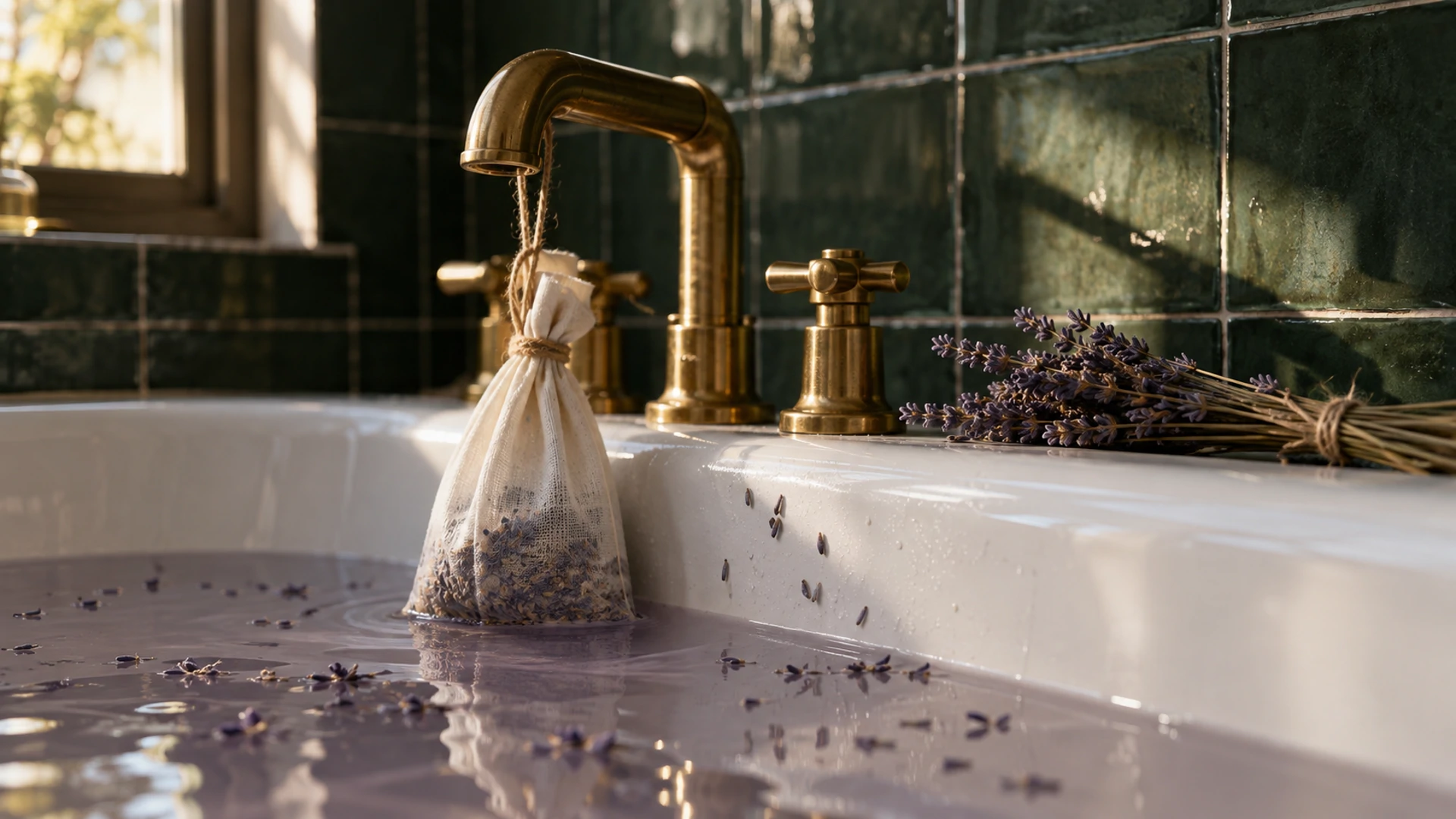
Fill a small muslin bag or cloth with dried lavender flower spikes — a generous handful — and knot it closed. Hang it from the tap or drop it directly into a warm bath, and let it steep while the tub fills. Before you step in, take a moment to name what you are leaving behind: not to dwell on it, but to acknowledge it clearly so you can set it aside. Let the bath be the boundary between that week and what comes next. When you drain the water afterward, treat it as the ritual's close — the week is going with it. Lavender's association with purification makes this more than a practical comfort; it is a deliberate working of release and reset.
A Sprig in a Letter
This one draws on lavender's Love and Attraction secondary — the quiet, settled affection that persists without urgency.
Dry a small sprig of lavender until the flowers hold their shape but release scent when pressed. Fold it into a letter or card you are sending to someone you love. There is no elaborate ritual here — the gesture is the working. Lavender folded into a written message carries the intention of calm, gentle love, and the scent will open ahead of the words when the letter is unfolded. Keep it simple and specific: you know exactly who this is for and what you mean by it.
Peace in the Middle Ground
Lavender's value in a practice is partly about what it does not demand. It does not require urgency or intensity. It works quietly, in the background of a bedroom or in the warmth of a bath, and its calm accumulates rather than arriving all at once. For a herb that reaches into sleep, love, protection, and purification, it is remarkably unassuming — which is exactly why it holds such a central place in healing and peace work.
To see how lavender sits alongside the other herbs of this category — and the six other paths through plant magic — the full guide is at The Witch's Herbarium.