Figural Candle Magic: When the Candle Needs to Be the Person
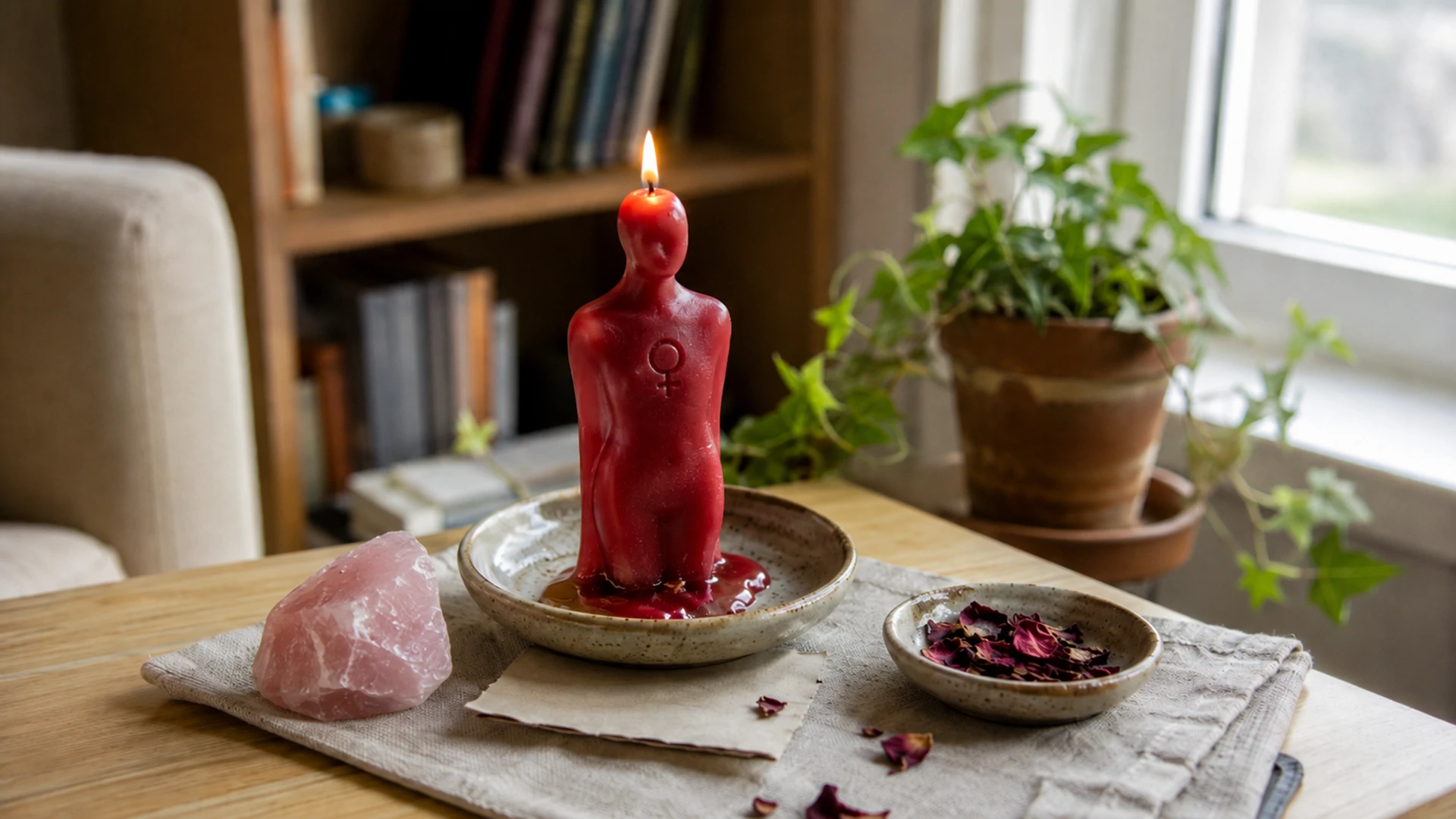
Sympathetic magic works on a simple but powerful premise: like affects like. When you act on a representation of something — a person, a relationship, a situation — that action extends to the real thing it represents. Figural candle magic takes that principle and builds it directly into the tool. The candle doesn't just carry your intention, it embodies it. A human-shaped figural candle isn't a pillar with your intent written on the side. It is, for the duration of your ritual, the person, the situation, or the outcome you're working with. That's the effigy principle in its purest form, and it's what makes figural candles the most purpose-built format in the whole candle magic toolkit for this kind of work.
Why Figural Candles Suit Sympathetic Magic Work
Figural candle magic draws on one of the oldest structural logics in ritual practice: the effigy principle. Across Hoodoo, folk magic traditions of the American South, and older European cunning practices, shaped wax figures have been used to stand in for people — to draw love, to bind harmful behavior, to heal, or to compel. The wax figure was understood to share an occult link with its target once named and charged. Your intention didn't just sit alongside the candle; it lived inside the form itself. When you work with a figural candle, you're reaching into that same lineage.
The specific advantage figural candles have over other formats comes down to correspondence density. A standard pillar or taper candle lets you carry one or two layers of symbolic meaning: color and maybe a carved word or oil dressing. A figural candle adds bodily form to that stack. If you're working a sympathetic spell for a person's health, you can anoint the figure's chest for heart matters, its head for mental clarity, its hands for their work — you're mapping intent onto anatomy in a way no cylindrical candle allows. This kind of targeted placement makes the spell spatially specific, which deepens focus and sharpens will.
Figural candles are typically solid wax cast in a mold, ranging from roughly four to ten inches tall depending on the form. That size means a significant wax mass and a burn time that runs several hours — sometimes requiring multiple sessions for larger figures. That sustained burn is an asset. Sympathetic magic isn't usually a one-breath working. It calls for extended concentration, for holding the target clearly in mind while the wax slowly transforms. The longer a figural candle burns, the more time you have to do that work deliberately and deeply.
For sympathetic magic specifically, the figural format is the meaningfully better choice over a pillar or taper for one direct reason: the form carries the resemblance your working requires. Sympathetic magic needs a stand-in. A red pillar candle can represent passion in general, but a red human figural candle represents a person, their energy, their body, their life. When you name a figural candle — when you declare it to be a specific person or a representation of a specific situation — the shaped wax does half the imaginative work for you, freeing your will to focus entirely on the outcome rather than on constructing the mental connection from scratch.
Preparing Your Figural Candle
Before anything is lit, preparation is where the real power gets built. Your figural candle needs to be selected, identified, dressed, and timed correctly. Each of these steps concentrates intent before the flame ever touches the wick.
Color is your first decision. For sympathetic magic the appropriate color depends on the specific nature of your working — what outcome you're directing energy toward. Red or pink figures suit love and attraction workings. Red also carries force and domination in Hoodoo tradition when used with commanding herbs. Green suits prosperity or healing tied to growth. Black figures are used for binding, banishing, or reversing harm. White is appropriate for healing, purification, or when you want the candle to carry only the intent you consciously load into it without additional color influence. For a complete reference on matching color to purpose, the complete guide to candle colors covers every option in depth.
Once you have your candle, name it. Hold it in both hands, state clearly who or what it represents — a full name if you have one, combined with a physical or personal detail you know about the target to sharpen the link. Some practitioners write the person's name on a slip of paper and press it beneath the candle's base, or carve the name directly into the wax. Carving into a figural candle is very workable given the surface area available, though the curved and contoured surface requires a little more care than carving a flat taper. A heated needle, a small awl, or even a sharp nail works well. You can carve names, sigils, or single words — keep carved text short so it stays legible. For the full technique, see the guide on inscribing candles for magic.
Dressing the candle is the next layer. Choose an oil that corresponds to your working's intent — a commanding oil for influence work, a love-drawing oil for attraction, a banishing oil for removal. For figural candles, application direction carries meaning in traditional practice: dressing toward you draws energy or the person to you; dressing away from you sends energy or banishes it. You can also anoint specific areas of the figure deliberately — the heart area for emotional workings, the head for matters of thought or control, the hands for work-related intent. Sprinkle a pinch of corresponding herb over or around the base of the candle if the working calls for it. The complete guide to candle dressing covers oils, herbs, and technique in full detail.
Timing sharpens a working but doesn't make or break it. That said, for sympathetic magic that involves drawing something toward you — a person, an outcome, healing, prosperity — a waxing moon adds natural support. For workings that push something away or bind it, the waning moon is the traditional choice. Day of the week also carries influence: Friday and Venus for love and attraction, Tuesday and Mars for force and domination, Saturday and Saturn for binding or banishment, Sunday for healing and vitality. If none of these align with when you need to work, don't wait — clarity of will matters more than perfect timing.
One safety note specific to figural candles: because they're solid wax with more mass than a taper, they can produce significant pooling as they burn down, especially toward the base. Set your candle in a heatproof dish with raised edges — a ceramic plate or a small cast iron pan both work — not a flat tile. If your figural candle is tall enough to require a multi-session burn, extinguish it by snuffing (not blowing), which keeps the intention sealed inside the working rather than dispersed into the air, then relight from the same wick when you return.
Lighting and Working with Your Figural Candle
Set up your working space before you light anything. Clear the surface around your candle of clutter. Place any supporting items — a photograph of the target, a personal effect, a written petition, crystals or herbs — in deliberate relationship to the figure. If you're working a drawing spell, position supporting items close to the figure's hands or in front of it. If you're doing a binding, a cord or strip of black cloth wound loosely around the figure before lighting is a traditional addition in Hoodoo practice. The arrangement of the space is part of the spell — not decoration.
When you're ready, light the candle. Don't rush this moment. Hold the unlit match or lighter for a breath before striking, and use that pause to form a clear mental image of the outcome you're working toward. Not a wish, not a hope — a specific, present-tense picture of the thing already done. Feel it as real. That's the mental state you want to hold as the flame takes.
As the figural candle burns, stay with it as long as you can manage — at least the first twenty minutes. Speak your intent aloud if that comes naturally to you: address the figure directly, state what it represents, and state what is happening through the burning. You can work in silence if words feel forced, but maintain visual focus on the flame and the melting wax. The wax's gradual transformation is the working in physical motion — the form dissolving and releasing the intention into the world. Sympathetic magic is active while the candle burns. Your attention is the engine.
If the working requires the candle to burn unattended partway through — for a large figure or a multi-session burn — spend focused time at the beginning and end of each session. Bring your full attention back to the intent each time you relight. The figure remains charged between sessions; you're not starting over, you're continuing. Think of each relighting as reaffirming the working rather than restarting it. That continuity is part of what makes the figural format well-suited to sustained, layered sympathetic workings.
Reading the Burn and Closing the Working
How a figural candle burns tells you something worth paying attention to. A strong, even flame that holds steady through the burn is the most favorable sign: the working is moving with minimal resistance, your intent is clear, and the energy is flowing without obstruction. A flame that burns high and bright early, then settles into a smaller but steady burn is also positive — the initial burst of energy from your focused intent settling into sustained work.
A flickering or struggling flame typically points to interference — internal or external. Internally, it may mean your own certainty about the working is wavering. Before looking for external causes, check in honestly: do you fully believe in what you're asking for? A weak or low flame that barely keeps itself going sometimes signals that more groundwork is needed before the working will gain traction. Extinguish it, sit with the intent, and return when your focus is stronger.
Soot on the remaining wax deserves attention. Black soot appearing early in the burn — especially around the head of a human figural candle — traditionally signals strong resistance or crossing energy around the target or the intent. Black soot appearing only toward the end, after a clean burn, is far less significant and often just reflects the candle burning down. White or gray soot is neutral. Heavy wax dripping down one side of the figure carries directional meaning in many traditions: dripping toward you indicates the energy or person is moving in your direction; dripping away means something is moving out of your life. For a drawing spell, you want pooling wax to move toward you or collect at the base in a full, complete pool.
When the candle finishes burning — either in one session or across several — take a moment before you touch anything. Sit quietly and feel the working as complete. Express gratitude to whatever forces you work with, or simply acknowledge to yourself that the intention has been released and is now active in the world. Grounding after intense ritual work matters: eat something, drink water, walk outside briefly, or do something physical and mundane. This closes the ritual state in your body and prevents that lingering, slightly untethered feeling that can follow a focused working.
Disposal of the remains depends on the nature of the working. For a drawing or love spell, keep the cooled wax and any remaining herbs or paper petition together — wrap them in cloth and store them somewhere in your home, or bury them near your doorstep to keep the drawn energy anchored close. For a banishing or binding spell, the remains should leave your property: wrap them in black cloth or brown paper and dispose of them at a crossroads, bury them off your land, or drop them in moving water. Do not keep the remains of a banishing spell in your home — doing so keeps that energy tethered to your space, which works against the intent of the working.
The Figural Form Closes the Loop
The effigy principle is what made this working possible from the start. The figural candle didn't just carry your intention as a color or a carved word — the form itself built the sympathetic link, the ritual identification between candle and target that no pillar or taper can replicate on its own. Everything you did — naming it, dressing it with spatial intent, reading the burn, closing with deliberate disposal — followed from that foundational act of identification.
This is also a fully repeatable practice. You can return to this same structure for any sympathetic working where you need a stand-in: healing workings, love and attraction spells, bindings, reversals, uncrossing, domination work. The candle form changes — you might choose an animal figure for a working involving instinct or spirit, a cross or skull figure for ancestor work, or a double-figure candle to represent a relationship between two people — but the preparation and ritual logic stays consistent. Build familiarity with this format and you'll find it becomes one of your most reliable tools.
If you want to understand where figural candles sit relative to other formats and when to choose one over another, the Candle Types for Magic: Complete Guide lays that out clearly. Every format has its strengths. Figural candles just happen to have a direct line to sympathetic work that no other type matches.