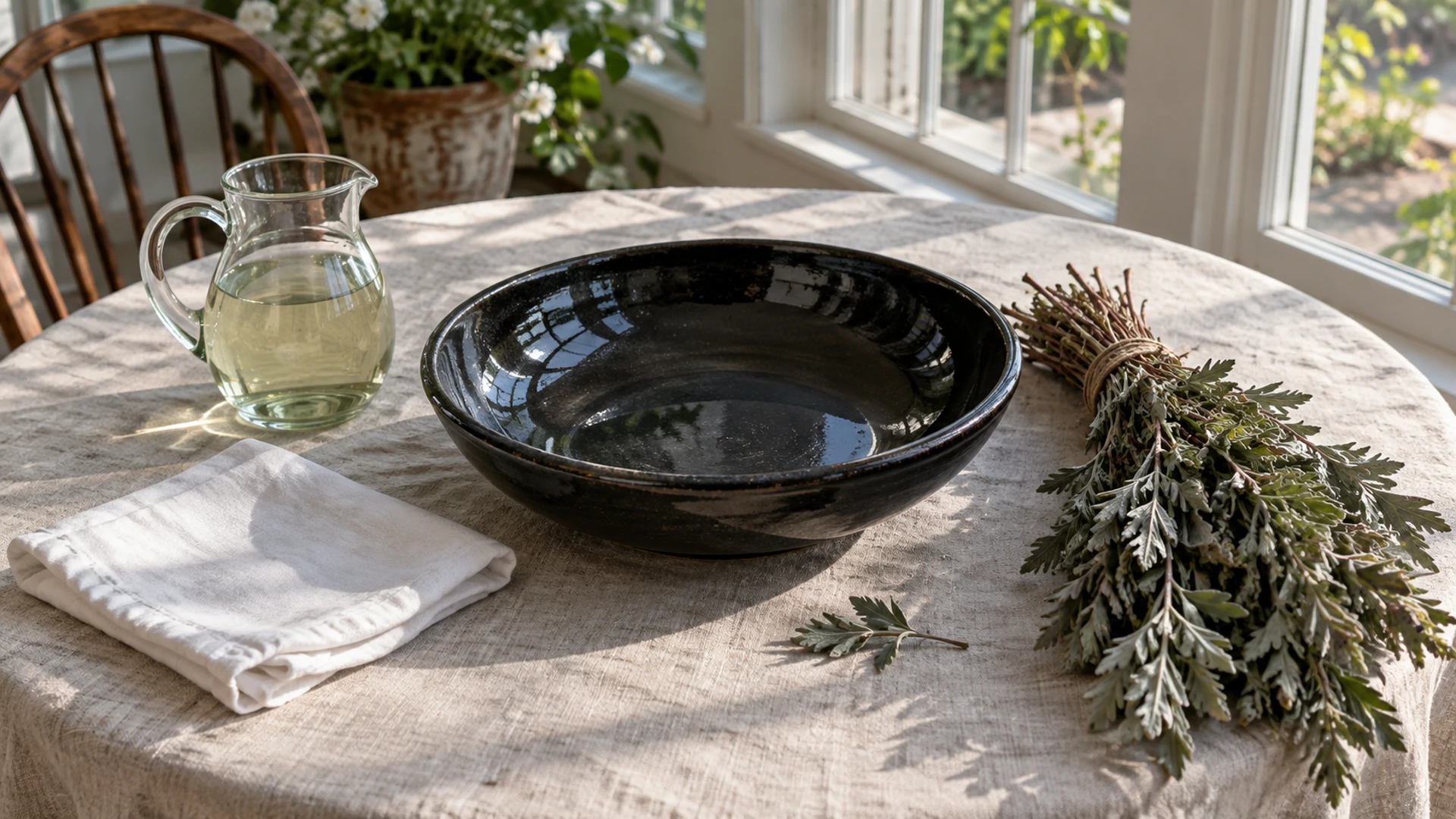
Mugwort (Artemisia vulgaris) in Magic: Correspondences, Uses & Safety
Mugwort is one of those herbs that shows up everywhere once you start paying attention — in dream pillows, on altars, in smoke bundles, and in the margins of old herbals going back centuries. Artemisia vulgaris has been a staple of magical practice across Europe, Asia, and the Americas for a long time, and for good reason. It is strongly associated with the Moon, with the inner world of dreams and visions, and with the kind of psychic receptivity that makes divination and spirit work sharper and more reliable. If you have been looking for a single herb to anchor your intuitive practice, mugwort is it. This guide walks you through everything you need to know — its spiritual meaning, its full correspondence profile, the best ways to use it in your work, its magical history, and the safety information you genuinely need before you start.
The Spiritual Meaning of Mugwort
Mugwort sits at the intersection of two things: the visible world and the world just beneath it. It is an herb of thresholds — the liminal spaces between waking and sleep, between the conscious mind and whatever lies deeper. That quality is not a metaphor layered onto a random plant. It is embedded in the herb's entire magical identity, from its planetary ruler to the traditions that have used it for thousands of years. When you bring mugwort into your practice, you are working with something that has been consistently understood, across wildly different cultures, as a key to inner sight.
The name Artemisia connects directly to Artemis, the Greek goddess of the Moon, the hunt, and wild places. That connection tells you something important about mugwort's energy. Artemis is not a soft or passive lunar figure — she is sharp, independent, and deeply attuned to natural cycles. Mugwort carries that same quality. It does not simply relax your defenses and open you up to whatever is floating around. It heightens your perception while keeping your awareness intact. Working with mugwort tends to feel less like drifting and more like tuning in with greater precision.
In modern magical practice, mugwort is primarily known as a dream herb and a psychic enhancer. Its most recognized use is helping practitioners access more vivid, memorable, and meaningful dreams — particularly the kind of lucid or prophetic dreaming that has been central to spiritual practice across so many traditions. But its scope goes wider than dreams. Mugwort is also used in divination work to sharpen intuitive perception, in astral travel and trance work to ease the transition between states of consciousness, and in protective workings because of its long folkloric association with warding off negative influences. It is genuinely one of the most multi-purpose herbs in a working magical cabinet.
Spiritually, mugwort teaches the value of receptivity. A lot of magical work is about directing will outward — shaping circumstances, drawing things toward you, or pushing things away. Mugwort asks you to turn that attention inward. It supports the quieter, more receptive side of practice: listening, observing, interpreting, and deepening your relationship with your own inner landscape. For practitioners who feel like they are doing a lot of active spellwork but not doing enough work on perception, intuition, or inner clarity, mugwort is a natural starting point.
Mugwort Correspondences and How They Shape Its Magical Uses
Correspondences are the symbolic and energetic associations that connect an herb to specific forces, intentions, and working styles. They matter because they tell you not just what an herb is traditionally used for, but why — and that understanding lets you use it more flexibly and effectively. Mugwort's correspondences are internally consistent in a way that makes it easy to work with once you see the full picture.
Here's the full correspondence profile at a glance:
- Planet: Moon
- Element: Earth
- Gender: Feminine
- Deities: Artemis, Diana, Hecate, the Cailleach
- Magical properties: Psychic enhancement, dream work, divination, astral travel, protection, purification
- Associated crystals: Moonstone, labradorite, amethyst, selenite
- Chakra: Third Eye (Ajna)
The Moon rulership is central to everything mugwort does. Lunar energy governs cycles, intuition, the subconscious, dreams, and the inner emotional life. An herb ruled by the Moon is naturally suited to any working that involves opening up to what lies beneath the surface — whether that is your own subconscious material or information coming through divination, dreams, or trance. When you use mugwort before a tarot reading, before sleep, or at the start of a meditative practice, you are aligning yourself with that lunar quality of deep inner receptivity.
The Earth element might surprise people who associate mugwort primarily with dreamy, ethereal experiences. But Earth grounds psychic work and keeps it functional. Without that grounding quality, heightened perception can feel scattered or hard to interpret. Mugwort's Earth element is part of why it tends to produce clear, structured dreams rather than chaotic noise — and why it has such a long history as a practical protective herb. It keeps your feet on the ground even while it opens your inner sight. That Earth-Moon combination is actually quite rare among psychic herbs, and it is a big part of what makes mugwort so dependable.
The deities connected to mugwort reinforce its core identity. Artemis and her Roman counterpart Diana are Moon goddesses of wildness, independence, and sharp perception. Hecate is the goddess of crossroads, magic, and the underworld — she rules transitions, liminal spaces, and deep magical wisdom. The Cailleach is the Celtic figure of winter, wild nature, and ancestral power. All of these connections point toward the same themes: vision, threshold-crossing, and the kind of fierce feminine power that does not flinch from darkness. If you work with any of these deities, mugwort is a natural offering and altar herb.
The Third Eye chakra association ties everything together. The Third Eye — located at the center of the forehead — governs intuition, inner vision, and perception beyond the ordinary senses. It is the energetic center most directly linked to psychic awareness, prophetic dreaming, and clear inner knowing. Using mugwort in any form is essentially working to open and strengthen that center. Pair it with amethyst or labradorite on your altar or under your pillow and you are stacking two Third Eye activators for a noticeably stronger effect.
How to Use Mugwort in Your Magical Practice
Mugwort is one of the most versatile herbs you will work with, which is part of what makes it such a good choice for both beginners and more experienced practitioners. There are genuinely useful ways to incorporate it through almost every method of herbal magic — burning, steeping, carrying, applying, and weaving it into spellwork. Here is a breakdown of the most effective approaches and how each one functions.
Burning as incense or in smoke bundles. This is the most classic and immediate way to work with mugwort. Burning dried mugwort releases its aromatic compounds and, from a magical standpoint, fills your space with its lunar, psychic-enhancing energy. Burn it before divination sessions to sharpen your intuition, before meditation or trance work to ease the shift in consciousness, or before sleep to set the conditions for vivid dreaming. You can burn loose dried mugwort on a charcoal disc, bundle it with other herbs like lavender or wormwood, or use it as a smudge stick on its own. The smoke also has a long folkloric history as a protective purifier — burning it in a space is said to clear it of unwanted energies and create a more receptive, spiritually open environment.
Dream pillows and sachets. Placing dried mugwort inside a small cloth sachet and tucking it under your pillow or inside your pillowcase is one of the best-known methods for enhancing dream recall and encouraging lucid or prophetic dreams. The gentle, ongoing contact with the herb throughout the night creates a sustained effect that is quite different from a single burst of incense smoke. For a dream sachet, combine mugwort with herbs like lavender for calm, rose for emotional clarity, or bay laurel for prophetic vision. Add a small piece of amethyst or moonstone if you want to reinforce the Third Eye activation. Set your intention clearly before you go to sleep — tell yourself what kind of dream information you are looking for, or simply ask for clarity and recall.
Herbal teas and moon water infusions. Mugwort tea has a long traditional history as a dream and vision aid. A weak infusion of dried mugwort leaf, drunk about an hour before sleep, is one of the more direct methods for dream enhancement available through herbal magic. The taste is bitter and slightly earthy, so blending it with a small amount of honey or a complementary herb like chamomile makes it more palatable. You can also prepare a cold infusion of mugwort in water left out under a full moon overnight — essentially a mugwort moon water — and use it to anoint your third eye before meditation or divination work. Important: see the safety section below before preparing any mugwort for internal use.
Candle dressing and altar work. Dried mugwort crumbled finely can be used to dress candles for lunar magic, psychic work, dream spells, and protection workings. Apply a thin layer of oil to a silver, purple, or white candle first, then roll it through the dried herb so it adheres. Burn it during ritual to anchor the intention. On your altar, mugwort can be used as a loose offering in a dish, placed around a crystal grid focused on intuition or divination, or bundled and placed near your tarot cards or scrying tools to keep their energy clear and active. Many practitioners keep a small bundle of dried mugwort near their divination tools permanently.
Ritual baths and floor washes. Adding a strong mugwort infusion to a ritual bath is a deeply effective way to prepare yourself for psychic or trance work. The full-body contact with the herb's energy creates a thorough cleansing and opening effect. Brew a strong tea, strain it carefully, and add it to your bathwater along with a handful of sea salt for purification. Focus your intention on clearing mental static and opening your inner perception. Alternatively, a diluted mugwort floor wash — the infusion added to your cleaning water — is a traditional method of purifying a space and laying down protective energy in your home.
Spellwork and charm bags. In more structured spellwork, mugwort pairs well with any working focused on psychic development, spirit communication, astral travel, lunar magic, or protection. Include it in charm bags alongside herbs like vervain or yarrow for protection, or with star anise and bay for psychic enhancement. Write your intention on a small piece of paper, fold it toward you, place it in the bag with the herbs, and seal it. Keep the bag under your pillow, on your altar, or on your person depending on the working's purpose.
Mugwort in Magical History
Understanding where mugwort comes from in the magical record adds depth to how you use it today. This is not an obscure herb recovered from one cultural tradition — it appears independently across multiple civilizations as a plant of protection, vision, and spiritual significance. Here are three traditions that shaped how we understand it now.
Anglo-Saxon and Northern European tradition. Mugwort appears in the Lacnunga, a tenth-century Anglo-Saxon manuscript that preserves both medical and magical herb lore. In the famous Nine Herbs Charm, mugwort is listed first and described as the oldest of herbs — "Una, mother of herbs" — and credited with power against poison, infection, and evil. It was traditionally worn in shoes or tied around the body to protect travelers and ward off fatigue and danger on long journeys. Midsummer harvesting of mugwort was a common practice, with the timing tied to the herb's connection to solar and lunar power at that liminal seasonal moment. This tradition gives us mugwort as fundamentally protective, with its visionary qualities embedded in that same protective framework.
Chinese and East Asian tradition. In Chinese folk medicine and spiritual practice, ai ye — mugwort — is one of the most important ritual plants. It is central to the practice of moxibustion, where compressed mugwort is burned near acupuncture points to stimulate energy flow. In a magical and spiritual context, it has been hung over doorways during the Dragon Boat Festival to repel evil spirits and purify the home. The plant's strong protective and cleansing associations in Chinese folk practice parallel its European uses remarkably closely, despite developing independently — which tells you something about the herb's intrinsic energetic qualities that transcended cultural interpretation.
Indigenous American traditions. Various Indigenous peoples of North America used related Artemisia species — including what is commonly called sagebrush — in smudging and ceremonial practice for purification, spiritual protection, and the preparation of sacred space. While the specific species vary by region and should not be conflated carelessly, the broader Artemisia genus has a consistent presence in Indigenous ritual contexts as a purifying and protective smoke plant. This reinforces the cross-cultural pattern of mugwort and its relatives being understood as herbs that clear, protect, and open the practitioner to spiritual perception.
Safety and Precautions When Working With Mugwort
Mugwort is a powerful herb and a safe one for most people when used thoughtfully — but there are real precautions you need to know before you start. This is not a reason to avoid it. It is a reason to use it intelligently, which is how you should be approaching any herb in your practice.
Pregnancy and breastfeeding. This is the most important caution: mugwort should never be used internally by anyone who is pregnant. It is a uterine stimulant with a documented historical use as an emmenagogue — an herb used to stimulate or regulate menstruation. In sufficient quantities it can induce uterine contractions and has been used historically to terminate pregnancies. Even topical use in concentrated forms should be avoided during pregnancy. If you are pregnant, avoid mugwort entirely. If you are breastfeeding, avoid internal use and consult a healthcare provider before using it in any form.
Allergies. Mugwort is in the Asteraceae family — the same family as ragweed, chrysanthemums, daisies, and chamomile. If you have known allergies to any of these plants, there is a real possibility you will react to mugwort as well. This is particularly important when burning it, since inhaling the smoke can trigger respiratory reactions in sensitive individuals. Start with minimal exposure and pay attention to how your body responds before incorporating it more heavily into your practice. Mugwort pollen is also one of the major causes of seasonal hay fever in many parts of the world.
Internal use limits. When preparing mugwort tea or infusions for internal use, keep concentrations low and use it occasionally rather than as a daily herb. High doses can cause nervous system effects including nausea, dizziness, and in extreme cases, convulsions. A standard magical dream tea uses a very small amount of dried herb — roughly one teaspoon per cup — and is not consumed nightly indefinitely. Treat it as a purposeful ritual tool, not a daily supplement.
Medication interactions. Mugwort may interact with blood-thinning medications, sedatives, and certain other pharmaceuticals. If you are on any regular medication, check with your doctor before using mugwort internally. This is basic harm reduction, not excessive caution — it applies to any medicinally active herb.
Continue Building Your Herbal Practice
Every herb you work with belongs to a broader category — cleansing, protection, attraction, or banishment — and knowing where a plant sits in that framework is what turns a shelf of dried botanicals into a real practice. If you're ready to see how Mugwort fits alongside the other foundational herbs, read Herbs in Magic: A Beginner's Guide to Magical Herbalism. It maps out the four core categories of herbal magic and walks you through the key plants in each one.
Start where you are, follow what calls to you, and trust that your practice will deepen with every plant you come to know.