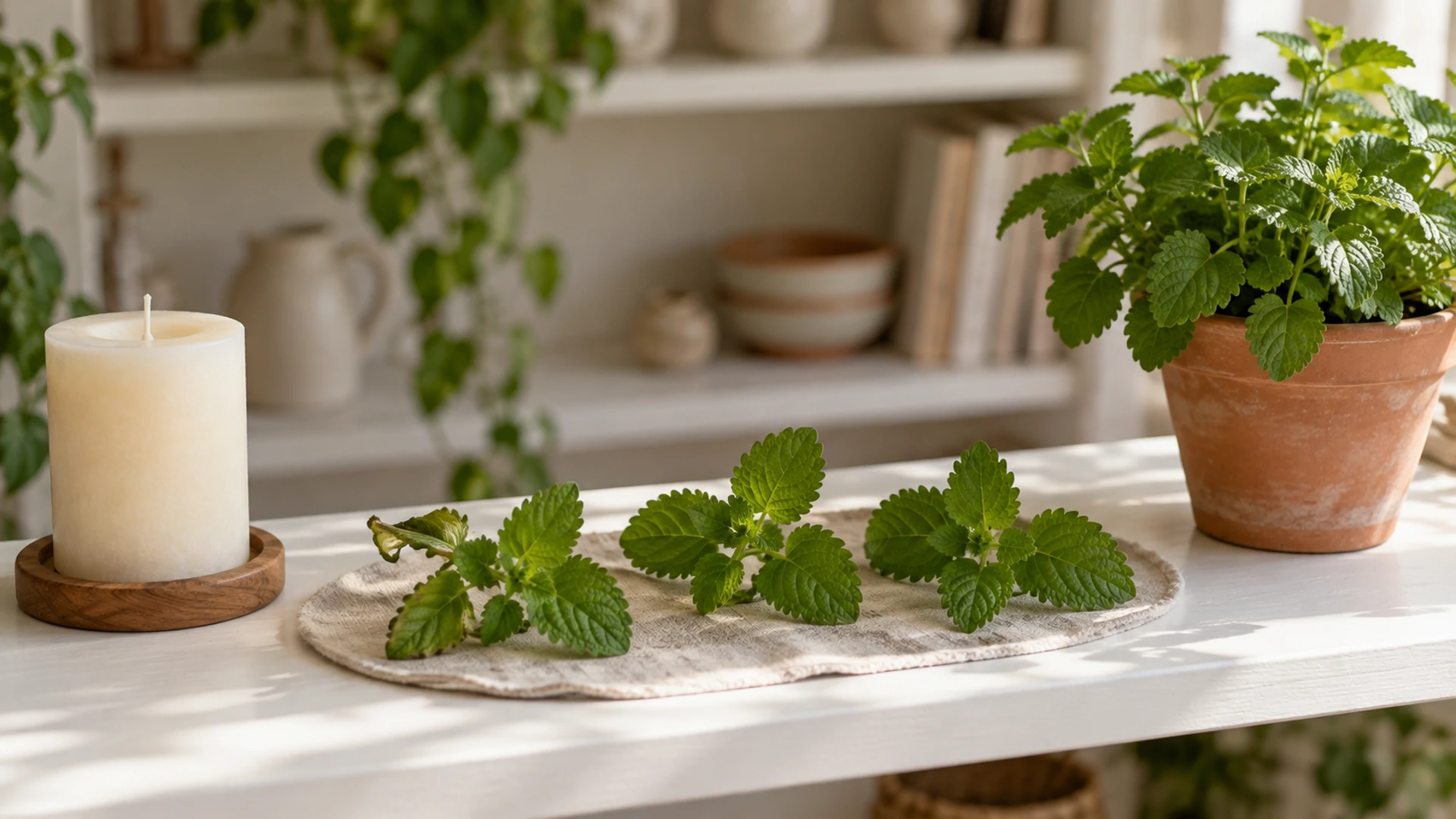
Lemon Balm (Melissa officinalis) in Magic: Correspondences, Uses & Safety
Lemon balm is one of those herbs that earns its place in a practice quickly. Its scent is bright and calming at once — fresh, citrusy, and a little sweet — and that sensory quality is a direct reflection of what it does magically. Lemon balm supports healing, love, emotional balance, and psychic clarity, making it genuinely useful across a wide range of workings. Whether you're brand new to herbal magic or you've been practicing for years and somehow haven't worked with this plant yet, this guide gives you everything you need to start using lemon balm with real intention and understanding.
The Spiritual Meaning of Lemon Balm
Lemon balm carries a spiritual energy that can best be described as gentle but purposeful. It doesn't overwhelm. It soothes, clarifies, and opens — which is exactly why it has been associated with healing, love, and the lifting of emotional weight across so many traditions and time periods. Magically speaking, lemon balm works on the inner landscape. It's the herb you reach for when something needs to be softened, released, or made easier to see clearly.
At its core, lemon balm is a plant of comfort and restoration. Its spiritual meaning centers on the idea that healing is not just physical — it's emotional, relational, and energetic. When grief sits heavy, when anxiety clouds your thinking, when a relationship needs warmth and gentleness to survive, lemon balm meets those needs directly. It holds a frequency of care — not the fierce, protective energy of something like black tourmaline or rue, but a warm, steady presence that says things will settle and become clear.
Lemon balm is also meaningfully connected to the realm of the psychic and the intuitive. Its association with the Moon gives it a natural affinity with dreams, inner knowing, and the subtle perceptual layers that open up through meditation and stillness. If you work with divination, spirit communication, or any practice that requires you to quiet the analytical mind and listen more deeply, lemon balm is a genuinely useful ally. It doesn't force that openness — it invites it, which is more sustainable and more honest to how psychic awareness actually develops.
There's also a sweetness to lemon balm that carries real symbolic weight. Sweetness in magical herbalism is associated with attraction — drawing love, friendship, joy, and positive energy toward you. This makes lemon balm one of the more versatile herbs for relationship and self-love workings. It doesn't just address existing wounds; it actively helps cultivate conditions for something better to grow. That dual quality — healing what's broken while attracting what's wanted — is part of what makes lemon balm so consistently useful across different types of magical work.
Lemon Balm Correspondences and How to Apply Them
Correspondences are the symbolic framework behind herbal magic. Every plant carries a set of associations — planetary rulers, elemental alignments, deity connections, and energetic properties — that reflect how its energy moves and what it's best suited for. When you understand a plant's correspondence profile, you can use it more intentionally, layer it more effectively with other ingredients, and make clearer decisions about when and how to incorporate it into your work.
Here's the full correspondence profile at a glance:
- Planet: Moon
- Element: Water
- Gender: Feminine
- Deities: Diana, Artemis, Aphrodite
- Magical properties: Healing, love, emotional balance, psychic clarity, anxiety relief, dream work
- Associated crystals: Moonstone, rose quartz, aquamarine, amethyst
- Chakra: Heart chakra
The Moon rulership is one of the most important things to understand about lemon balm because it shapes the timing and the texture of any working you use it in. Moon-ruled herbs are most potent when used in alignment with lunar cycles — particularly during the full moon, when emotional and psychic energies are heightened, and during the waning phase, when you're releasing grief, anxiety, or energetic weight. If you're doing a healing working with lemon balm, timing it to the waning moon gives your intention more structural support.
The Water element connection reinforces lemon balm's emotional domain. In elemental magic, Water governs feeling, intuition, the subconscious, and relationships. A Water herb is particularly effective in workings that involve the inner world — processing emotion, deepening empathy, clearing psychic channels, or nurturing connection between people. If you're working on self-love, healing after loss, or strengthening a bond with someone, the Water element in lemon balm is doing meaningful energetic work alongside your intention.
The Feminine polarity means lemon balm's energy is receptive rather than projective. In magical herbalism, feminine herbs are associated with drawing inward — pulling things toward you, creating space, nurturing, and receiving. This is why lemon balm works so well in attraction workings and in healing. It doesn't push; it opens. When you're trying to draw love, peace, clarity, or restoration into your life, a feminine herb aligned with your intention is pulling in the same direction your will is pointed.
The deity connections — Diana, Artemis, and Aphrodite — span two distinct energetic domains, which tells you something interesting about lemon balm's range. Diana and Artemis are lunar goddesses associated with the wild, independence, and the night. If you work with moon magic, night rituals, or practices that honor feminine sovereignty and instinct, these connections give lemon balm a home in that work. Aphrodite brings the love and beauty dimension — attraction, desire, pleasure, and relational healing. Together, these deity associations confirm that lemon balm is equally at home in moon workings and in love and healing magic.
The heart chakra association ties everything together. The heart chakra governs love, compassion, grief, forgiveness, and emotional connection — both toward others and toward yourself. Herbs associated with the heart chakra are valuable in any working where you're trying to open emotionally, heal a wound, release resentment, or strengthen a loving connection. Lemon balm supports that center directly, which is why it's so effective in combination with rose quartz and moonstone — both of which also carry heart-level and lunar energy respectively.
How to Use Lemon Balm in Your Magical Practice
One of the best things about lemon balm is that it's genuinely easy to work with. It's widely available — both as a fresh garden herb and as a dried botanical — it has a pleasant and non-overpowering scent, and it's flexible enough to work across multiple formats. Whether your practice leans toward ritual, folk magic, meditation, or everyday intentional living, there's a way to bring lemon balm in that fits naturally.
As an herbal tea or potion: Lemon balm tea is one of the simplest and most direct ways to work with this herb. Drinking an herb is an act of deep incorporation — you're not just using lemon balm symbolically, you're taking it into your body. For magical purposes, brew a simple lemon balm infusion and charge it with your intention before drinking. For healing work, focus on what you're releasing or restoring. For love and self-care, hold your hands around the warm cup and direct your intention toward opening and receiving. This works beautifully before meditation or divination sessions because the herb's calming, clarity-enhancing properties support the mental state you're cultivating.
As incense or smoke: Dried lemon balm burns gently and produces a clean, slightly sweet smoke. You can burn it loose on a charcoal disc or blend it with other herbs to create a custom incense blend. For space clearing with a softer energy — particularly after arguments, emotional turmoil, or illness — lemon balm smoke is a gentler alternative to more aggressive cleansing herbs like white sage or dragon's blood. It doesn't strip the energy of a space so much as it soothes and resets it. Combine it with lavender for anxiety and emotional clearing, or with rose for love and heart work.
In sachets and spell bags: Sachets — small cloth pouches filled with herbs, crystals, and other magical ingredients — are one of the most versatile formats in herbal magic. A lemon balm sachet placed under your pillow supports healing dreams and intuitive clarity during sleep. Tucked into your bag or kept close to your body, it acts as a gentle talisman for emotional stability and calm. For a love-drawing sachet, combine lemon balm with rose petals and a small piece of rose quartz, set your intention clearly, and carry it with you or place it somewhere meaningful in your home.
As a candle dressing herb: Dressing a candle means anointing it with oil and rolling it in or pressing herbs into it before burning it, linking the herb's energy to your candle working. For a healing or self-love candle ritual, anoint a pink or white candle with a gentle carrier oil — sweet almond or jojoba work well — and press dried lemon balm into the surface. As the candle burns, the herb's energy carries your intention. You can pair this with moonstone or rose quartz placed around the base of the candle to deepen the working.
As an essential oil: Lemon balm essential oil — sometimes labeled as melissa oil — is highly concentrated and carries the plant's magical and energetic properties in potent form. A small amount diluted in a carrier oil can be used to anoint candles, tools, crystals, and your own pulse points before ritual work. It's particularly useful for anointing your temples or wrists before meditation or psychic work, where you want to call on lemon balm's clarifying and intuition-supporting qualities. Be aware that pure melissa oil is expensive and frequently adulterated — source carefully.
In bath rituals: An herbal bath is one of the oldest and most effective formats in folk magic. Brewing a strong lemon balm infusion and adding it to your bathwater turns bathing into a full energetic reset. For healing work, set the intention of releasing what no longer serves you — emotional residue, anxiety, grief, energetic heaviness — and visualize it leaving your body as you soak. For love and self-care, focus the ritual on replenishment and receptivity. This format is particularly powerful during the full or waning moon.
Lemon Balm in Magical History
Lemon balm has been cultivated and valued for well over two thousand years, and its history in magical and spiritual practice runs alongside its long use as a medicinal plant. The two were rarely separated in older traditions — healing the body and working with spiritual or energetic forces were understood as part of the same continuum.
Ancient Greece and Rome: The Greeks knew lemon balm as a sacred plant of Artemis and used it in the temples of that goddess. It was cultivated near hives — the name Melissa literally means honeybee in Greek — and bees were considered messengers of the divine. In this context, lemon balm was associated with the nourishment of the soul, the sweetness of life, and communication with the spiritual realm. Roman writers including Pliny documented it as an herb of healing and longevity, and it was widely used in restorative preparations that bridged physical and spiritual wellness.
Medieval Europe: During the medieval period, lemon balm was a staple of monastery gardens across Europe, grown by monks and healers who understood its calming and restorative properties. It appeared in preparations aimed at lifting melancholy — what we might now call depression or grief — and was considered an herb of the heart in both the physical and emotional senses. Medieval herbalists like Paracelsus wrote about lemon balm with considerable enthusiasm, linking it to long life and the restoration of mental and spiritual vitality. Its cultivation and use kept this plant firmly embedded in European herbal and folk magic traditions through the Renaissance and beyond.
European folk magic: In folk magic traditions across Germany, France, and the British Isles, lemon balm was used in charms and preparations related to love, luck, and healing. It appeared in love-drawing sachets, was added to baths before important social events to increase attractiveness and charm, and was used in sympathetic healing workings intended to ease grief and heartbreak. Its presence in folk magic reinforces what its correspondence profile tells us — this is an herb that has consistently been understood as aligned with love, emotional healing, and gentle attraction across cultures and centuries.
Safety and Cautions When Working with Lemon Balm
Lemon balm is one of the safer herbs you'll encounter in magical practice, which is part of why it's so approachable for beginners. That said, safe doesn't mean without consideration, and there are a few things worth knowing before you work with it regularly — especially if you plan to use it internally through teas, baths, or potions.
Thyroid interaction: This is the most important caution for lemon balm. Research suggests that lemon balm can inhibit thyroid-stimulating hormone (TSH) and reduce the activity of the thyroid gland. If you have a thyroid condition — particularly hypothyroidism — or if you take thyroid medication, you should consult a healthcare provider before consuming lemon balm regularly. Occasional use is unlikely to cause issues for most people, but regular internal use over time is worth being thoughtful about if thyroid health is a concern for you.
Sedative effects: Lemon balm has genuine calming and mildly sedative properties. When consumed as a tea or taken in supplement form, it can enhance the effects of other sedatives, sleep aids, or anti-anxiety medications. If you're on any medication in that category, be aware of this interaction. For magical purposes, this quality is actually useful — it's part of why lemon balm tea before dream work or meditation is effective — but it's worth knowing so you can work with it consciously.
Pregnancy and breastfeeding: As a general principle of herbal magic and herbalism, it's wise to avoid using potent herbs internally during pregnancy without medical guidance. Lemon balm falls into this category — its safety during pregnancy hasn't been fully established, and internal use is best avoided unless you've spoken with a healthcare provider.
Topical and smoke use: For most people, using lemon balm as incense, in sachets, or as a diluted essential oil presents minimal risk. Skin sensitivity is possible with undiluted melissa essential oil, so always dilute before applying topically. If you're using lemon balm smoke regularly in an enclosed space, general smoke inhalation cautions apply — keep the space ventilated.
Continue Building Your Herbal Practice
Every herb you work with belongs to a broader category — cleansing, protection, attraction, or banishment — and knowing where a plant sits in that framework is what turns a shelf of dried botanicals into a real practice. If you're ready to see how Lemon Balm fits alongside the other foundational herbs, read Herbs in Magic: A Beginner's Guide to Magical Herbalism. It maps out the four core categories of herbal magic and walks you through the key plants in each one.
Start where you are, follow what calls to you, and trust that your practice will deepen with every plant you come to know.