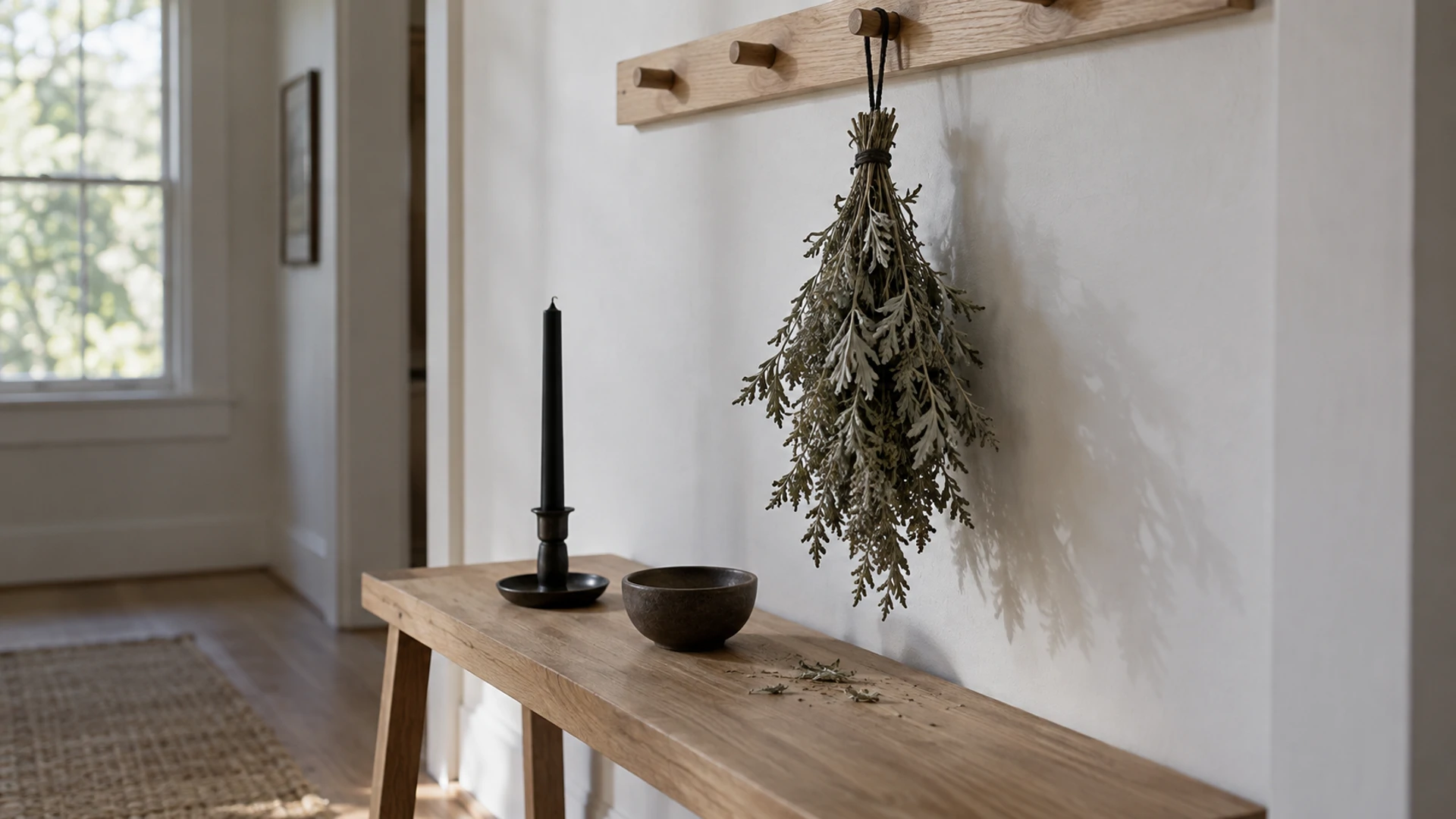
Wormwood (Artemisia absinthium) in Magic: Correspondences, Uses & Safety
Wormwood is not a gentle herb. It bites. It clears. It cuts through confusion and forces clarity in its wake. Artemisia absinthium has been used in magical practice for thousands of years — as a spirit-summoning incense, a visionary herb, a weapon against malevolent forces, and a tool for sharpening psychic awareness. If you're drawn to wormwood, you're likely drawn to the kind of magic that doesn't settle for half-measures. This guide will walk you through everything you need to know to work with it confidently, responsibly, and with real intention behind every use.
The Spiritual Meaning of Wormwood
Wormwood carries what many practitioners describe as a liminal energy — energy that exists at thresholds. It lives at the edge between the physical world and the unseen one, between clarity and confusion, between this realm and whatever lies just beyond it. That liminal quality is what makes it such a reliable ally in spirit work, divination, and psychic development. It doesn't invite softness. It demands presence.
The name Artemisia connects the herb directly to Artemis, the Greek goddess of the hunt, the moon, and the wild. Artemis was a goddess of thresholds herself — she governed transitions, untamed spaces, and the boundary between civilization and wilderness. Wormwood inherits that energy completely. Working with it puts you in contact with a force that is wild, directed, and unapologetically sharp.
Spiritually, wormwood is most strongly associated with psychic sight and prophetic vision. Its historical use in absinthe — the famously hallucinogenic spirit — is rooted in this reputation, though the mystique around absinthe was largely exaggerated. What is real is wormwood's long-standing place in visionary and divinatory work across cultures. Practitioners have burned it before scrying, used it to anoint tools before readings, and included it in ritual spaces dedicated to spirit communication. The herb carries an energy that sharpens the inner eye and thins the veil between seen and unseen.
Beyond vision, wormwood is a powerful banishing and protective herb. Its bitterness — literal and energetic — repels what doesn't belong. In magical terms, bitterness corresponds to rejection, expulsion, and the refusal to tolerate intrusion. When you bring wormwood into a working, you're not asking for protection politely. You're enforcing a boundary. That is a meaningful distinction. Wormwood works best when your intention is clear and your will behind it is firm.
There is also a deep connection between wormwood and the dead. It has historically been placed near graves, burned at funerary rites, and used in rituals meant to honor ancestors or open communication with spirits of the departed. If you work with ancestral magic, wormwood is a natural ally — one that signals to the spirits that you are serious, that you are present, and that you are working within a tradition that respects their power.
Wormwood Correspondences and How to Apply Them
Correspondences are the framework that lets you build coherent magical workings. They tell you which herbs, stones, planets, and symbols share energetic resonance — so when you combine them, you're not just assembling random ingredients. You're concentrating a specific current of energy toward a specific end. Wormwood's correspondences are strongly Mars-aligned, which means its energy is assertive, penetrating, and focused on breaking things down rather than building them up.
Here's the full correspondence profile at a glance:
- Planet: Mars
- Element: Fire
- Gender: Masculine
- Deities: Artemis, Hecate, Diana, Mars
- Magical properties: Psychic vision, spirit communication, banishing, protection, binding, hex-breaking
- Associated crystals: Black tourmaline, labradorite, amethyst, obsidian
- Chakra: Third Eye (Ajna)
The Mars rulership shapes everything about how wormwood functions in a working. Mars governs aggression, will, conflict, and force — but also courage, clarity, and the ability to cut through illusion. When you use wormwood in a banishing, you're not gently escorting something out. You're applying forceful, directed energy to expel it. When you use it in psychic work, you're not passively opening — you're actively penetrating the veil. That distinction matters when you're setting your intention. Wormwood amplifies directed will. Passive or vague intention will get you vague results.
The Fire element reinforces this. Fire transforms, purifies, and destroys what no longer serves. It's the element of action and will. Pairing wormwood with other Fire-aligned tools — red or black candles, cinnamon, dragons blood resin — creates a compounding effect. You're stacking resonant energies and giving your intention nowhere to dissipate.
The Third Eye chakra association connects wormwood directly to intuition, psychic awareness, and spiritual perception. This is the energy center responsible for inner vision, the ability to perceive patterns and energies beyond the physical, and the development of clairvoyant senses. When you use wormwood in divination or spirit work, you're essentially sending a focused signal to that center — activating it, sharpening it, and directing its attention outward.
The crystal associations deserve a closer look because they tell you exactly how to amplify wormwood's energy in different directions. Black tourmaline shares its protective and banishing properties — combine the two in a protective working and you have a formidable barrier. Labradorite enhances psychic sight and works beautifully alongside wormwood in divination setups. Amethyst deepens spiritual connection and is particularly useful in ancestor work. Obsidian is the strongest of the four for shadow work and revealing what's hidden — a natural partner for wormwood's truth-cutting energy.
Ways to Use Wormwood in Magic
Knowing the correspondences gives you the energetic map. Knowing how to actually use the herb is what lets you act on it. Wormwood is a versatile plant — it can be burned, carried, brewed, worn, and worked into nearly any magical format. Each method engages the herb's energy differently, and choosing the right one depends on what your working requires.
As incense. Burning wormwood is its most traditional use in magical practice. When burned, it produces a sharp, bitter, slightly medicinal smoke that has a pronounced effect on the atmosphere of a space. Burn it loose on a charcoal disc or blend it with other resins and herbs. Use it to cleanse a ritual space before spirit work, to open the psychic senses before a tarot or scrying session, or to create a boundary of protective smoke around your working area. The smoke carries an authoritative, clarifying energy — it signals to your own subconscious and to any spiritual presences that the space is intentional and serious.
As an incense blend. Wormwood combines powerfully with mugwort for psychic and spirit communication work — the two herbs are frequently paired because mugwort softens the edges while wormwood sharpens them. For banishing blends, pair it with black pepper, frankincense, and a pinch of dragon's blood resin. For ancestor work, combine it with myrrh and a pinch of graveyard soil if you work with that tradition.
In sachets and charm bags. A small sachet of dried wormwood can be carried for psychic protection, placed under a pillow to encourage prophetic dreams, or tucked into a divination bag alongside your tarot cards or runes. When making a sachet, set your intention clearly as you pack the herb — your focused will is what activates the correspondence, not just the presence of the plant. A wormwood sachet made without intention is just a small bag of dried leaves.
As a candle dressing. Crushed dried wormwood can be pressed into the surface of an anointed candle for banishing, protection, or psychic enhancement spells. Use black or dark purple candles for banishing and spirit work. Dress the candle with a corresponding oil first — Mars oil, psychic vision oil, or a simple base of olive oil with a few drops of wormwood essential oil if available — then press the crushed herb into the wax with intention. As the candle burns, the herb releases its energy into the working.
In ritual baths and washes. A strong wormwood infusion — made by steeping dried herb in near-boiling water and straining it thoroughly — can be added to a ritual bath for psychic cleansing and opening, or used as a floor wash for banishing negative energy from a space. Do not use this method if you have sensitive skin or open wounds, and do not drink the infusion unless you have researched safe dosages carefully (more on that in the safety section). The bath method works particularly well before divination rituals or any working where you need your psychic senses fully open.
In spellwork and ritual. Loose wormwood can be incorporated into sigil work, petition spells, or jar spells. Place it in a banishing jar along with black salt, iron filings, and a written intention. Add it to a spirit communication ritual as an offering or as a tool for opening the channel. Include it in a hex-breaking working where you need to dissolve stagnant or hostile energy that has attached itself to your space or person. In all cases, the herb is acting as a focal point for your will — it sharpens and concentrates the intention you bring to it.
Wormwood in Magical History
Wormwood's role in magical practice stretches across continents and millennia. You're working with an herb that has been taken seriously by practitioners long before the modern witchcraft revival, and understanding that lineage can deepen the respect and intentionality you bring to your own work.
Ancient Egypt and the Mediterranean world. The Ebers Papyrus, one of the oldest surviving medical texts, records wormwood as a medicinal herb used in Egypt as early as 1550 BCE. In the broader Mediterranean world, wormwood-type plants were associated with purification, protection against evil, and offerings to deities of the underworld. Its bitterness was understood as a spiritual quality — something that repelled corruption and disease at both the physical and energetic level.
European folk magic and witchcraft tradition. In European herbalism and folk magic, wormwood was one of the key herbs used for protection against malevolent spirits and harmful magic. It was hung over doorways, burned in hearths, and included in witch bottles and protective charms. It was also strongly associated with the spirit world in folk traditions — hung in rooms where the dying rested, placed near graves, and used in rituals for communicating with the dead. The bitter herb was understood to mark the boundary between life and death, keeping harmful spirits away while creating a respectful channel for the benign ones.
Ceremonial magic and the Western esoteric tradition. Within the more formalized Western esoteric tradition — including grimoire magic, planetary magic, and early modern occultism — wormwood was consistently listed under Mars and used in workings aligned with that planet's domain: conflict, protection, force, and breaking curses. The 17th-century occultist Nicholas Culpeper catalogued it under Mars and detailed both its medicinal and its energetic properties. This placement has remained consistent through the Western magical tradition to the present day, which is part of why its Mars correspondences feel so reliable and well-attested when you work with them.
Safety and Precautions When Working With Wormwood
Wormwood is a powerful herb, and power requires respect. This section is not here to scare you away from working with it — you are fully capable of using it safely and effectively. But there are real precautions you need to know, and understanding them is part of being a responsible, informed practitioner.
Toxicity. Wormwood contains thujone, a chemical compound that is toxic in sufficient quantities. The thujone content is what gave absinthe its dangerous reputation, and while the effects were historically exaggerated, the risk is real. Do not ingest wormwood in large amounts or over extended periods. Teas made from wormwood should be consumed only in small quantities and for short durations if at all — consult a qualified herbalist before doing so. For the vast majority of magical purposes, you do not need to consume the herb at all.
Skin sensitivity. Direct, prolonged contact with wormwood can cause skin irritation in some people. When making infusions for floor washes or ritual baths, use gloves during preparation and keep exposure time reasonable. If you're adding it to a bath, use a relatively diluted infusion rather than a concentrated one.
Pregnancy and nursing. Wormwood is a uterine stimulant and should be completely avoided by anyone who is pregnant or nursing. This is a hard rule with no exceptions. Even smoke from burning wormwood should be avoided during pregnancy.
Smoke exposure. Burning any herb produces smoke, and extended exposure to smoke in enclosed spaces is a respiratory irritant. Burn wormwood incense in a well-ventilated area. If you have asthma, respiratory sensitivities, or are burning large quantities, be especially mindful of air circulation.
Medication interactions. Wormwood can interact with certain medications, including anticoagulants and seizure medications. If you take any prescription medication, do your research or consult a medical professional before any internal use of the herb.
None of these precautions should make you afraid of wormwood — they should make you smarter about working with it. The herb is entirely safe when used with awareness. Burn it. Carry it. Include it in spellwork and ritual. Just do so from a position of knowledge, and it will serve you powerfully.
Continue Building Your Herbal Practice
Every herb you work with belongs to a broader category — cleansing, protection, attraction, or banishment — and knowing where a plant sits in that framework is what turns a shelf of dried botanicals into a real practice. If you're ready to see how Wormwood fits alongside the other foundational herbs, read Herbs in Magic: A Beginner's Guide to Magical Herbalism. It maps out the four core categories of herbal magic and walks you through the key plants in each one.
Start where you are, follow what calls to you, and trust that your practice will deepen with every plant you come to know.