Imperial Topaz: The Stone for Stepping Up
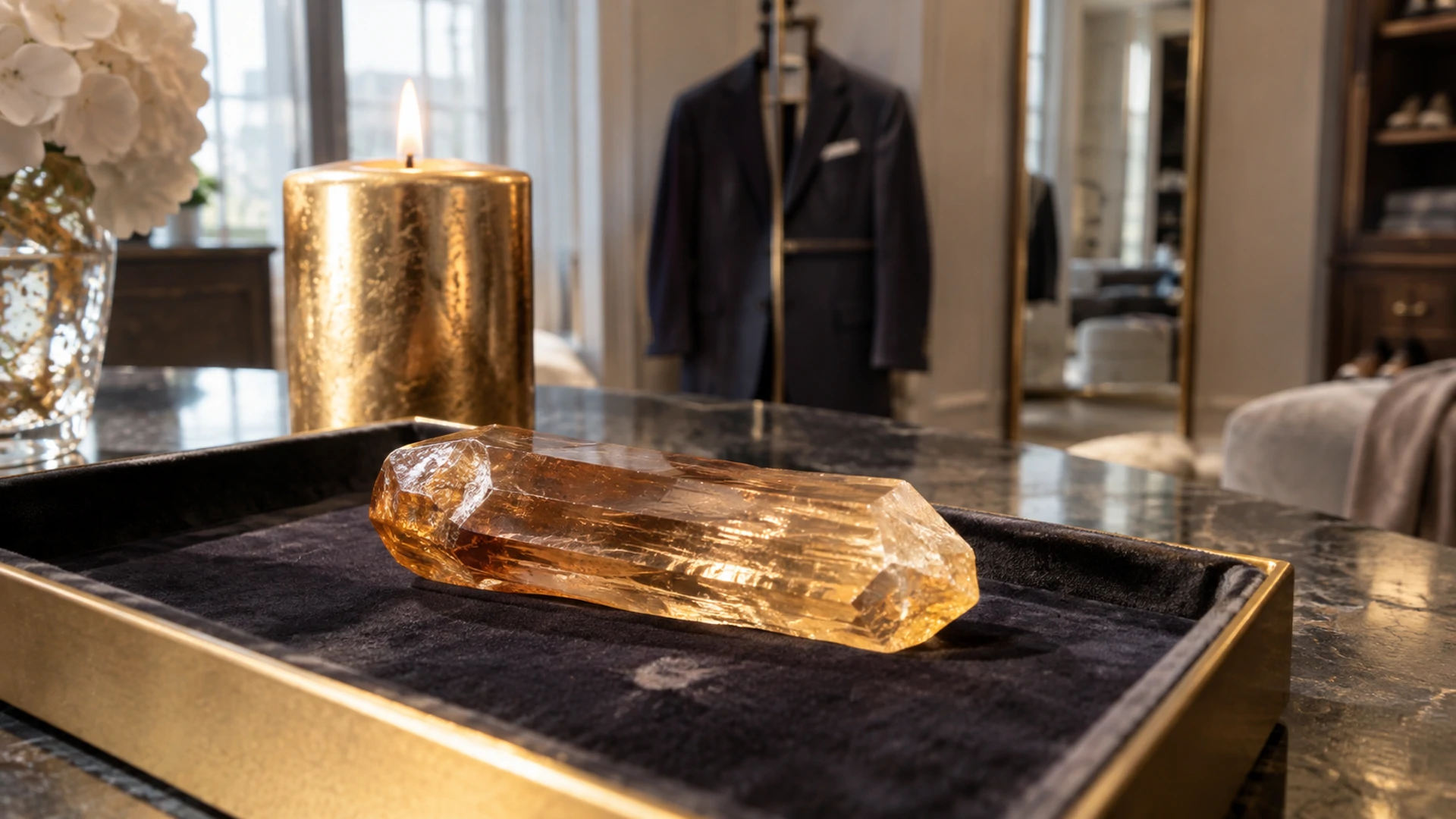
Imperial Topaz works a specific kind of abundance magic — the kind tied to elevation, not accumulation. It belongs to the moments when your financial standing genuinely shifts, not the slow daily drip of good fortune.
The Stone for Stepping Up: Why Imperial Topaz Belongs in Abundance
Most abundance stones are concerned with flow. They draw money in, keep it moving, or plant seeds for future growth. Imperial Topaz does something narrower and rarer: it works the moment of genuine elevation. Its mechanism within the abundance category is what you might call rare, elevated wealth-consolidation — stepping into higher status and higher value, occupying a prestige register that has nothing to do with everyday financial luck. This is a stone for the raise you negotiated hard for, the sale that changes your professional tier, the moment you cross from one income bracket into another and need to actually inhabit that new standing rather than quietly shrink back to what felt familiar.
That distinction matters because Imperial Topaz shares a mineral family and a name with Yellow Topaz, and the two are frequently conflated. They are not the same stone. Yellow Topaz carries the energy of everyday accessible abundance — joy, confidence, and the common daily flow of good fortune. It's approachable, broadly useful, and well suited to keeping a general prosperity current running through your life. Imperial Topaz is doing something different. It targets the threshold crossing itself: the rare elevation, the prestige tier, the higher standing. If Yellow Topaz is a steady tide, Imperial Topaz is the wave that lifts you to a new waterline.
The contrast with Citrine is just as worth naming. Citrine's abundance mechanism is spontaneous manifestation — active, radiant generation of new wealth and opportunity through confidence and joy, not a slow accumulation. It is expansive and forward-moving, radiating the energy of a sunny disposition turning into money. Imperial Topaz isn't radiating outward. It's consolidating inward, claiming a position and holding it with the gravity of something genuinely rare. These two stones complement each other well precisely because they aren't doing the same job.
On correspondences: Imperial Topaz is primarily a solar plexus stone. The solar plexus governs personal power, will, and the sense of one's own value in the world — all exactly on target for a stone whose work is stepping into elevated standing rather than just wishing for it. Some traditions also place it at the sacral chakra for its relationship to creative energy and the act of manifesting a specific outcome rather than a general state. Its ruling element is Fire, which gives it drive and decisiveness rather than patient accumulation. Its planetary ruler is the Sun — the planet of authority, leadership, and the visibility that comes with genuine achievement. These correspondences all point to the same thing: Imperial Topaz is for the moment you own your position, not the moment you're still building toward it.
A Single Source, A Disputed Name: Choosing Imperial Topaz
Genuine Imperial Topaz is rare in a way that most abundance stones simply aren't. While common yellow and blue topaz varieties are mined in many locations worldwide, true Imperial Topaz is sourced almost exclusively from a single mining district near Ouro Preto, in Brazil's Minas Gerais state. The color range that qualifies as "imperial" runs from orange to pink-red, and one of its most distinctive features is dichroism — a shift in color depending on the angle from which you view it. A stone that glows amber-orange from one angle may show a warmer pink-red from another. This is not a defect or an inconsistency; it's one of the physical signatures of the genuine material.
When you're buying, that color-shift is worth looking for. The orange-to-pink range with visible dichroism is what distinguishes Imperial Topaz from regular yellow topaz or from heat-treated and irradiated blue topaz, which is colorless material processed to reach its hue. Imperial Topaz in its most prized form is natural, untreated, and genuinely rare — which means the price reflects that. If you're seeing it at costume-jewelry prices, verify what you're actually getting.
The name "imperial" has two competing origin stories and neither one has been definitively settled. One account connects it to the eighteenth- and nineteenth-century Russian Imperial court, where fine pink topaz from the Ural Mountains was reportedly reserved for the royal family and the nobility surrounding it. A separate account traces the name to Dom Pedro II, the Emperor of Brazil, and his association with the Minas Gerais material. Both stories have been repeated in gemological and metaphysical writing; neither has the documentary backing to be declared the correct one. What's not disputed is that the name carries a prestige register regardless of which empire it honors — and that the Ouro Preto district in Minas Gerais has been worked continuously since the early eighteenth century, making it one of the longest-running gem sources on record.
On care: topaz sits at a Mohs hardness of 8, which sounds like it should be nearly indestructible. But hardness and toughness are different things, and topaz has perfect cleavage in one direction. That means if it's struck at the wrong angle — the edge of a counter, a hard surface during a gesture — it can split or chip cleanly along that plane despite its hardness number. Wear set Imperial Topaz jewelry with awareness of this. Avoid ultrasonic cleaners, and keep it away from extreme heat, which can alter its color. Brief water contact is fine; prolonged soaking is not ideal. Store it separately from harder stones, and if it's a raw or rough specimen, handle it with particular care around the edges.
Three Practices for a Higher Standing
The Threshold Crossed
This practice is for the specific moment a financial elevation actually arrives — a raise, a significant sale, a contract signed, a milestone crossed — not in anticipation of it, but in direct response to it.
Sit with the Imperial Topaz held in your dominant hand within the first twenty-four hours of the event. Light a gold candle — gold for the Sun's authority and the prestige register this stone carries — and hold the stone at solar plexus level, not at the heart. The heart is for feeling; the solar plexus is for claiming. Breathe slowly and state, aloud or firmly in your mind, the specific nature of what has changed: not what you hope will follow, but what is now true. "I earn this. This is my level now." Hold that statement until it settles in the body rather than just the mind. Let the candle burn down completely if possible. Carry the stone for the week following, keeping it in a pocket rather than a bag, close to the body's center.
The Guarded Standing
This practice is for the weeks after elevation, when the risk isn't losing what you've gained through a single dramatic event but through the quiet erosion of underselling yourself, reverting to old patterns, or spending from anxiety rather than strategy.
Set the Imperial Topaz on a small surface you use daily — a desk corner, a bedside, wherever your financial decisions or work actually happen. Pair it with a piece of Pyrite, whose mechanism is protective, disciplined wealth-building — abundance through willpower, resolve, and safeguarding what's already been built, not spontaneous luck. The two stones address different registers that are both needed here: Imperial Topaz for the elevated self-concept, Pyrite for the disciplined stewardship of what that elevation has produced. Each morning, briefly touch both stones before beginning work. No elaborate ritual is required — the contact is the reminder. The practice is about consistent awareness, not a single charged moment. Run it for a full lunar month.
The Rare Claim
This practice is for recognizing and claiming a genuinely rare opportunity the moment it surfaces — the kind that doesn't wait and doesn't circle back — rather than hesitating past it.
Keep Imperial Topaz on your person during any period when a significant opportunity is actively in motion — a pitch, a negotiation window, a narrow decision timeline. When the moment arrives, hold the stone briefly in your palm and take a single slow breath before you respond or commit. This isn't a moment of doubt; it's a moment of alignment. The pause gives your solar plexus rather than your anxiety the last word. If you work with planetary hours, the Sun hour — particularly on a Sunday — is the natural timing for any intention-setting that precedes the opportunity window, since the Sun governs authority, visibility, and the kind of leadership energy that Imperial Topaz already carries. Pair with frankincense burned briefly if you're setting the intention in advance; frankincense clears the field and sharpens focus without adding a competing energetic agenda.
Named for an Empire, Though Which One Is Disputed
The history of Imperial Topaz is in two parts, and only one of them is clearly settled. The Ouro Preto mining district in Minas Gerais, Brazil has been worked continuously since the early eighteenth century. This is not contested. The region has produced the world's most significant supply of imperial-grade orange and pink topaz for over three hundred years, and it remains the dominant source today. Whatever the stone is named for, this is where it comes from, and that provenance is part of its identity in a direct and material way.
The name itself is murkier. Two accounts circulate in gemological and metaphysical writing without either one having established clear documentary dominance. The first traces "imperial" to the Russian Imperial court, where fine pink topaz from Ural Mountain mines was reportedly reserved for the royal family during the eighteenth and nineteenth centuries, forbidden to the general population as a mark of rank. The second traces the name to Dom Pedro II, Emperor of Brazil, and his patronage of Minas Gerais material. Both stories fit the stone's prestige register. Both remain plausible. The honest answer is that the naming origin is disputed, and using either version as if it's settled is repeating a tradition of confident imprecision that runs all through gemstone lore. What both accounts agree on is that the name was always meant to signal royalty — exclusive access, elevated rank, and the specific authority that comes with genuine scarcity.
Abundance That Changes Your Standing
Imperial Topaz belongs in the Abundance category precisely because its mechanism is so specific. It isn't trying to do what Citrine does — spontaneous, radiant manifestation through confidence and joy — or what Yellow Topaz does, which is keep everyday accessible abundance in daily flow. Imperial Topaz targets the rarer event: the elevation that changes your tier, the prestige-register shift that most abundance practices are too general to address. If you're working with a moment that genuinely calls for that kind of consolidation, this is the stone for it.
To see where Imperial Topaz sits alongside the rest of the Abundance stones — and how all seven stone categories relate to each other — The Crystal Compendium: Seven Paths to Stone Magic is the place to start.